
If you’re struggling with thinning hair, slow growth, or a dry, flaky scalp, you are not alone. Millions seek solutions for healthier hair without harsh chemicals or high costs. The good news? You can make hair growth oil at home using natural ingredients proven to nourish the scalp, stimulate follicles, and boost hair strength. This guide gives you science-backed recipes, expert tips, and step-by-step instructions to create effective, personalized hair oils in minutes.
While topical treatments play a key role, remember that healthy hair starts from within. A diet rich in biotin, iron, omega-3s, and vitamins A, C, D, and E supports internal hair health. But when paired with targeted scalp oils, results can be transformative. Whether you are dealing with seasonal dryness, postpartum shedding, or early signs of alopecia, the right homemade oil blend can make a visible difference in as little as 6 to 8 weeks.
Choose the Best Carrier Oils for Your Blend

Your base oil forms the foundation of any homemade hair growth blend. It delivers active ingredients to the scalp and determines texture, absorption, and benefits.
Use Castor Oil for Thickness
Castor oil is a powerhouse for hair growth. Its high ricinoleic acid content reduces scalp inflammation and boosts blood circulation, key for delivering oxygen and nutrients to follicles. Because it is thick and slow-absorbing, it is best mixed with lighter oils. Use 25 to 50 percent of your total blend to avoid buildup.
Pro tip: Warm castor oil slightly between palms before applying to improve spreadability.
Try Coconut Oil for Strength
Coconut oil penetrates the hair shaft better than most oils, reducing protein loss and preventing breakage. It also has antimicrobial properties that help fight dandruff and scalp infections. Ideal for dry or damaged hair, but may be too heavy for fine or oily scalps.
Pick Jojoba Oil to Balance Sebum
Jojoba oil mimics the scalp’s natural sebum, making it perfect for regulating oil production. It will not clog pores and absorbs quickly. Great for oily scalps or those prone to folliculitis.
Add Almond or Argan Oil for Shine
Sweet almond oil is lightweight and rich in vitamin E, magnesium, and fatty acids, ideal for conditioning without greasiness. Argan oil adds shine, tames frizz, and protects against heat and UV damage. Use either as a primary or secondary base in blends.
Add Essential Oils for Growth Boost
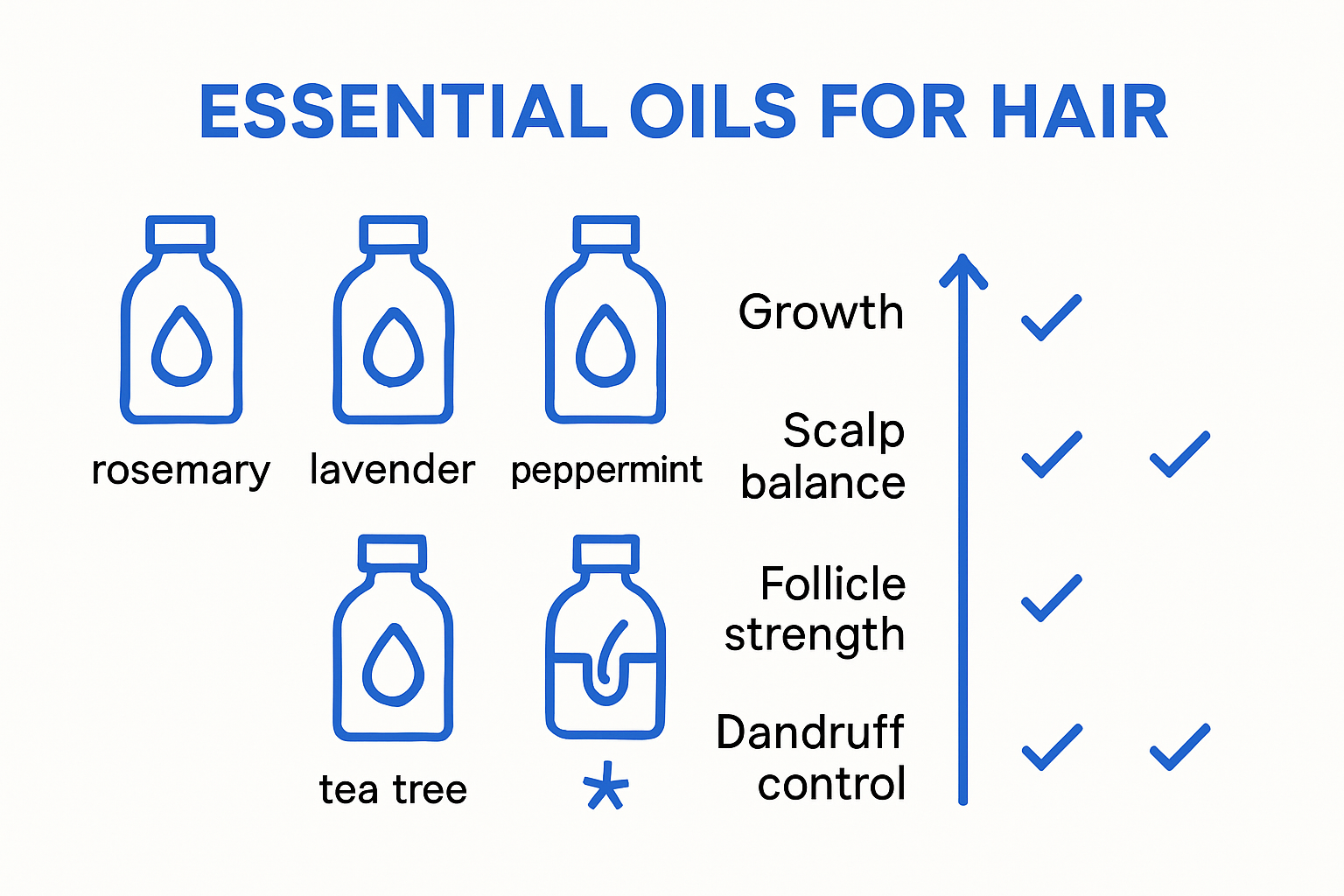
Essential oils are potent actives that enhance circulation, reduce inflammation, and may directly stimulate hair follicles. Always dilute to 1 to 2 percent, which means 5 to 10 drops per tablespoon of carrier oil.
Apply Rosemary Oil for Proven Results
Rosemary essential oil is clinically shown to match 2 percent minoxidil in promoting hair growth after 6 months, with less itching. It improves microcirculation and may block DHT, a hormone linked to hair loss.
How to use: Add about 30 drops per 1 ounce of carrier oil.
Use Peppermint Oil to Stimulate Follicles
Peppermint oil increases blood flow more effectively than many other oils. A 4-week animal study found it significantly increased follicle depth and number. It creates a cooling sensation that indicates active circulation.
Best for: Thinning areas or slow-growing patches.
Include Lavender Oil for Healing
Lavender oil has antimicrobial and anti-inflammatory properties. Studies show it can trigger hair follicle regeneration, especially in cases of stress-related shedding.
Bonus: Its calming scent helps reduce anxiety, a known contributor to hair loss.
Fight Dandruff with Tea Tree Oil
Tea tree oil is a powerful antifungal and antibacterial agent. It is effective against dandruff, seborrheic dermatitis, and clogged follicles. Use sparingly, 5 to 10 drops per ounce, to avoid irritation.
Ideal for: Itchy, flaky, or oily scalps.
Make a Multi-Oil Growth Blend
This potent recipe combines circulation-boosting, anti-inflammatory, and nourishing oils for maximum impact.
Gather the Right Ingredients
You will need:
• ¼ cup castor oil
• 1 teaspoon black cumin seed oil
• ½ teaspoon rosemary essential oil
• 15 drops lavender essential oil (optional)
• 2 tablespoons cayenne-infused olive oil (optional)
Note: Black cumin seed oil may irritate sensitive skin, so patch test first.
Follow These Mixing Steps
- Pour all ingredients into a clean, dry amber glass bottle.
- Close tightly and shake well for 30 seconds.
- Label with date and ingredients.
- Store in a cool, dark place.
Shelf life: Up to 6 months.
Apply Correctly for Best Results
- Section damp or dry hair to expose the scalp.
- Apply ½ to 1 teaspoon of oil directly to the scalp.
- Massage in circular motions with fingertips for 3 to 5 minutes.
- Leave on for 1 hour or overnight.
- Wash out with a gentle, sulfate-free shampoo.
Frequency: Once per week.
Warning: Do not apply undiluted essential oils directly to the scalp.
Try a Winter Hair Growth Oil
Designed for cold, dry months, this lightweight formula prevents moisture loss without clogging pores.
Use Andrea Nucete-Elliott’s Method
TIY founder Andrea Nucete-Elliott recommends a simple, scalp-focused oil for winter care. Her version uses rosemary oil diluted in a light carrier.
Prepare the Blend
• 30 drops rosemary essential oil
• 28.5 ml carrier oil (jojoba, almond, or argan)
Mix in a dark glass bottle and shake well.
Apply with Care
- Start with clean, dry hair.
- Section hair and apply oil only to the scalp.
- Massage gently for 2 to 5 minutes.
- Leave on for 2 to 4 hours. Do not exceed this time.
- Wash out with warm, not hot, water.
Why not overnight? Prolonged exposure can clog follicles, especially in winter when sebum production slows.
Follow Expert Dos and Do Nots
Do:
• Apply 1 to 2 times per week
• Focus on the scalp, not hair ends
• Warm oil slightly for better absorption
Do not:
• Use too much oil, less is more
• Apply to hair lengths, it can weigh hair down
• Skip the shampoo, always wash thoroughly
Infuse Oils for Extra Power

Infused oils extract active compounds from herbs and spices, enhancing their growth-stimulating effects.
Make Cayenne-Infused Oil
Capsaicin in cayenne pepper boosts circulation, delivering more nutrients to follicles.
Use the Double Boiler Method
- Combine ½ teaspoon ground cayenne pepper with 2 tablespoons olive or sweet almond oil.
- Heat gently in a double boiler for 1 hour.
- Let cool, then strain through cheesecloth.
- Store in a dark glass bottle.
Alternative: Solar infusion, place mixture in a sealed jar in direct sunlight for 3 to 5 days.
Test Before Use
Cayenne can cause a strong warming sensation. Always perform a patch test, avoid broken or irritated skin, and dilute further if sensitivity occurs.
Best use: Add 1 to 2 teaspoons to your main oil blend. Do not use alone.
Apply Oil the Right Way
Even the best blend fails if not applied properly. Follow these steps for real results.
Section Hair for Full Coverage
Divide hair into 4 to 6 sections using clips. This ensures every part of the scalp gets treated, especially hard-to-reach areas like the crown and nape.
Massage to Boost Circulation
Use your fingertips, not nails, to massage in small circles. Spend 3 to 5 minutes total. You should feel mild warmth, which means blood flow is increasing.
Pro tip: Do this in the shower before washing. Heat opens pores for deeper absorption.
Choose Duration Based on Oil Type
• Light oils (jojoba, almond): 2 to 4 hours
• Thick oils (castor, coconut): 1 hour or overnight
• Winter use: Limit to 4 hours to prevent clogging
Use a shower cap or towel to protect clothes and bedding.
Wash Out Thoroughly
Residue leads to buildup, dullness, and clogged follicles. Remove oil completely.
Use Warm Water and Gentle Shampoo
Hot water can strip natural oils and irritate the scalp. Warm water helps dissolve oil without damage.
Double Wash If Needed
For heavy oils like castor or coconut:
1. First wash: Break down oil
2. Second wash: Cleanse scalp deeply
3. Rinse thoroughly
Tip: Add a drop of dish soap to shampoo if oil is stubborn. It cuts grease safely.
Store Oil Properly
Homemade blends lack preservatives. Proper storage keeps them effective and safe.
Use Dark Glass Bottles
Amber or cobalt glass blocks UV light, which degrades oils. Never store in clear plastic or glass.
Keep in a Cool, Dry Place
Avoid bathrooms with steam or direct sunlight. A bedroom drawer or cabinet works best.
Label and Date All Bottles
Write the date of preparation. Most blends last:
• Carrier oils: 6 to 12 months
• Essential oils: 1 to 3 years
• Infused oils: 1 to 3 months if using fresh herbs
Discard if oil smells rancid or looks cloudy.
Patch Test Every New Blend
Allergic reactions can cause itching, redness, or hair loss. Always test first.
Perform a 24-Hour Skin Test
- Apply 2 to 3 drops to the inner forearm.
- Cover with a bandage.
- Wait 24 hours.
- If no redness, swelling, or itching occurs, it is safe to use.
Warning: Discontinue immediately if irritation develops.
Customize for Your Hair Type
Not all oils work for everyone. Match your blend to your needs.
For Thinning Hair or Alopecia
Best ingredients:
• Rosemary essential oil
• Peppermint essential oil
• Castor oil
• Vitamin E oil
Use 2 to 3 times per week for 8 weeks to assess results.
For Dry, Flaky Scalp
Best ingredients:
• Coconut oil
• Almond oil
• Lavender essential oil
• Tea tree essential oil
Apply 1 to 2 times weekly, leave for 2 to 4 hours.
For Oily Scalp or Dandruff
Best ingredients:
• Jojoba oil
• Rosemary essential oil
• Tea tree essential oil
Use light applications, wash after 2 hours.
For Curly or Coily Hair
Best ingredients:
• Castor oil
• Coconut oil
• Olive oil
• Cayenne-infused oil (optional)
Leave on overnight weekly for deep conditioning.
Know the Science Behind the Oils
Understanding why these oils work builds confidence in your routine.
Rosemary vs. Minoxidil: What Studies Show
A 2015 clinical trial found rosemary oil used twice daily for 6 months produced similar hair count improvements as 2 percent minoxidil. Participants reported less scalp itching, making it a gentler alternative.
Peppermint Oil Speeds Up Growth Phase
A 2014 animal study showed peppermint oil triggered earlier entry into the anagen (growth) phase and increased follicle number and depth significantly compared to controls.
Castor Oil’s Anti-Inflammatory Action
While human trials are limited, castor oil’s ricinoleic acid is proven to reduce inflammation and improve circulation, both critical for follicle health.
Avoid Common Mistakes
Even small errors can reduce effectiveness or cause harm.
Never Skip Dilution
Essential oils are highly concentrated. Applying them undiluted can cause burns, irritation, or hair loss.
Rule: 1 to 2 percent dilution, which means 5 to 10 drops per tablespoon of carrier oil.
Do Not Overuse Oil
More is not better. Excess oil leads to greasy scalp, clogged follicles, and dust and pollutant buildup.
Use ½ to 1 teaspoon per application.
Do Not Ignore Internal Health
Topical oils support growth but cannot fix deficiencies. If you have unexplained hair loss, check iron levels, vitamin D, thyroid function, and hormonal balance.
Talk to a doctor if shedding persists.
Final Tips for Long-Term Success
Hair growth takes time. Be consistent and patient.
Track Your Progress
Take weekly photos under the same lighting. Look for reduced shedding, new baby hairs, and improved scalp condition.
Most see changes in 6 to 8 weeks.
Rotate Oils Occasionally
Using the same blend long-term may reduce effectiveness. Switch recipes every 2 to 3 months.
Combine With Healthy Habits
For best results, stay hydrated, eat protein-rich foods, reduce stress, avoid tight hairstyles, and use silk pillowcases.
Frequently Asked Questions About Making Hair Growth Oil at Home
How long does it take to see results from homemade hair growth oil?
Most users see visible changes within 6 to 8 weeks of consistent use. This includes reduced shedding, new baby hairs, and improved scalp condition. Results vary based on hair type, underlying health, and how regularly you apply the oil.
Can I leave hair growth oil on overnight?
It depends on the oil type and your scalp. Thick oils like castor and coconut can be left on overnight, but lighter oils and winter formulas should be limited to 2 to 4 hours to prevent clogged follicles. Always protect your pillow with a towel.
Which essential oil is most effective for hair growth?
Rosemary essential oil is the most clinically supported. Studies show it matches the effectiveness of 2 percent minoxidil after 6 months of use. Peppermint oil is also highly effective for stimulating follicles and increasing blood flow.
How often should I apply homemade hair growth oil?
Apply 1 to 2 times per week for most hair types. Overuse can lead to buildup, clogged pores, and greasy scalp. Consistency matters more than frequency.
Can I use hair growth oil on colored or chemically treated hair?
Yes, but choose lighter oils like jojoba or argan to avoid weighing down processed hair. Avoid applying directly to colored hair lengths, focusing instead on the scalp. Wash thoroughly to prevent residue buildup.
What is the proper dilution ratio for essential oils in hair growth blends?
Always dilute to 1 to 2 percent concentration. This equals 5 to 10 drops of essential oil per tablespoon of carrier oil. Never apply undiluted essential oils directly to the scalp.
Key Takeaways for Making Hair Growth Oil at Home
Making hair growth oil at home is affordable, natural, and empowering. With the right ingredients, technique, and consistency, you can support stronger, thicker, healthier hair without stepping into a salon. Choose carrier oils that match your hair type, add clinically proven essential oils like rosemary and peppermint, and always patch test before full application. Apply to a clean scalp, massage for 3 to 5 minutes, and wash out thoroughly after the recommended duration. Store your blends in dark glass bottles away from heat and light, and use within 6 months for best potency. Start with one simple blend, follow the steps, and let your scalp do the rest.