If you’re struggling with thinning hair, dry scalp, or lackluster locks, you’re not alone. Millions of people turn to natural solutions every year, and one of the most effective methods is mixing essential oils with carrier oils for hair care. This powerful combination delivers concentrated plant compounds directly to your scalp while nourishing hair from root to tip. However, essential oils must never be applied neat. Used improperly, they can irritate your skin or cause long-term sensitization. The key lies in proper dilution and smart oil pairing. In this guide, you’ll learn exactly how to mix essential oils with carrier oil for hair growth, scalp health, and damage repair using proven ratios and safe practices.
Choose the Right Carrier Oil for Your Hair Needs

Your carrier oil isn’t just a diluent. It actively contributes to hair health by enhancing absorption, supporting follicle function, and addressing specific concerns like DHT buildup or dryness. The right base can transform your blend from basic to powerful.
Match Carrier Oil to Your Hair Concern
Different carrier oils serve different purposes. Choose based on your scalp and hair type.
For DHT blocking to combat thinning hair, use pumpkin seed oil or saw palmetto oil. Both inhibit 5-alpha-reductase, the enzyme that converts testosterone into hair-loss-causing DHT.
To prevent protein loss and strengthen hair shafts, coconut oil is your best choice. It penetrates the hair shaft better than any other oil, reducing breakage in both damaged and healthy hair.
For dry, damaged, or post-treatment scalps, try tamanu oil, rosehip oil, or sea buckthorn oil. All three promote tissue regeneration and soften scarred areas.
To balance oily scalps without clogging pores, jojoba oil mimics human sebum and regulates oil production effectively.
For lightweight application that won’t leave residue, grapeseed oil thins heavier blends and reduces staining from dark oils like black seed.
Blend two to three carrier oils for synergistic effects. For example, mix coconut for strength, jojoba for balance, and pumpkin seed for growth support.
Avoid Common Carrier Oil Mistakes
Never use mineral oil or synthetic bases. They sit on the scalp and block follicles from receiving nutrients. Always choose cold-pressed, unrefined, organic oils when possible. Never heat oils in the microwave, as it degrades beneficial compounds. Use a double boiler instead to gently warm solid oils like coconut.
Dilute Essential Oils Safely for Hair Application

Using essential oils at the wrong concentration can do more harm than good. Proper dilution ensures safety, effectiveness, and long-term usability without risking irritation or sensitization.
Know the Correct Dilution Ratios
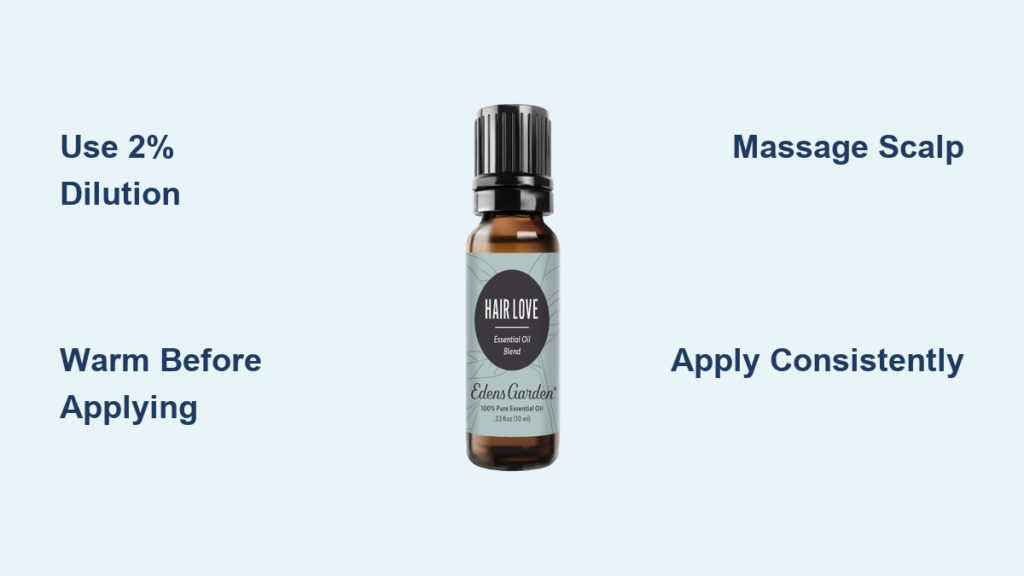
For most hair applications, a two to three percent dilution is ideal. This means six drops of essential oil per 30 milliliters of carrier oil for a two percent dilution, or nine drops per 30 milliliters for three percent.
General adult use recommends two percent dilution, which equals four to five drops per 10 milliliters of carrier oil.
For sensitive skin, children, or elderly individuals, use one percent dilution with two to three drops per 10 milliliters.
Short-term targeted treatment can use up to three percent, but avoid this concentration for regular use.
The maximum safe limit is ten percent, which equals 20 drops per 10 milliliters. This should only be used under professional guidance on small areas.
Never exceed three percent for regular use. High concentrations increase the risk of irritation and permanent skin sensitization.
Why Dilution Matters
Undiluted essential oils can cause redness, itching, or chemical burns on the scalp. They can trigger allergic reactions that become permanent, leading to sensitization where even future diluted use may cause reactions. There is also risk of systemic absorption with potential toxicity.
When you dilute in carrier oil, it slows evaporation for longer contact time on the scalp. The carrier enhances penetration into the scalp tissue, extends your essential oil supply, and boosts overall efficacy through synergistic blending.
Pick Proven Essential Oils for Hair Growth

Not all essential oils deliver results. Choose ones with clinical backing for scalp stimulation, circulation, and follicle activation.
Top Science-Backed Essential Oils
Rosemary oil stimulates blood flow, blocks DHT, and has been shown to perform as well as two percent minoxidil in clinical studies. It works best for androgenetic alopecia, thinning edges, and postpartum shedding.
Peppermint oil creates a cooling sensation that increases circulation to the scalp. Animal studies show it significantly boosts hair growth and follicle depth. It works best for dormant follicles, low blood flow, and dull scalp.
Lavender oil calms inflammation, improves circulation, and promotes the anagen or growth phase. It works best for stress-related hair loss, irritated scalp, and general maintenance.
Tea tree oil has antimicrobial and antifungal properties that clear dandruff, unclog follicles, and reduce scalp buildup. It works best for oily scalp, dandruff, and folliculitis.
Cedarwood oil balances sebum and stimulates circulation. It is often used in blends for alopecia areata and works best for flaky scalp, hormonal imbalance, and patchy loss.
Combine two to three essential oils for broader benefits. For example, pair rosemary for growth, tea tree to cleanse, and lavender to soothe.
Mix Your Oils Step by Step
Creating your own blend is simple. Follow these steps to ensure safety, potency, and stability in your final product.
Prepare Your Tools and Workspace
Gather these essential items before starting.
Use a glass container such as amber or cobalt bottles in the 50 to 100 milliliter range to protect oils from light degradation.
Have measuring tools ready, including a graduated cylinder or syringe for accuracy.
Use a double boiler for gently warming solid oils.
Create labels to include ingredients, date, and dilution ratio.
Never use plastic containers. Essential oils degrade plastic and can leach harmful chemicals into your blend.
Follow the Mixing Process
Measure your carrier oils into a clean bowl or bottle first.
Blend multiple carriers if desired, such as 40 milliliters coconut, 40 milliliters jojoba, and 20 milliliters pumpkin seed.
Gently warm if needed, such as with solid coconut oil, then let cool slightly.
Add essential oils last because heat destroys their volatile compounds.
Stir or shake well to ensure even distribution throughout the blend.
Label immediately with the date and ingredients.
Add five to 10 drops of vitamin E oil per 100 milliliters to extend shelf life and boost antioxidant protection.
Try Targeted Hair Oil Recipes

Use these research-backed blends for specific concerns. Each is formulated with safe dilution and maximum efficacy in mind.
Recipe for Thinning Hair and DHT Blockage
This blend targets pattern baldness, receding hairline, and hormonal hair loss.
For the base, combine 10 milliliters pumpkin seed oil, 20 milliliters saw palmetto oil, and 40 milliliters coconut oil for a total of 70 milliliters.
Add six drops rosemary, three drops lavender, and three drops cedarwood. This totals 12 drops, which equals approximately 2.4 percent dilution.
To use, warm the oil in a water bath. Massage into the scalp for five to 10 minutes. Leave on for 30 minutes or longer. Shampoo out thoroughly with a double wash recommended. Repeat two to three times per week.
Recipe for Post-Treatment Regrowth
This blend focuses on damaged scalp, fibrosis, and slow regrowth after chemotherapy or radiation.
For the base, combine 10 milliliters tamanu oil, 10 milliliters black seed oil, 10 milliliters sea buckthorn oil CO2 extract, 10 milliliters rosehip oil, and 60 milliliters grapeseed oil for a total of 100 milliliters.
Add six drops rosemary, four drops lavender, and two drops spikenard. This totals 12 drops, which equals approximately two percent dilution.
To use, apply daily to affected areas. Massage gently. The blend can be used up to three times per day. Leave in without rinsing. Store in the refrigerator to extend shelf life.
Avoid this blend during the first 16 weeks of pregnancy. Do not use if you have epilepsy or psychosis due to the rosemary content.
General Growth-Stimulating Blend
This simple formula works for edges, thinning zones, and general maintenance.
For the base, combine 60 milliliters argan or jojoba oil, one to two tablespoons castor oil, one teaspoon aloe vera oil, and five to 10 drops vitamin E oil.
Add 15 drops rosemary, 15 drops peppermint, and 15 drops tea tree. This totals 45 drops, which equals approximately three percent dilution. Reduce to 30 drops for a gentler two percent if you have sensitive skin.
To use, warm gently. Massage into scalp and edges for five to 10 minutes. Leave on for several hours or overnight. Wash out with shampoo. Use one to two times per week.
Apply Your Blend for Maximum Results
Even the best blend fails without proper application. Technique matters as much as ingredients.
Warm Oil Before Use
Heat opens follicles and improves penetration. Place the bottle in warm water for five to 10 minutes. Never microwave oil, as it degrades active compounds.
Massage Correctly for Best Absorption
Use your fingertips rather than nails to avoid scratching the scalp.
Apply circular motions across the entire scalp, focusing on thinning areas but covering all zones.
Massage for five to 10 minutes to boost circulation effectively.
Scalp massage also reduces stress, which is a known contributor to hair loss.
Decide Between Leave-In and Rinse-Out
Choose leave-in application for dry, damaged, or recovering scalps. Use lighter oils like jojoba or grapeseed for this method.
Choose rinse-out application for thick blends containing castor or coconut oil. This prevents buildup on oily scalps.
Follow Safety and Storage Rules
Natural doesn’t mean risk-free. Protect yourself and preserve your blend properly.
Always Perform a Patch Test
Apply a drop of diluted oil behind your ear or on your inner forearm.
Wait 24 hours before full application.
If redness, itching, or swelling occurs, do not use the blend.
Never skip this step, even with gentle oils like lavender.
Know Who Should Avoid Certain Oils
If you are pregnant, avoid rosemary, clary sage, and high-dose peppermint in the first trimester.
If you have epilepsy or mental health conditions, skip rosemary because it may trigger seizures.
If you have nut allergies, avoid coconut, almond, or other nut-based carrier oils.
Store Your Blends Properly
Use dark glass bottles to protect from light.
Keep in a cool, dark place. The refrigerator extends shelf life.
Most blends last six to 12 months.
Discard if the smell becomes rancid, color changes, or texture seems off.
Why DIY Beats Commercial Hair Products

Most store-bought hair oils contain parabens, sulfates, and synthetic fragrances that strip natural oils and clog follicles. DIY blends give you complete control over every ingredient.
Benefits of Natural Blends
Natural blends contain no harsh chemicals like silicones, alcohols, or artificial preservatives.
Oils like coconut and jojoba penetrate deeply to reach the follicle.
They address root causes including poor circulation, DHT buildup, inflammation, and microbial imbalance.
DIY blends are cost-effective. A 100 milliliter bottle costs less than 10 dollars to make.
You can customize every blend for your specific hair type, scent preference, and goals.
Maximize Results with Consistency
You won’t see changes overnight. Hair growth takes time, but consistency pays off.
Be Patient and Track Progress
Visible results take three to six months of regular use.
Take monthly photos to track your progress accurately.
Use blends one to three times per week, or daily for recovery phases.
Support Hair Health Holistically
Eat a balanced diet focusing on protein, iron, zinc, and omega-3 fatty acids.
Stay hydrated because dry hair starts from within.
Manage stress through meditation, yoga, or deep breathing.
Avoid traction from tight braids, ponytails, and excessive heat styling.
Pair oil treatments with a gentle, sulfate-free shampoo to prevent buildup.
Key Takeaways for Mixing Essential Oils with Carrier Oil
Mixing essential oils with carrier oil for hair is a powerful natural way to support growth and scalp health, but only when done safely. Always use a two percent dilution for regular adult use, choosing carrier oils based on your specific needs. Coconut oil prevents protein loss, pumpkin seed and saw palmetto block DHT, and tamanu oil repairs damaged tissue. Apply your blend with a warm scalp massage lasting five to 10 minutes, then rinse out or leave in depending on your hair type. Stay consistent for three to 6 months before expecting visible results, and store your blends properly in dark glass bottles.
Frequently Asked Questions About Mixing Essential Oils with Carrier Oil
How much essential oil should I add to carrier oil for hair?
For general adult use, add four to five drops of essential oil per 10 milliliters of carrier oil for a two percent dilution. This is the safest concentration for regular scalp application.
Can I use essential oils on my hair without carrier oil?
No. Essential oils must always be diluted in carrier oil before topical application to the scalp. Applying them neat can cause skin irritation, sensitization, or allergic reactions.
Which carrier oil is best for hair growth?
Pumpkin seed oil and saw palmetto oil are best for blocking DHT and supporting growth. Coconut oil is best for preventing protein loss and strengthening hair shafts. Tamanu oil excels at repairing damaged scalp tissue.
How often should I apply essential oil hair blends?
For maintenance, apply once per week. For dry or damaged scalps, apply two to three times per week. For post-treatment recovery, you can apply daily or up to three times per day.
How long does it take to see results from essential oil hair treatments?
Visible results typically take three to six months of consistent use. Take monthly photos to track progress, as daily changes are difficult to notice.
Can I leave essential oil blends in my hair overnight?
Yes, you can leave blends in overnight if using lighter carrier oils like jojoba or grapeseed. For heavier oils like castor or coconut, rinse out after 30 minutes to prevent buildup on oily scalps.