
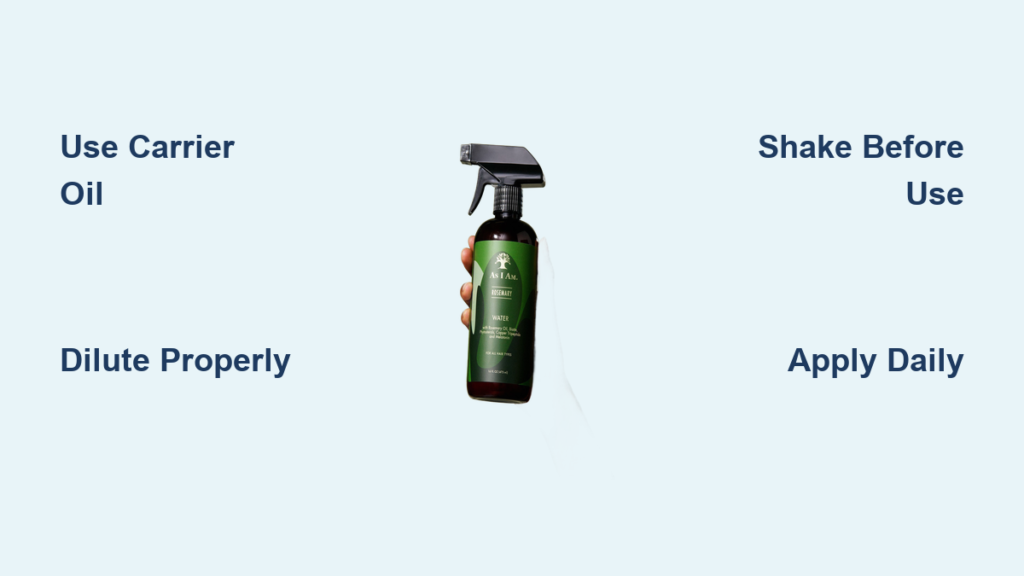
If you’re looking for a natural way to boost hair growth, reduce shedding, and improve scalp health, mixing rosemary oil with water is a popular and science-backed solution. While pure rosemary essential oil is too potent to apply directly, combining it safely with water creates an effective, easy-to-use spray that supports thicker, healthier hair over time.
The key challenge? Rosemary essential oil does not dissolve in water. It separates and floats on top, which can lead to uneven application and skin irritation from undiluted droplets. But with the right method using a carrier oil or emulsifier, you can create a stable, safe, and effective rosemary water spray for your hair care routine.
Create Rosemary Water Infusion
:max_bytes(150000):strip_icc()/GettyImages-1130890788-e35c89fbf7734cdea4d8c49403f513a9.jpg)
This method makes a gentle, water-based rosemary tea using fresh or dried herb. It extracts natural compounds without the need for essential oils, making it perfect for daily use.
Steep Rosemary in Hot Water
- Boil 2 cups of distilled or filtered water.
- Add 5 to 6 fresh rosemary sprigs or 2 to 3 tablespoons of dried rosemary.
- Remove from heat, cover, and steep for 1 to 2 hours. For a stronger infusion, steep overnight.
- Strain through cheesecloth or a fine mesh sieve.
- Cool completely before transferring to a spray bottle.
Optional: Simmer uncovered for 15 minutes to concentrate the brew.
Use as Lightweight Hair Toner
Pour the infusion into a spray bottle and apply daily to your scalp and roots. There is no need to rinse. Leave it in for full absorption. This method is safe for color-treated hair and sensitive scalps.
Pro Tip: Add a few drops of rosemary essential oil after steeping for extra potency if your scalp can tolerate it.
Make Emulsified Rosemary Oil Spray
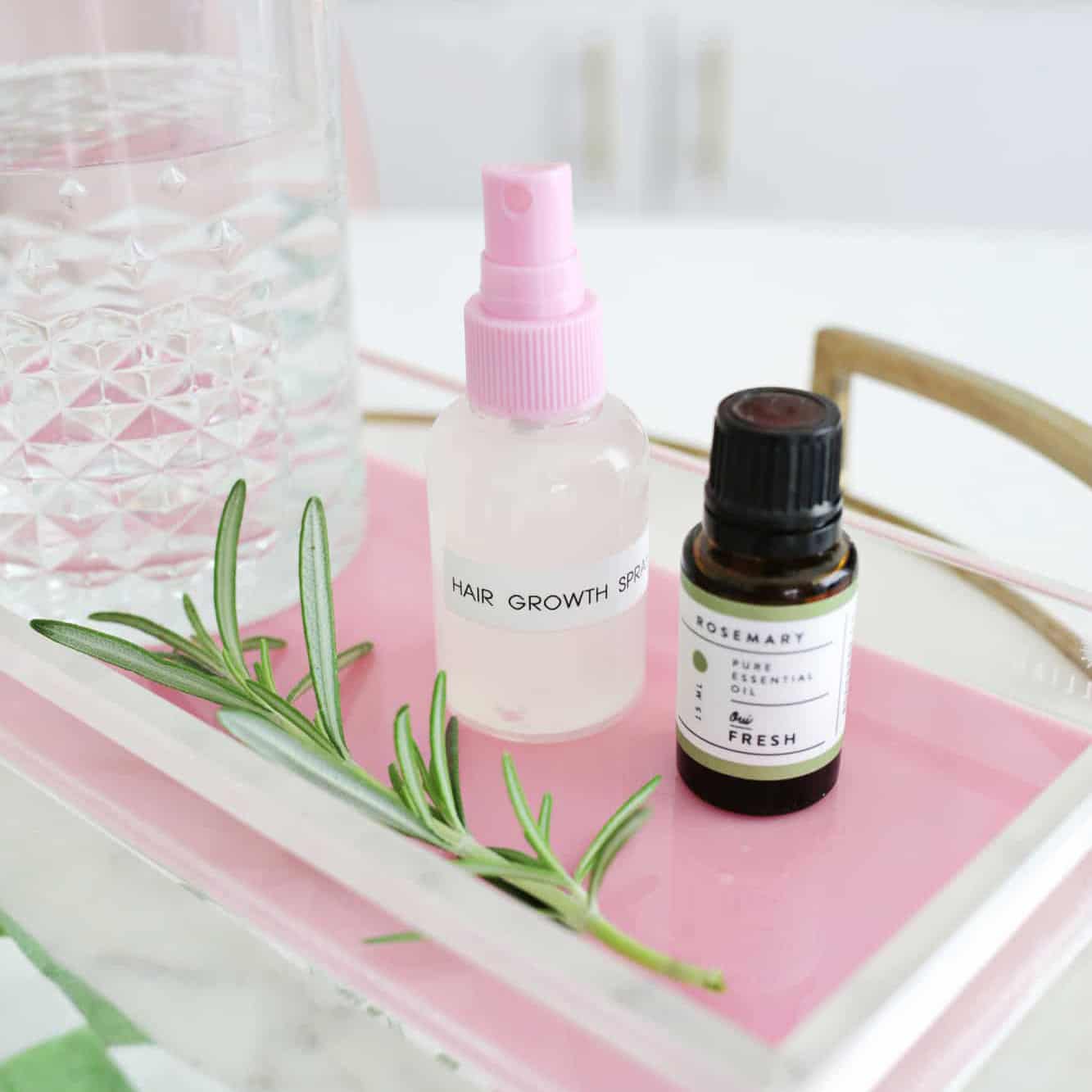
This method safely combines rosemary essential oil with water using a carrier oil to prevent separation and ensure even application.
Choose a Lightweight Carrier Oil
Use 1 to 2 teaspoons per cup of water. Jojoba oil mimics scalp sebum and feels non-greasy. Sweet almond oil softens hair and adds shine. Fractionated coconut oil stays liquid and has no odor. Avoid heavy oils like castor unless highly diluted.
Mix With Proper Dilution
Use a 1 to 2 percent dilution for safe topical use, which means 5 to 12 drops of rosemary essential oil per 8 ounces of water. Start low with 5 to 6 drops if you are new to essential oils.
Sensitive scalp users should use 3 to 6 drops per ounce.
Add Optional Emulsifiers
Improve oil-water blending and add hydration by including quarter teaspoon of vegetable glycerin, which binds moisture and acts as a mild emulsifier. Alternatively, add 1 tablespoon of aloe vera juice to soothe the scalp and enhance dispersion. Avoid alcohol or harsh surfactants that can dry the scalp.
Prepare the Spray
- In a small bowl, mix carrier oil with rosemary essential oil.
- Slowly pour into water while stirring vigorously.
- Add glycerin or aloe vera if using and stir well.
- Funnel into a dark glass spray bottle.
- Label with the date and shake before every use.
Shelf life is up to 6 weeks when refrigerated.
Use Rosemary Hydrosol Directly
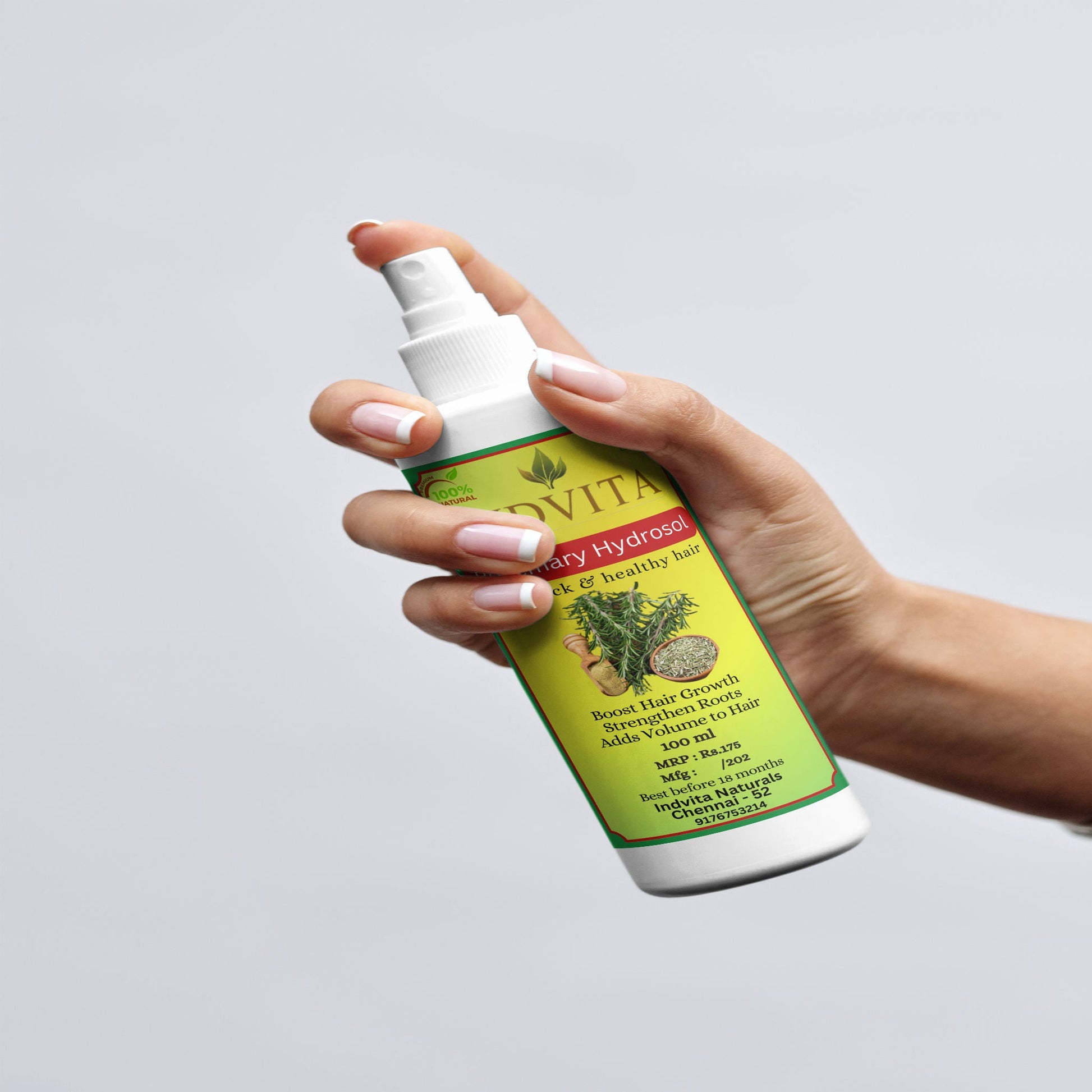
Skip the mixing entirely by using rosemary hydrosol, a true water-soluble product made during essential oil distillation.
Spray Pure Hydrosol on Scalp
Rosemary hydrosol contains trace essential oil and water-soluble actives. No dilution is needed. It is ideal for daily use, sensitive skin, or between washes. Apply 2 to 3 times daily by misting directly onto your scalp.
Store Properly
Keep hydrosol in a cool, dark place. Use within 3 to 6 months after opening. Do not refrigerate unless the product label specifies it.
Bonus: Mix with aloe vera or glycerin for a hydrating hair mist.
Why Dilution Is Non-Negotiable
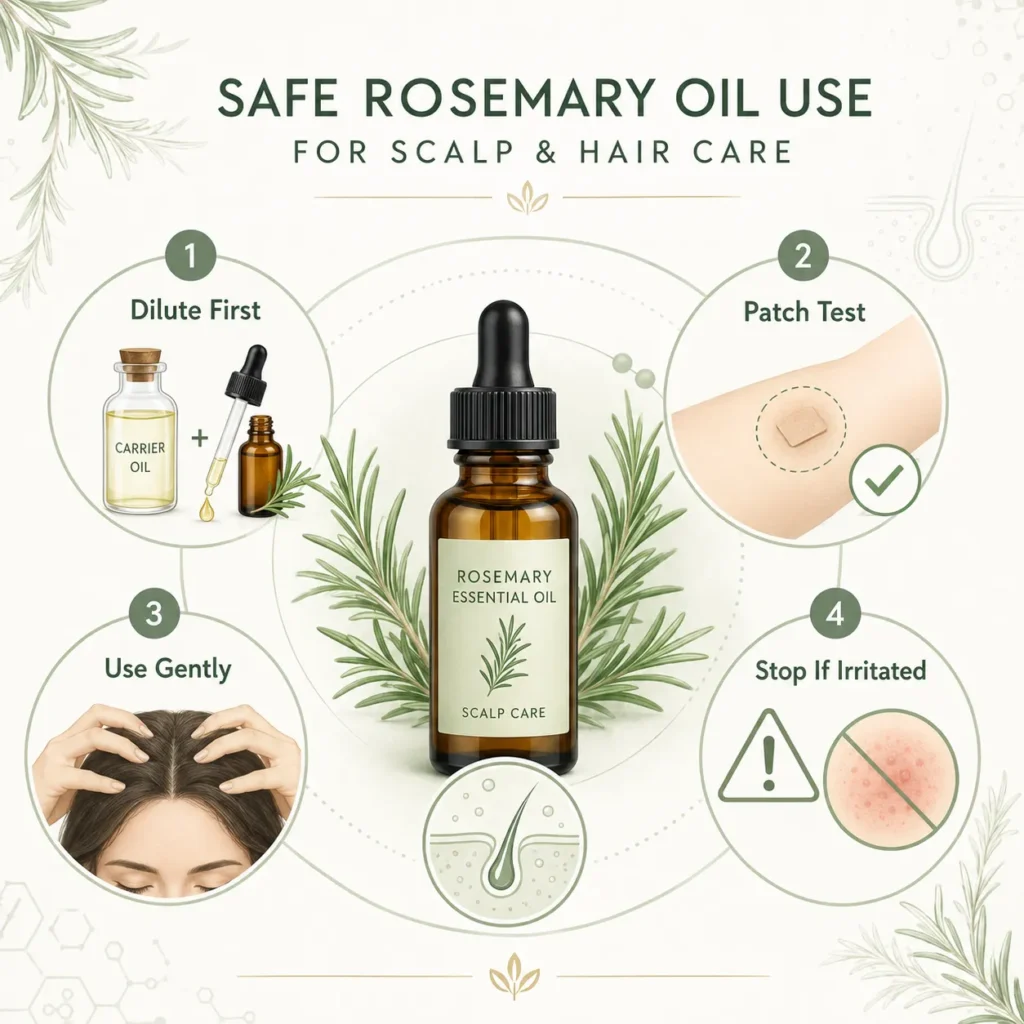
Rosemary essential oil is highly concentrated. Applying it undiluted risks scalp irritation or burning, redness and itching, and allergic reactions or sensitization over time.
Active compounds like carnosic acid, 1,8-cineole, and rosmarinic acid are powerful but must be diluted for safe use. Never apply rosemary essential oil directly to the scalp.
Follow Safe Dilution Guidelines
| Use Case | Drops per Ounce | Carrier Volume |
|---|---|---|
| General use | 6 to 12 drops | 1 fluid ounce water plus carrier oil |
| Sensitive scalp | 3 to 6 drops | 1 fluid ounce |
| Weekly treatment | 5 to 7 drops | 1 teaspoon carrier oil only |
First-time users should start with 5 drops per 8 ounces of water and perform a patch test first.
Apply Rosemary Water Correctly
Shake and Spray on Scalp
- Shake the bottle well since oil separates from water.
- Part your hair into sections.
- Spray directly onto the scalp, focusing on thinning areas.
- Massage gently for 2 to 3 minutes to boost circulation.
Leave In, Do Not Rinse
Rinsing reduces effectiveness. Let the mixture absorb overnight or throughout the day.
Use Consistently
Oily scalps benefit from daily application. Normal scalps can use it every wash day. Dry or sensitive scalps should use it 2 to 3 times per week.
Clinical results typically appear after 6 months of regular use.
Boost Results With These Tips
Combine With Scalp Massage
Massaging your scalp for 2 to 3 minutes daily increases blood flow, enhancing nutrient delivery to hair follicles.
Use Heat for Deeper Penetration
After spraying, cover with a shower cap and apply a warm towel or sit under a hooded dryer for 20 minutes. Heat opens follicles and improves absorption.
Add to Shampoo or Conditioner
Mix 5 to 10 drops of rosemary oil per ounce of shampoo. Alternatively, blend with 1 teaspoon of carrier oil first, then add to your product. This provides ongoing exposure without extra steps.
Store for Maximum Freshness
| Formula Type | Storage | Shelf Life |
|---|---|---|
| Rosemary infusion | Refrigerated, glass bottle | Up to 2 weeks |
| Emulsified oil-water spray | Refrigerated, dark bottle | 4 to 6 weeks |
| Rosemary hydrosol | Cool, dark place | 3 to 6 months after opening |
| Frozen rosemary water | Ice cube tray, freezer bag | Up to 3 months |
Tip: Make small batches of 4 to 8 ounces to avoid spoilage.
Avoid Common Mistakes
Skipping the carrier oil is a major error. Water alone will not disperse essential oil, and you risk irritation from concentrated droplets.
Using metal spray bottles is another mistake. Essential oils can corrode metal components. Always use dark glass or BPA-free plastic.
Overusing the spray is counterproductive. More is not better. Excessive use may clog follicles or cause buildup, especially with oils.
Expecting instant results sets you up for disappointment. Hair growth takes time. Most studies show visible improvement at 2 to 3 months, with peak results at 6 months.
Know the Benefits Backed by Science

Stimulates Hair Growth
A 2015 clinical trial found that 1 percent rosemary oil in carrier oil, used twice daily for 6 months, was as effective as 2 percent minoxidil for treating androgenic alopecia with less scalp itching.
Reduces Hair Loss
Rosemary improves microcirculation to follicles and reduces inflammation, helping prevent shedding in conditions like telogen effluvium.
Balances Scalp Oil Production
Users report extending time between washes by 1 to 3 days due to sebum regulation.
Soothes Itchy, Flaky Scalp
Its anti-inflammatory and antimicrobial properties help manage dandruff and irritation.
May Delay Graying
Antioxidants like rosmarinic acid protect follicles from oxidative stress linked to premature graying.
Patch Test Before Use
Allergies to mint-family herbs like rosemary are rare but possible.
How to Test
- Mix 1 drop rosemary oil with 1 teaspoon of water or carrier oil.
- Apply to inner forearm or behind the ear.
- Wait 24 hours.
- If no redness, swelling, or itching occurs, it is safe to use on your scalp.
Who Should Avoid Rosemary Oil
Pregnant Women
Rosemary essential oil may stimulate uterine contractions. Avoid topical use during pregnancy. Dietary amounts like cooking are safe.
People With Epilepsy
Rosemary oil has neurostimulatory effects. Consult a doctor before use if you have seizure disorders.
Those Allergic to Lamiaceae Plants
This includes mint, basil, and oregano. Use caution or avoid entirely.
Frequently Asked Questions About Mixing Rosemary Oil with Water
Can I mix rosemary oil directly with water?
No. Essential oils do not dissolve in water. Always use a carrier oil or emulsifier to avoid irritation and ensure even distribution.
Can I use rosemary water every day?
Yes if it is rosemary infusion or hydrosol. For essential oil blends, limit to 3 to 5 times per week unless very lightly diluted.
How long until I see results?
Most people notice less shedding in 2 to 3 months. Thicker hair and visible regrowth typically appear after 6 months of consistent use.
Do I rinse out rosemary water?
No. Leave it on the scalp to absorb. Rinsing reduces effectiveness.
Does rosemary water change hair color?
Some users report darkening of gray hairs, though this is anecdotal. It does not stain or dye hair.
Can I add rosemary oil to my shampoo?
Yes. Add 5 to 10 drops per ounce of shampoo. For even mixing, blend with a carrier oil first.
Is it safe for color-treated hair?
Yes. Rosemary water does not strip color and can improve scalp health after chemical treatments.
Key Takeaways for Mixing Rosemary Oil with Water
Mixing rosemary essential oil with water requires a carrier oil or emulsifier because essential oils do not dissolve in water. Use a 1 to 2 percent dilution with 5 to 12 drops per 8 ounces of water combined with 1 to 2 teaspoons of lightweight carrier oil like jojoba or sweet almond.
Choose your formula based on your scalp type. Rosemary water infusion works for daily use and sensitive scalps. Emulsified spray provides growth support with balanced hydration. Hydrosol offers frequent use with no residue.
Store your preparation properly. Refrigerate infused water and emulsified sprays. Keep hydrosol in a cool, dark place. Use smaller batches to ensure freshness.
Be patient and consistent. Clinical studies show visible results after 6 months of regular use. Combine with scalp massage and occasional heat for enhanced absorption.
Start today by trying the rosemary water infusion method if you have a sensitive scalp, or the emulsified spray if you want the full benefits of essential oil. Either way, your scalp will thank you for this natural, science-backed treatment.