
If your hair feels brittle, looks dull, or refuses to hold moisture no matter what conditioner you use, you are not alone. Dry hair is one of the most common hair concerns, especially for those with curly, coily, or chemically treated textures. The good news is that applying a hair mask to dry hair can actually deliver deeper ingredient penetration when done correctly. However, the method you choose matters significantly. Using the wrong technique can leave your hair greasy, weighed down, or completely unresponsive to the treatment. This guide walks you through every step to transform dry, lifeless strands into soft, hydrated, and resilient hair.
Choose the Right Hair Mask for Your Hair Type
Selecting the correct formula is the foundation of successful treatment. Not all hair masks work for every hair type, and using the wrong one can worsen your concerns rather than solve them.
Match Ingredients to Your Hair Needs
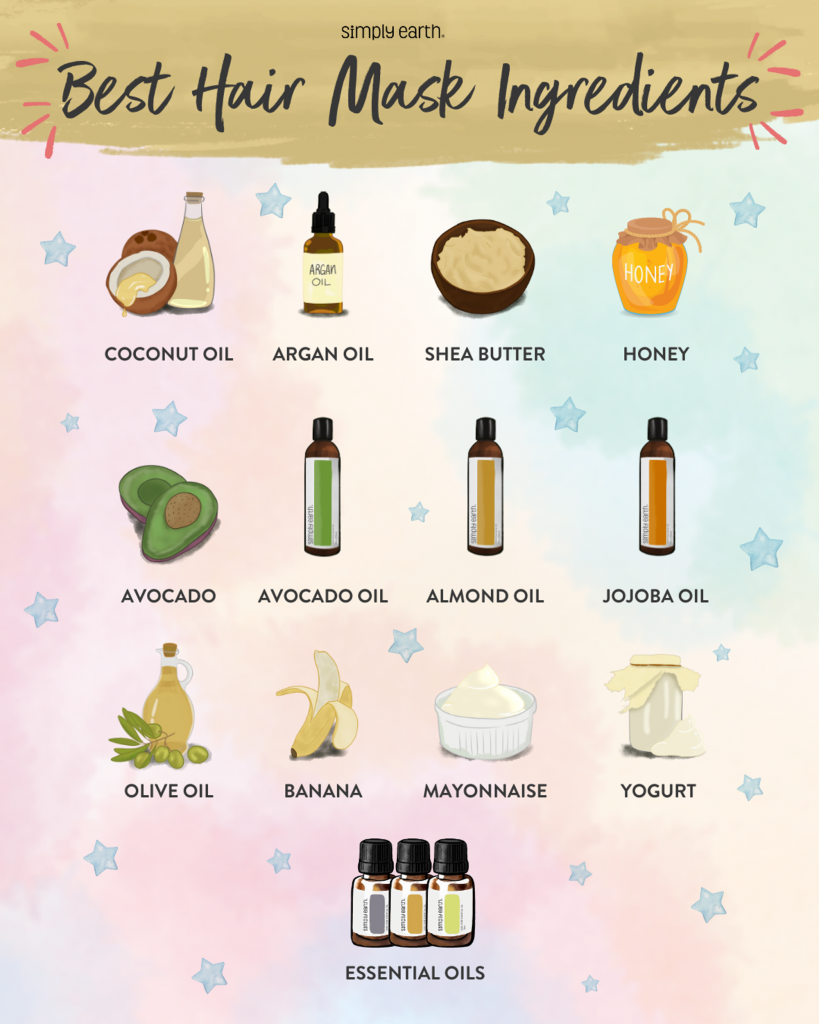
For dry hair, prioritize masks that contain these powerful ingredients:
- Shea butter, coconut oil, and avocado oil provide deep nourishment and restore lost lipids
- Ceramides and fatty acids repair the hair’s protective barrier
- Hydrolyzed proteins like keratin and silk strengthen weak, porous strands
- Humectants such as glycerin, hyaluronic acid, and honey draw in and retain moisture
Avoid masks with drying alcohols like ethanol or SD alcohol 40, as well as sulfates and heavy silicones unless you clarify regularly.
Choose Based on Your Specific Hair Type
| Hair Type | Best Mask Type | Why |
|---|---|---|
| Coarse, curly, coily (3C–4C) | Rich, oil-based or buttery masks | High porosity needs intense sealing |
| Low-porosity hair | Lightweight, water-based, humectant-rich formulas | Prevents buildup and repels water |
| Fine or oily roots | Non-greasy, protein-light formulas | Avoids weighing down roots |
| Color-treated or bleached | Repairing masks with ceramides and UV filters | Prevents fading and further damage |
Pro Tip: Alternate between moisture-rich and protein-based masks each week to maintain balance and prevent brittleness.
Prep Hair Before Application
Proper preparation ensures the mask penetrates evenly and avoids causing breakage during application.
Detangle Thoroughly First
Always detangle before applying any product, whether your hair is dry or damp. Use a wide-tooth comb or detangling brush, starting from the ends and working upward gradually. Skipping this step leads to breakage and uneven product distribution across your strands.
Section Your Hair for Even Coverage
Divide your hair into four to six sections using clips or hair ties. This guarantees that every strand receives treatment, which is especially important for thick or long hair. Sectioning also makes application faster and more precise.
Apply Hair Mask to Dry or Damp Hair
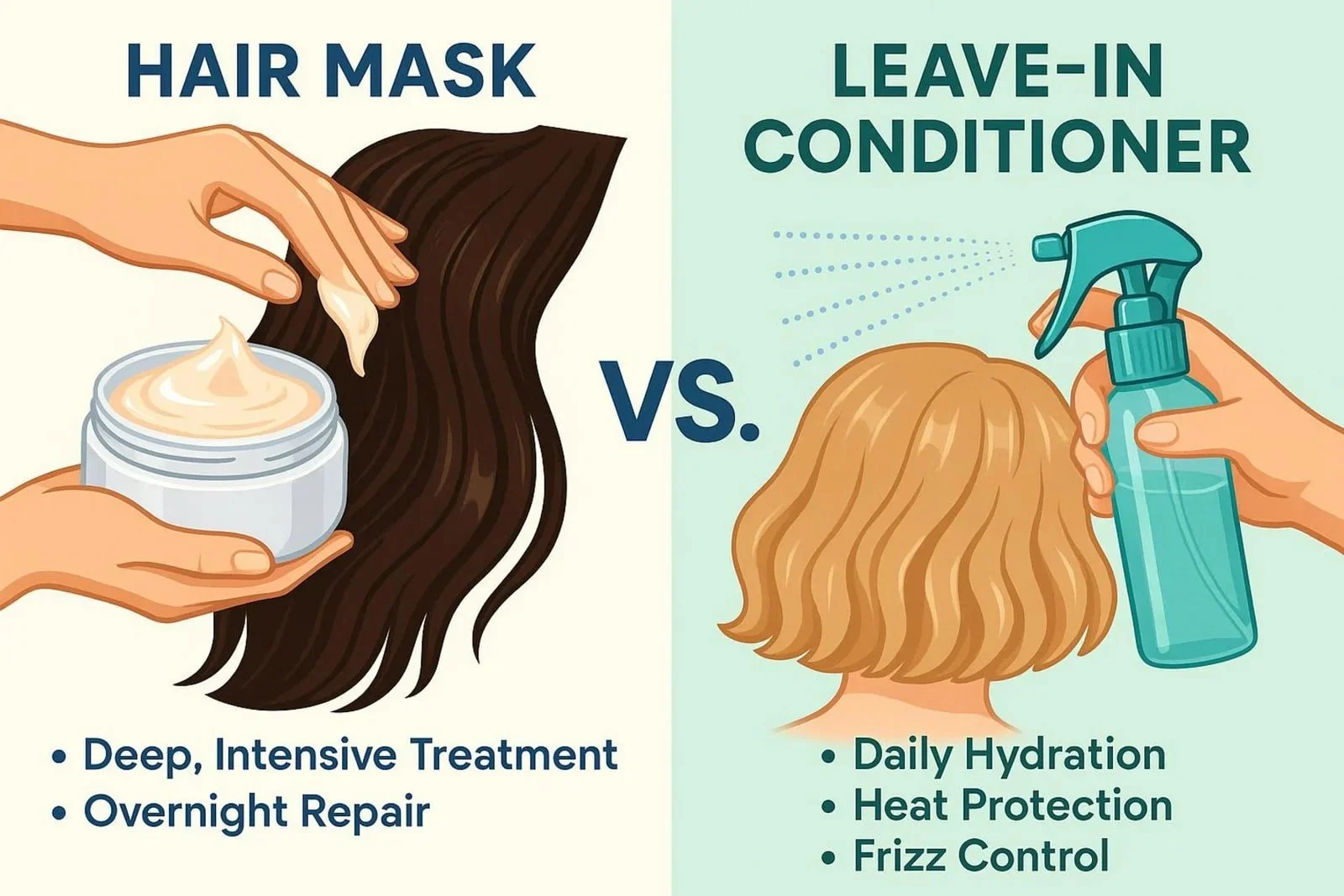
This is where most people get confused. Both methods work, but the right one depends entirely on your hair type and goals.
Dry Hair Method: Pre-Wash Application
This technique works best for very dry, coarse, curly, coily, or high-porosity hair. Applying a mask to dry, unwashed hair before shampooing allows oils and butters to penetrate deeper without water competition.
Benefits of Dry Application
- Occlusive ingredients penetrate deeper without water competition
- Reduces hygral fatigue, which is the swelling and shrinking that damages hair during wet and dry cycles
- Forms a protective layer that minimizes protein loss during washing
How to Apply to Dry Hair
- Detangle dry hair thoroughly
- Section hair and apply mask from mid-lengths to ends
- Cover with a shower cap
- Add low heat using a warm towel or hooded dryer for ten to fifteen minutes
- Wash out with gentle shampoo, double cleansing if needed
Pro Tip: Leave the mask on overnight under a silk cap for maximum absorption if your hair is extremely dry or damaged.
Damp Hair Method: Post-Wash Application
This is the most widely recommended method by trichologists and works best for normal, fine, low-porosity, or color-treated hair. Applying the mask after shampooing on clean, towel-dried hair allows for deeper ingredient penetration.
Why Damp Application Works
- Shampoo removes buildup that blocks absorption
- Slightly lifted cuticle allows deeper penetration of active compounds
- Damp hair provides slip for even distribution
How to Apply to Damp Hair
- Wash with sulfate-free shampoo
- Gently towel-dry until damp, not dripping
- Detangle again if needed
- Apply mask from mid-lengths to ends
- Cover and process for ten to thirty minutes
Quantity Guide: Short hair needs one to two teaspoons, medium hair needs one to two tablespoons, and long or thick hair may need up to three tablespoons.
Boost Mask Effectiveness with Heat
Heat opens the hair cuticle and dramatically improves ingredient absorption. You do not need expensive equipment to add heat to your treatment.
Simple Heat Methods
- Warm towel wrap: Soak a towel in hot water, wring it out completely, and wrap around your head for ten to fifteen minutes
- Hooded dryer: Sit under low heat for fifteen to twenty minutes
- Thermal cap: Use a reusable heated cap for consistent warmth throughout treatment
Expert Note: Avoid high heat settings, as they can damage already fragile hair. Low to medium warmth is sufficient.
Processing Time by Hair Condition
| Hair Condition | Time to Leave On |
|---|---|
| Mild dryness | 10-15 minutes |
| Moderate damage | 20-30 minutes |
| Severe dryness or coily hair | 30+ minutes or overnight |
Never exceed twenty minutes with protein-heavy masks if you are protein-sensitive, as excess protein causes stiffness and breakage.
Rinse Properly for Maximum Benefits
How you rinse your mask is just as important as how you apply it.
Use Lukewarm to Cold Water
Lukewarm water emulsifies oils and helps rinse out residue effectively. Finish with a cold water rinse to seal the cuticle, lock in moisture, and boost shine. Never use hot water, as it strips natural oils and causes frizz.
Double Cleanse After Dry Application
If you used the pre-poo method, shampoo twice to ensure all residue is removed. The first wash removes the bulk of the oil and mask, while the second ensures no greasy residue remains. Use a gentle, sulfate-free cleanser to preserve moisture.
Post-Mask Care Routine
The treatment does not end when you rinse. What you do after masking determines how long the benefits last.
Lock in Moisture
After rinsing, apply a leave-in conditioner to damp hair followed by a few drops of hair oil like argan, jojoba, or marula on your ends. This sealing step prevents moisture loss and enhances softness.
Protect Hair Daily
- Sleep on silk or satin pillowcases to reduce friction
- Wear a silk bonnet or scarf at night
- Limit heat styling or always use a heat protectant
- Use dry shampoo between washes to extend freshness
Pro Tip: Trim your hair every six to eight weeks. No mask can repair split ends.
How Often to Use a Hair Mask

| Hair Type | Frequency | Notes |
|---|---|---|
| Dry, damaged, chemically treated | 1-2 times per week | Replenishes lost moisture |
| Curly or coily (3C-4C) | 2-3 times per week or daily | High porosity loses moisture fast |
| Low-porosity | Every 7-10 days | Prevents buildup, use lightweight formulas |
| Fine or oily | Every 2 weeks | Use non-greasy, moisturizing-only masks |
Warning: Overuse causes buildup, greasiness, and limpness, especially in fine hair.
Common Mistakes to Avoid
Applying to Dirty, Dry Hair
Putting a mask on unwashed, product-laden hair creates a barrier that blocks absorption. Either cleanse first or use the pre-poo method intentionally.
Using Too Much Product
Start small. You can always add more. Overloading weighs hair down and wastes product.
Leaving On Too Long
Especially with protein masks, more is not better. Excess protein causes brittleness and breakage.
Rinsing with Hot Water
Hot water strips moisture, dulls shine, and raises the cuticle. Always finish with a cold rinse.
Skipping Detangling
This leads to tugging, breakage, and patchy coverage. Detangle before and after masking if needed.
Applying to Roots on Fine or Oily Hair
Only apply to roots if you have a dry, flaky scalp, the mask is specifically formulated for scalp use, or your hair is dry throughout. Otherwise, stick to mid-lengths and ends.
Professional vs DIY Hair Masks

Store-Bought Masks
Professional masks offer clinically tested formulas with enhanced delivery systems like liposomes and nano-emulsions. They provide longer shelf life and targeted repair for severe dryness, color protection, and consistent results.
Top-rated options include Olaplex No. 3 Hair Perfector, L’Oréal Professionnel Absolut Repair, Briogeo Don’t Despair Repair, and Moroccanoil Intense Hydrating Mask.
DIY Natural Masks
DIY masks offer fresh ingredients and customization but lack penetration technology. They provide temporary softness but cannot match the deep repair capabilities of professional formulas.
Reality Check: DIY masks work well for maintenance but fall short for lasting repair on severely damaged hair.
Frequently Asked Questions About Using Hair Mask on Dry Hair
Can I apply a hair mask to dry, unwashed hair?
Yes, you can apply a hair mask to dry, unwashed hair using the pre-wash method. This approach works best for very dry, coarse, curly, coily, or high-porosity hair. It allows oils and butters to penetrate deeper without water competition, and it forms a protective barrier during washing.
Which method is better: dry or damp hair application?
The better method depends on your hair type. Dry application works best for coarse, curly, coily, and high-porosity hair. Damp application works best for normal, fine, low-porosity, and color-treated hair. Both methods are effective when used appropriately for your specific hair profile.
How long should I leave a hair mask on dry hair?
Processing time varies by hair condition. Mild dryness needs ten to fifteen minutes, moderate damage needs twenty to thirty minutes, and severe dryness or coily textures need thirty minutes or longer. You can leave protein-free masks on overnight for maximum absorption.
Can I use a hair mask every day?
Daily use is generally not recommended and can cause buildup and greasiness. Most hair types benefit from one to three applications per week. Curly and coily hair types may benefit from more frequent use, but fine or oily hair should limit use to every two weeks.
Why is my hair still dry after using a hair mask?
Your hair may still be dry if you are using the wrong mask type for your hair porosity, not using enough product, rinsing with hot water, or skipping the sealing step with leave-in conditioner and hair oil. Also ensure you are detangling and sectioning properly for even coverage.
Key Takeaways for Using Hair Mask on Dry Hair
Using a hair mask on dry hair can transform your strands when done correctly. The most important factors are choosing the right method for your hair type, selecting a mask with appropriate ingredients, and following through with proper post-mask care. Always detangle and section your hair before application, and choose the dry or damp method based on whether you have coarse, curly, high-porosity hair or fine, low-porosity hair. Enhance penetration with low heat, rinse with lukewarm water followed by a cold finish, and always seal in moisture with leave-in conditioner and hair oil afterward. Track how your hair responds over four to six weeks and adjust frequency and product type as needed. With consistent application tailored to your unique hair profile, you will notice significantly softer, shinier, and more resilient hair.