Dry, brittle, or frizzy hair? You are not alone. Millions struggle with damaged strands due to heat styling, chemical treatments, and environmental stress. The solution is a deep conditioning hair mask. Unlike regular conditioners that sit on the surface, a deep conditioner penetrates the hair shaft to restore moisture, repair damage, and boost strength from within. When used correctly, it transforms dull, lifeless hair into soft, shiny, and resilient locks.
This guide reveals the science-backed method to use a deep conditioning hair mask effectively. You will learn how to apply it for maximum absorption, which ingredients actually work, how often to use it based on your hair type, and common mistakes that sabotage results. Whether you have fine, curly, coily, or color-treated hair, this routine will help you get the most out of every treatment.
Prepare Damp, Clean Hair Before Applying
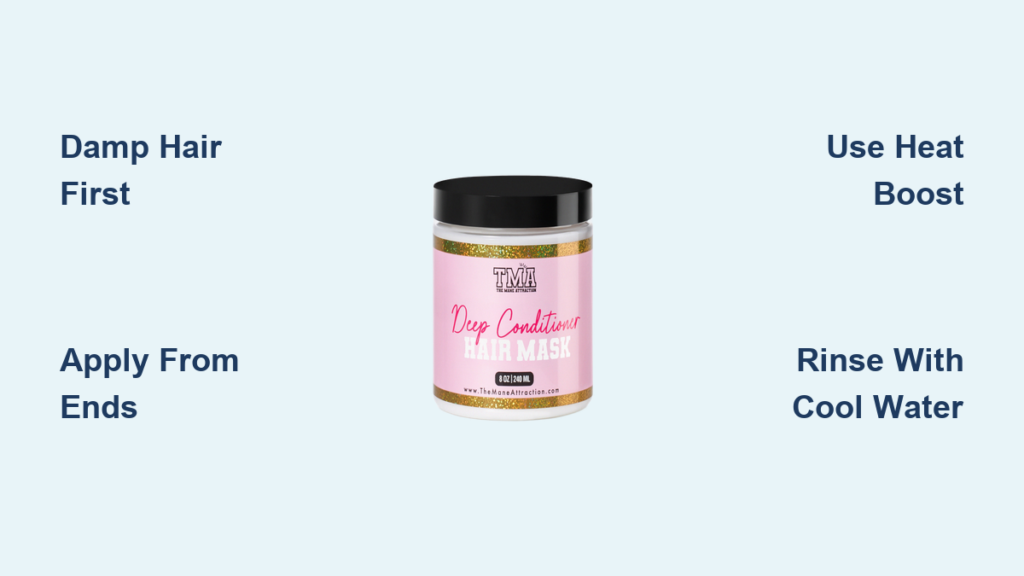
Before applying any deep conditioner, your hair must be clean and damp. This ensures optimal penetration of active ingredients into the hair cortex.
Shampoo First Unless Pre-Pooing
Start with freshly shampooed hair unless you are using a pre-poo oil treatment. Shampoo removes buildup, excess sebum, and pollutants that block moisture absorption. It also lifts the hair cuticle slightly, allowing the deep conditioner to reach the cortex.
Exception: For very dry or damaged hair, apply coconut or olive oil before shampooing to protect against protein loss during cleansing.
Towel-Dry to Dampness
After washing, gently squeeze out excess water with a microfiber towel or cotton T-shirt. Avoid rubbing because this causes friction and breakage. Your hair should be damp, not dripping wet. Too much water dilutes the mask, and too little reduces absorption.
Detangle Before Application
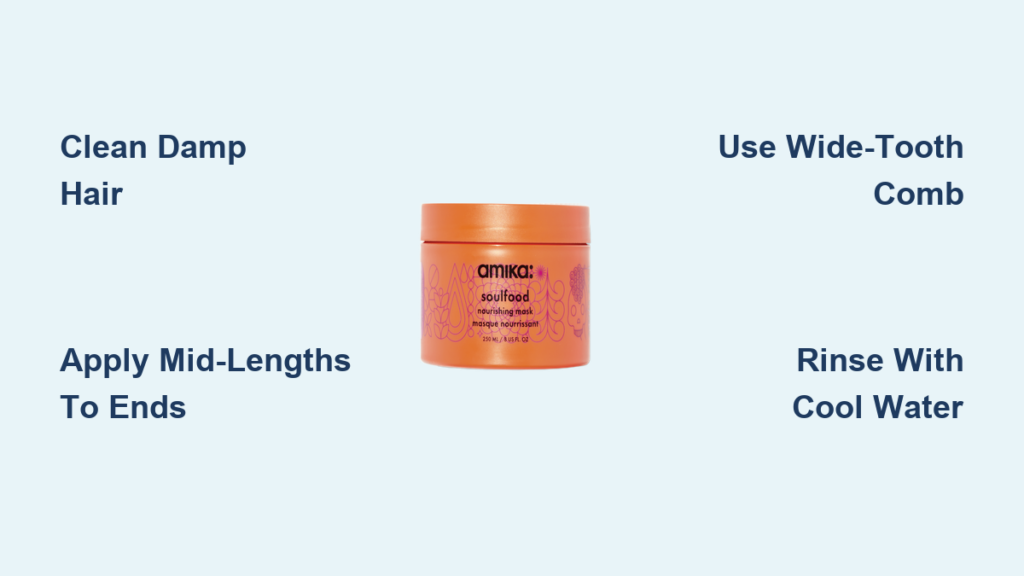
Use a wide-tooth comb or your fingers to detangle while hair is still coated with regular conditioner. This prevents snagging and breakage when applying the heavier mask.
Pro Tip: Use a cheap rinse-out conditioner to detangle first. It saves your expensive deep conditioner for actual treatment.
Section Hair for Full Coverage
Thick, curly, or long hair needs sectioning to ensure every strand gets treated evenly.
Divide Into 2 to 6 Sections
Clip hair into 2 to 6 sections depending on thickness. Fine hair may only need 2 sections, while thick or coily textures benefit from 4 to 6 sections. This prevents missed spots and guarantees even distribution.
Expert Insight: For Type 4 kinky or coily hair, brushing during application with a leave-in conditioner brush improves product penetration through tight curls.
Apply Mask From Ends Up
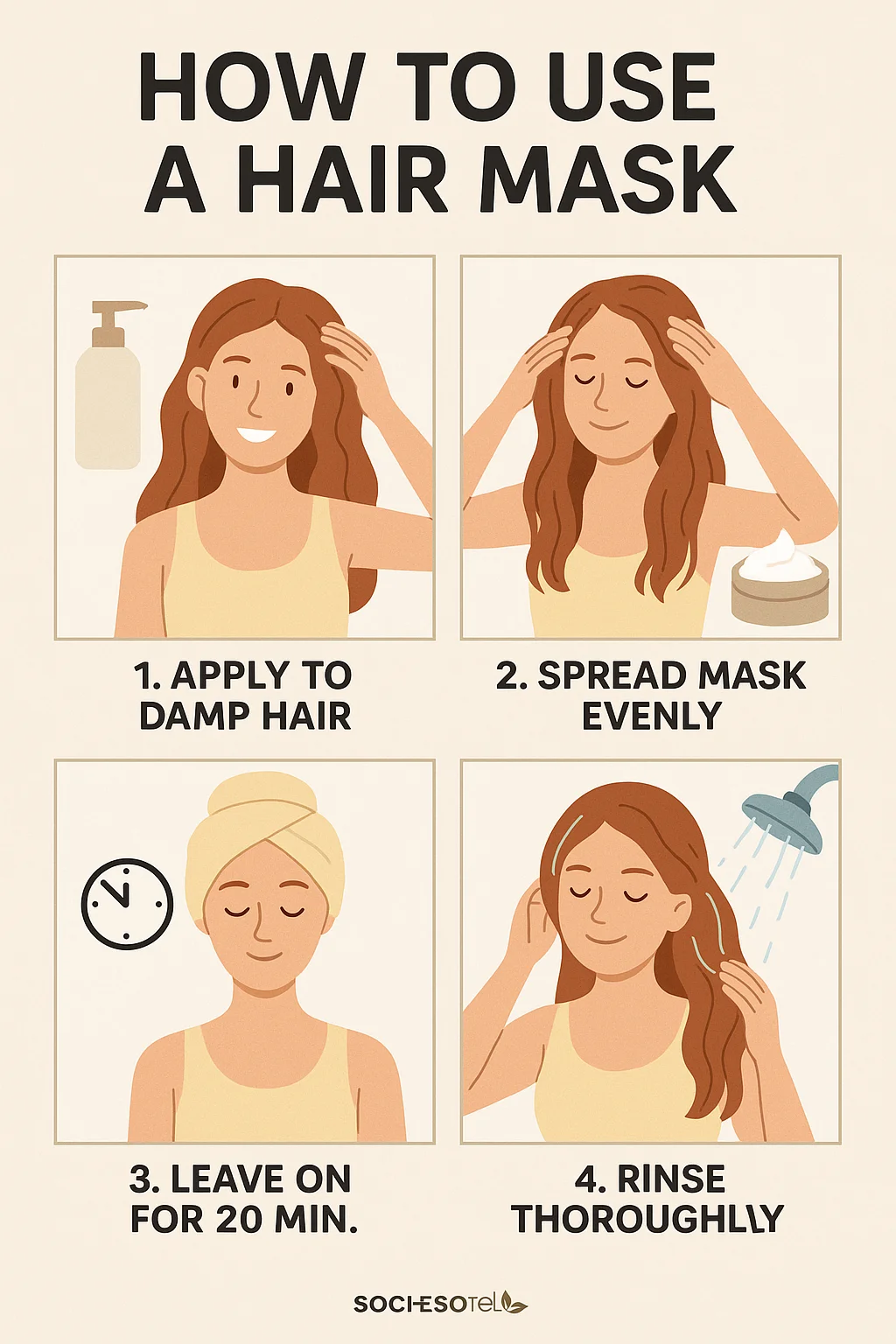
The ends of your hair are the oldest and most damaged, so they need the most attention.
Start at the Tips
Scoop a generous amount of mask and apply it starting at the ends, then work upward toward the mid-lengths. Use your fingers, a paddle brush, or wide-tooth comb to distribute evenly.
Avoid the Roots
Unless the product is specifically formulated for scalp health, do not apply near the roots or scalp. Doing so can cause greasiness, clog follicles, or lead to buildup.
Use Enough Product
Do not skimp. Apply liberally, especially if you have thick, long, or highly porous hair. You can always rinse out excess later.
Leave On for 20 to 40 Minutes
Time matters, but more is not always better when it comes to deep conditioning treatments.
Standard Treatment Duration
Most masks work best when left on for 20 to 40 minutes. This allows humectants, oils, and proteins to penetrate deeply without risking hygral fatigue.
Warning: Leaving a deep conditioner on too long, especially on wet hair, can cause hygral fatigue. This is where hair swells from over-absorbing moisture, leading to weakness and breakage.
Follow Label Instructions
Some masks are safe for overnight use, especially anhydrous oil-based ones, but water-based formulas should be rinsed within the recommended window.
Rule of Thumb: Never exceed 2 hours unless the product label says otherwise.
Boost Results With Heat
Heat opens the hair cuticle and dramatically increases ingredient absorption, especially for low-porosity or coarse hair.
Use a Shower Cap
Always cover hair with a plastic shower cap after application. It traps body heat and prevents the mask from drying out.
Try Warm Towel Wrap
Soak a towel in hot water, wring it out, and wrap it around your head for 10 to 20 minutes. The warmth softens the cuticle and enhances penetration.
Hooded Dryer or Steamer
For maximum effect, use a hooded dryer on low heat for 15 to 30 minutes. Alternatively, use a hair steamer for consistent, gentle heat that boosts hydration.
Evidence-Based Benefit: Heat increases blood flow to the scalp and improves delivery of repairing ingredients like keratin and hyaluronic acid.
Rinse Thoroughly With Cool Water
How you rinse determines how well moisture stays locked in.
Rinse With Lukewarm Water First
Begin rinsing with lukewarm water to remove most of the product. Avoid hot water because it opens the cuticle and strips moisture.
Finish With Cold Water
Switch to cool or cold water at the end. This seals the cuticle, locks in hydration, and boosts shine and smoothness.
Check for Residue
Run your fingers through your hair. If it still feels slippery, keep rinsing. Leftover product leads to buildup, dullness, and flatness.
Optional Double Rinse: If your hair feels coated, do a quick rinse with a mild sulfate-free shampoo after deep conditioning.
Post-Treatment Care Routine
What you do after rinsing affects how long the benefits last.
Gently Dry Hair
Pat hair dry with a microfiber towel or soft cotton T-shirt. Never rub because this causes frizz and breakage.
Apply Leave-In Conditioner
Especially for curly, dry, or high-porosity hair, follow up with a leave-in conditioner to maintain hydration and improve manageability.
Style Smartly
Use curl creams, gels, or mousses as needed. Deeply conditioned hair holds styles better and resists frizz.
Minimize Heat Styling
Give your hair a break from blow dryers, flat irons, or curling wands immediately after treatment to preserve moisture.
Best Frequency by Hair Type
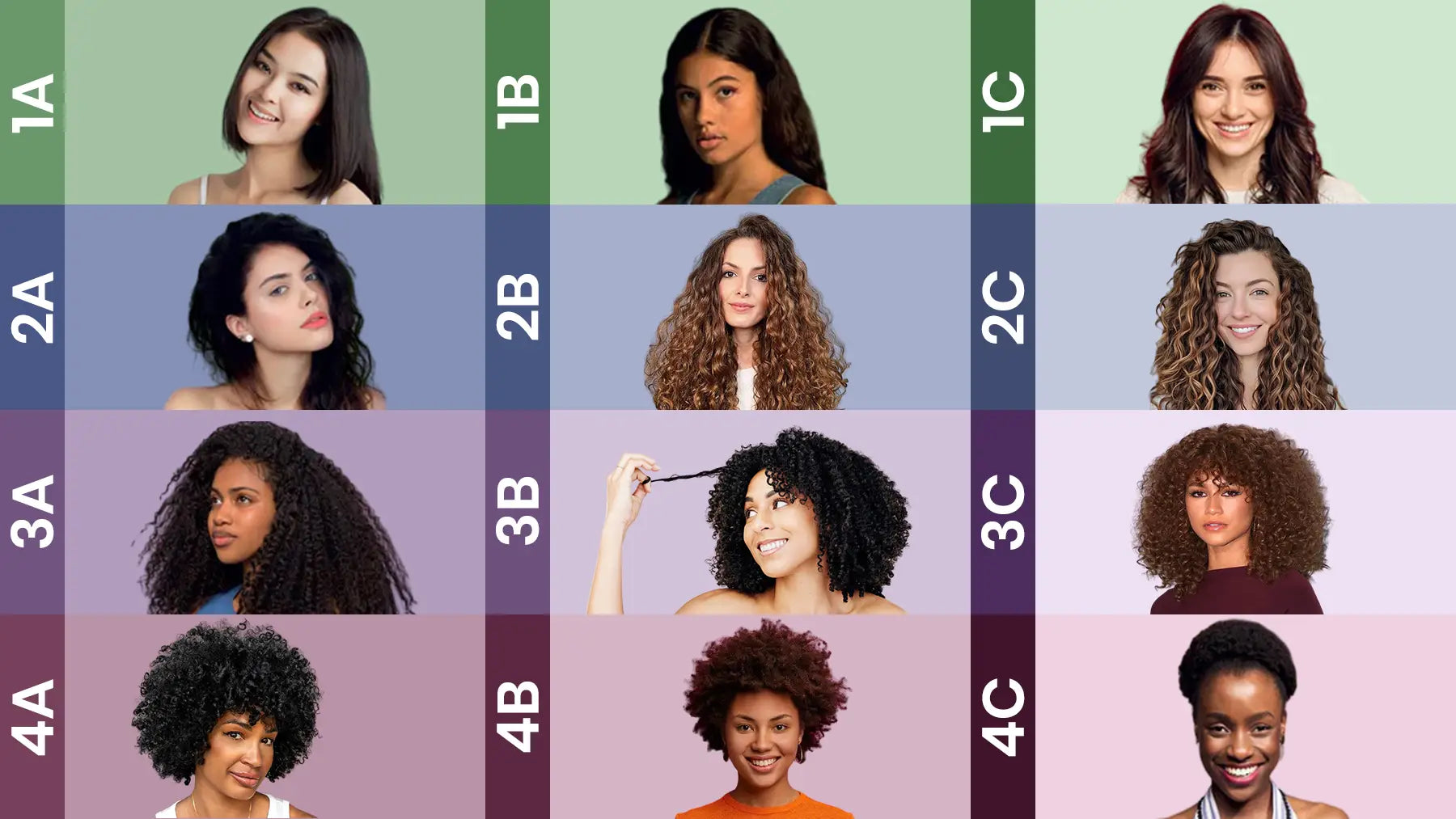
How often you deep condition depends on your hair is needs, not a one-size-fits-all rule.
Weekly for Damaged or Textured Hair
These hair types lose moisture quickly and need consistent reinforcement.
• Chemically treated hair (dyed, bleached, relaxed): weekly
• Heat-styled regularly: weekly
• Coily or kinky (Type 3 to 4): weekly or bi-weekly
• High porosity hair: weekly
Every 2 Weeks for Normal Hair
Healthy, low-maintenance hair benefits from deep conditioning every other week to maintain strength and shine.
Every 3 Weeks for Fine Hair
Fine or thin hair can become weighed down easily. Limit deep conditioning to every 2 to 3 weeks and use lightweight, silicone-free formulas.
Consistency Tip: Like skincare or fitness, results build over time. Stick with it for 4 to 6 weeks to see visible improvement.
Choose the Right Ingredients

Not all masks are created equal. Look for formulations with penetrating, functional ingredients, not just surface-coating silicones.
Must-Have Active Ingredients
• Coconut oil: penetrates shaft, reduces protein loss
• Hyaluronic acid: binds moisture deep in cortex
• Shea butter: moisturizes and protects cuticle
• Hydrolyzed keratin: repairs damaged areas in cortex
• Cetyl alcohol: adds slip, smooths cuticle
• Avocado oil: deeply nourishes with vitamins A, D, E
• Bentonite clay: clarifies while boosting hydration
Avoid: Products high in dimethicone or mineral oil because they coat but do not nourish.
Ideal Formula: A balanced blend of water, penetrating oils, humectants, and proteins.
DIY Deep Conditioning Recipes
Make your own natural, customizable mask at home with simple ingredients.
Moisture-Rich Honey and Olive Oil Mask
• 2 tablespoons honey
• 2 tablespoons olive oil
• Mix and apply to damp hair
• Leave for 20 to 40 minutes, rinse with lukewarm water
• Best for: dry, frizzy hair
Why it works: Honey is a powerful humectant, and olive oil improves elasticity.
Strength-Building Egg and Coconut Oil Mask
• 1 egg yolk
• 2 tablespoons melted coconut oil
• Apply, leave 15 to 20 minutes, rinse with cool water
• Best for: weak, breaking hair
Caution: Do not use hot water because it cooks the egg.
Shine-Enhancing Avocado and Banana Mask
• 1/2 mashed avocado
• 1/2 mashed banana (or 2 tablespoons mayonnaise)
• Apply, leave 20 minutes, rinse thoroughly
• Best for: dull, lifeless hair
All-Purpose Nourishing Mask
• 1/2 avocado
• 1 egg
• 1 tablespoon olive oil
• Blend, apply, rinse after 20 to 30 minutes
• Best for: general repair and hydration
Patch-Test First: Avoid if allergic to eggs or nuts.
Common Mistakes to Avoid
Even with the best product, poor technique ruins results.
Applying to Dry Hair
Dry hair repels moisture. Always apply to damp, clean hair for proper absorption.
Skipping Detangling
Tangled hair means uneven coverage. Always detangle before applying.
No Heat for Low-Porosity Hair
Tight cuticles resist moisture. Use heat (shower cap plus warm towel) to open the cuticle.
Over-Leaving the Mask
More time does not equal better results. Risk hygral fatigue, which causes swollen, weak hair prone to breakage.
Rinsing With Hot Water
Hot water opens the cuticle and lets moisture escape. Always finish with cool water.
Over-Conditioning Fine Hair
This can make hair limp and flat. Use lighter formulas and limit frequency.
Special Tips by Hair Type

Tailor your routine for best results based on your specific hair type.
Coily or Kinky Hair (Type 3 to 4)
• Deep condition weekly
• Use rich, buttery formulas with cetyl alcohol for slip
• Detangle before application
• Always use heat for deeper penetration
• Focus on ends and new growth zones
Fine or Thin Hair
• Use lightweight, silicone-free masks
• Apply only from mid-lengths to ends
• Limit time to 15 to 20 minutes
• Rinse thoroughly to avoid flatness
High Porosity Hair
• Absorbs fast but loses moisture quickly
• Use protein-rich masks to strengthen
• Seal with jojoba or grapeseed oil after rinsing
Low Porosity Hair
• Cuticle is tightly closed, so moisture has difficulty entering
• Use heat during treatment
• Choose liquid-based, lighter conditioners
• Avoid heavy oils that sit on top
Frequently Asked Questions About Deep Conditioning Hair Masks
How long should I leave a deep conditioning hair mask on?
Most deep conditioning masks work best when left on for 20 to 40 minutes. This allows the active ingredients to penetrate the hair cortex without causing hygral fatigue, which can lead to weak, breakage-prone hair. Always check the product label, as some formulas are safe for longer wear.
Can I use a deep conditioning mask on fine hair?
Yes, but use caution. Fine hair becomes weighed down easily, so choose lightweight, silicone-free formulas. Apply only from mid-lengths to ends, and limit processing time to 15 to 20 minutes. Rinse thoroughly to avoid a flat, limp appearance.
What happens if I leave the mask on too long?
Leaving a deep conditioner on for more than 2 hours, especially on wet hair, can cause hygral fatigue. This is where the hair shaft swells from absorbing too much moisture, resulting in weak, mushy strands prone to breakage. Stick to the recommended time unless the product specifically states it is safe for extended wear.
Should I shampoo before or after applying a deep conditioning mask?
Shampoo before applying the mask. Clean hair allows better penetration of the deep conditioning ingredients. The exception is if you are doing a pre-poo treatment, where you apply oil to dry hair before shampooing to protect against protein loss.
How often should I deep condition my hair?
Weekly deep conditioning is ideal for chemically treated, heat-styled, or coily hair types. Normal hair benefits from treatment every 2 weeks, while fine hair should limit use to every 2 to 3 weeks to avoid weighing it down.
Can I make an effective deep conditioning mask at home?
Yes, simple DIY masks work well. Honey and olive oil create a moisturizing treatment. Egg yolk and coconut oil provide protein for strengthening. Avocado and banana add shine. These natural options offer customizable hydration without synthetic additives.
Key Takeaways for Using Deep Conditioning Hair Mask
Deep conditioning is a powerful, science-backed method to restore moisture, strength, and vitality to your hair. The key lies in proper technique: apply to damp, clean, detangled hair, focus on damaged ends, use heat enhancement when needed, and rinse thoroughly with cool water to seal the cuticle.
Choosing the right ingredients matters more than brand names. Look for penetrating oils like coconut and avocado, humectants like hyaluronic acid, and proteins like hydrolyzed keratin. Avoid products that rely solely on silicones because they coat the surface without providing real nourishment.
Consistency delivers results. Like fitness or skincare, weekly deep conditioning builds over time. Stick with your routine for 4 to 6 weeks to see visible improvement in softness, shine, and strength. Pair deep conditioning with trims, protective styles, and minimal heat exposure for the best long-term hair health.