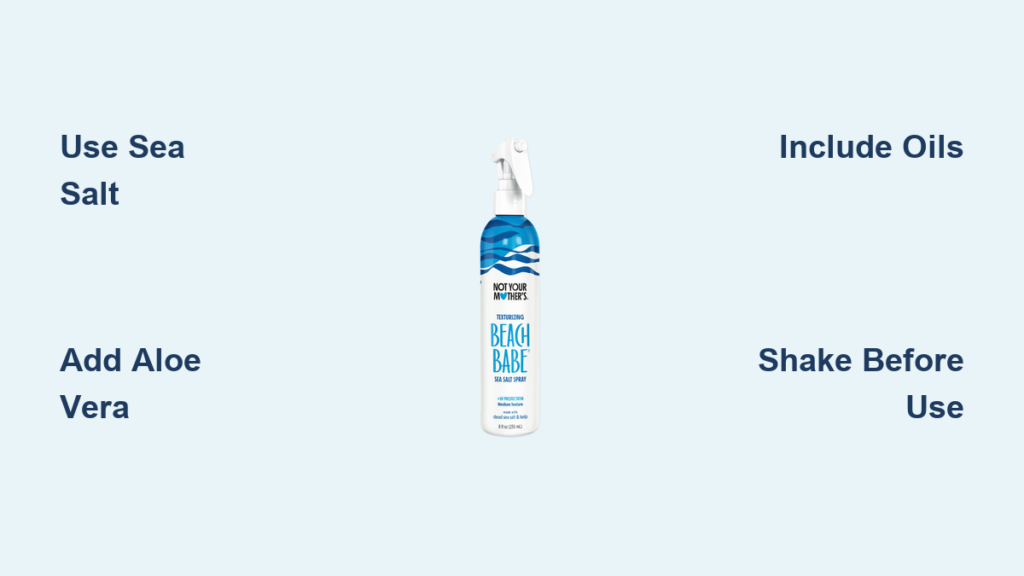
You’ve seen that effortlessly tousled, beachy look on Instagram and wondered how people get those natural waves without a trip to the ocean. The secret is salt spray, and you can make it at home in under ten minutes using simple ingredients you probably already have in your kitchen. Making salt spray for hair gives you complete control over what goes on your strands, letting you avoid the alcohol and synthetic additives found in many commercial products while saving money at the same time.
This guide covers everything you need to know: the best ingredients for your specific hair type, two foolproof mixing methods, customization tips for different textures, and exactly how to apply it for soft waves, lasting volume, or defined curls.
Choosing the Right Base Liquid
The foundation of any salt spray is the liquid that carries ingredients through your hair. Your choice affects shelf life, scalp health, and overall performance.
Distilled or Filtered Water Works Best
For most recipes, distilled water is ideal because it’s free of impurities and reduces bacterial growth. If you don’t have distilled water, use filtered water that you’ve heated and then cooled to eliminate chlorine and microbes. Avoid using tap water long-term, especially in areas with hard water, as mineral buildup can dull your hair over time.
Tea Bases Add Extra Benefits
You can swap part of the water with these alternatives:
- Chamomile tea gently lightens blonde or gray tones while soothing the scalp
- Black tea slightly darkens brunettes and contains tannins that may strengthen hair
- Rosemary hydrosol stimulates circulation and promotes shine
Note that tea-based sprays last only one to two weeks and must be refrigerated due to their organic content.
Selecting Your Salt Blend for Texture

Salt is the star ingredient that creates grit, separation, and volume by temporarily lifting the hair cuticle. Not all salts work the same way.
Sea Salt for Classic Beachy Texture
Sea salt adds that classic beachy grit and enhances wave formation. Use one to two tablespoons per eight to twelve ounces of liquid. Fine grain dissolves faster and spreads more evenly, while coarse grain gives stronger texture but may leave residue if not fully dissolved.
Epsom Salt for Volume Without Crunch
Epsom salt works especially well for fine, flat, or straight hair because magnesium sulfate adds lift without stiffness. Use one to two tablespoons per ten ounces. This creates soft volume ideal if you want body but dislike dryness or stiffness.
Himalayan Pink Salt for Sensitive Scalps
Himalayan pink salt contains trace minerals like iron and potassium, making it milder and less drying. Use half a teaspoon to one tablespoon. It’s best for dry or sensitive scalps and often used in place of sea salt for a softer effect.
Combine Salts for Balanced Results
Many users blend one tablespoon sea salt with one tablespoon Epsom salt to get strong texture from sea salt and lightweight volume from Epsom salt with minimal dryness when paired with oils.
Adding Moisture to Prevent Damage
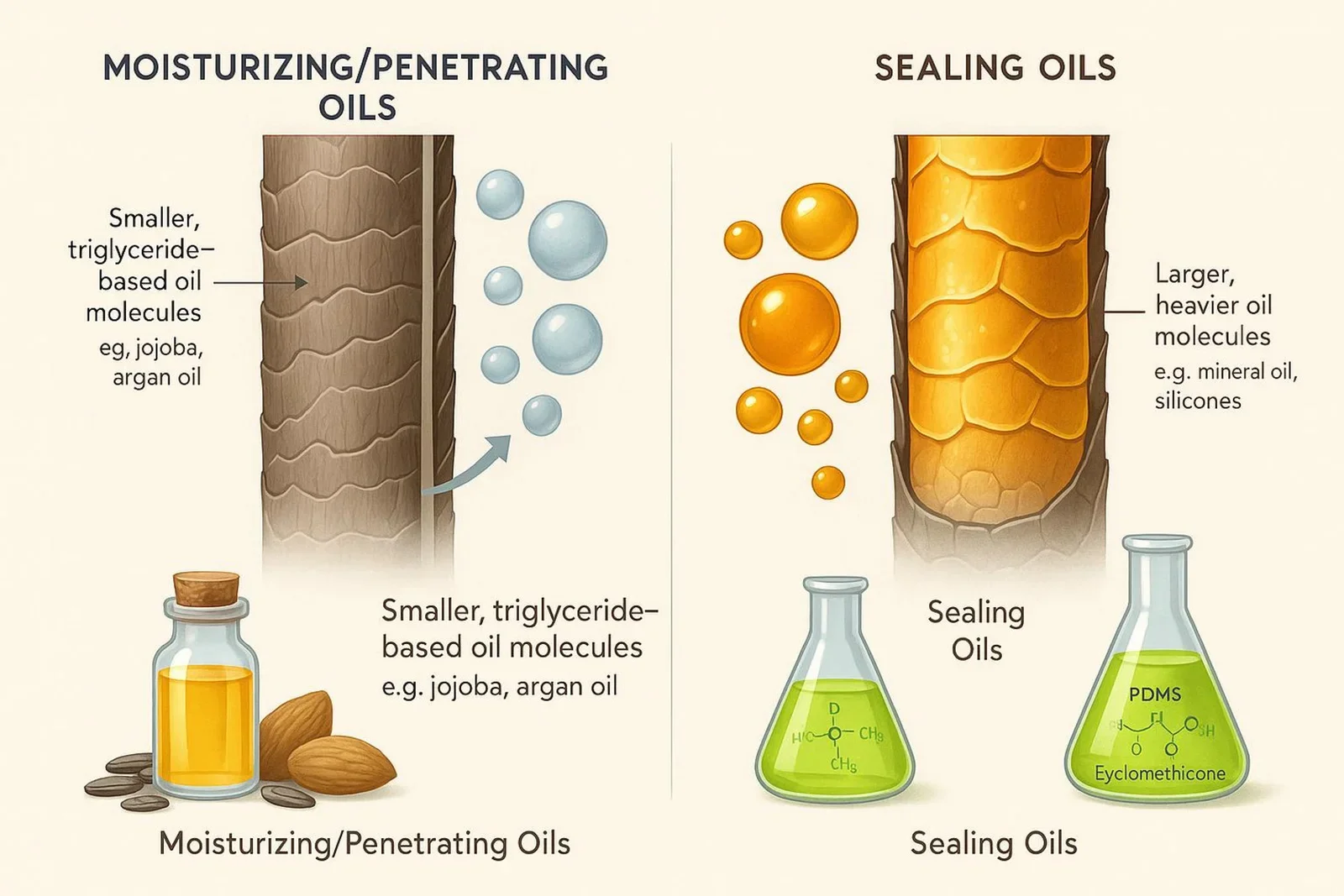
Salt draws moisture from the air and your hair. Without balancing hydrators, repeated use causes brittleness, frizz, and split ends. Always include at least one moisturizing agent.
Lightweight Oils Protect and Shine
Add one to two teaspoons of carrier oil to seal in moisture and soften texture. Argan oil works for all hair types and adds shine. Coconut oil deeply conditions dry, thick, or curly hair. Jojoba oil mimics natural scalp oils, making it ideal for oily or damaged hair. Castor oil is thick, so use just one to two drops for thin or thinning hair. Olive oil nourishes very dry hair but is heavier.
Melt coconut oil before mixing, and warm water helps oils blend smoothly.
Aloe Vera Gel Controls Frizz
Add one tablespoon of aloe vera gel for its natural humectant properties that enhance curl definition and reduce frizz. Aloe also improves spray consistency, helping it coat strands evenly.
Leave-In Conditioner Adds Softness
Mix in one to two teaspoons of leave-in conditioner, especially for dry, damaged, or color-treated hair. It counters salt’s drying effect and improves manageability. Choose water-based formulas to avoid clogging the spray nozzle.
Customizing With Essential Oils
Want a spa-like scent or scalp benefits? Add essential oils, but always dilute properly.
Top Choices and Their Effects
- Lavender offers a floral scent and calms the scalp
- Lemon provides citrus freshness but use cautiously near sun exposure
- Orange delivers sweet, uplifting aroma perfect for summer
- Tea tree offers medicinal scent with antifungal properties that fight dandruff
- Rosemary provides herbaceous scent that may support hair growth
- Peppermint gives a cool, invigorating sensation that stimulates the scalp
Use five to ten drops per ten to twelve ounces of spray. Warning: citrus oils increase sun sensitivity, so avoid direct UV exposure after using them.
Gathering Your Equipment
You don’t need fancy tools. A spray bottle of ten to twelve ounces with a fine mist nozzle ensures even distribution without soaking your hair. Glass bottles are preferred because they’re non-reactive and eco-friendly, though BPA-free plastic works too. You can repurpose bottles from toners or cleaners just wash them thoroughly first. Optional tools include a funnel, heat-safe bowl, and whisk.
Mixing It Right: Two Simple Methods
How you combine ingredients matters, especially when using oils, gels, or conditioners.
Method One: Shake and Go
This method works best for beginners or simple recipes without coconut oil or thick gels.
- Pour one cup of warm distilled water into the spray bottle
- Add one tablespoon sea salt and one tablespoon Epsom salt
- Cap and shake for two to three minutes until fully dissolved
- Add one teaspoon argan oil, one tablespoon aloe vera gel, and five to ten drops essential oil
- Shake again until smooth
Method Two: Pre-Mix in Bowl
This method ensures even blending, ideal for richer formulas with coconut oil or gels.
- Heat ten to twelve ounces of water to near-boiling but do not boil
- Pour into a heat-safe bowl and stir in both salts until dissolved
- Add one tablespoon melted coconut oil, one tablespoon aloe vera gel, and one teaspoon leave-in conditioner
- Whisk in essential oils
- Let cool slightly, then funnel into a clean spray bottle
Always shake well before each use because separation is normal.
Tailoring the Formula to Your Hair Type

One size doesn’t fit all. Adjust your recipe based on your hair’s needs.
Fine or Thin Hair
Use only Epsom salt for lift without weight. Apply mainly at the roots. Skip heavy oils and use jojoba or argan with a maximum of one teaspoon. Avoid conditioner in the mix.
Thick or Coarse Hair
Use the full salt blend with one tablespoon each. Add coconut oil and aloe for manageability. Include one tablespoon of water-based gel for extra hold.
Wavy or Curly Hair
Focus on moisture balance using one tablespoon sea salt, Epsom salt, aloe, and argan oil. Add leave-in conditioner to reduce frizz. Apply to damp hair, scrunch, and air dry for natural bounce.
Dry or Damaged Hair
Reduce salt to one tablespoon total, preferably Epsom salt. Boost moisture with two teaspoons oil, one tablespoon aloe, and one teaspoon conditioner. Limit use to once or twice per week.
Oily Hair
Use a tea base like chamomile or black tea to help regulate oil. Apply only to mid-lengths and ends. Avoid oils or use just one drop of jojoba.
Short Hair
Use a light formula with one tablespoon Epsom salt and minimal oil. Spray lightly for texture, not waves. This works great for taming flyaways.
Applying Salt Spray for Best Results
How you use the spray determines the outcome.
Spray on Damp Hair for Waves
- Wash and towel-dry hair to damp
- Shake the bottle well
- Spray evenly from mid-lengths to ends
- Scrunch upward with hands or a microfiber towel
- Air dry or diffuse on low heat
Use on Dry Hair for Volume
- Shake well
- Focus spray at roots and crown
- Massage in with fingertips
- Blow-dry with a diffuser or brush upward
Refresh Second-Day Hair
- Lightly mist the entire head
- Scrunch or tousle with fingers
- Style as usual
This extends time between shampoos without washing.
Creating Long-Lasting Waves Overnight
Want camera-ready texture that lasts all day? Try this pro method.
- Wash hair at night
- Towel-dry to damp
- Apply salt spray evenly
- Braid into two pigtails or twist into a bun
- Sleep on it and let air dry
- Unravel in the morning and gently separate
Lightly re-spray and scrunch in the morning for extra texture if needed.
Storing Your Salt Spray Properly
Homemade sprays lack preservatives, so storage is key.
| Base Type | Shelf Life | Storage |
|---|---|---|
| Distilled water only | Up to one month | Refrigerate |
| With tea or oils | Two to four weeks | Refrigerate |
| With conditioner or hydrosol | Up to six months | Cool, dark cabinet |
Discard if the smell changes, liquid clouds, or mold appears. Make small batches of eight to twelve ounces and refrigerate, especially with tea, aloe, or oils.
Preventing Dryness and Damage
Salt can be drying with frequent use. Protect your hair with these habits.
Signs of Overuse
Watch for increased frizz, brittle ends, dullness, or scalp tightness.
Damage Prevention Tips
Always include oil or aloe in your formula. Use heat protectant if blow-drying. Deep condition once or twice weekly. Limit shampooing to twice per week. Never sleep with salt residue unless your hair is protected.
DIY sprays are less drying than commercial versions with alcohol, especially when balanced with oils.
Comparing DIY to Store-Bought Salt Spray
Why make your own? Here’s how DIY stacks up.
DIY salt spray costs about two dollars per ten ounces compared to ten to twenty-five dollars for commercial sprays. DIY versions use natural, customizable ingredients while commercial sprays often contain alcohol, parabens, and synthetic fragrance. Texture and volume are comparable, though commercial sprays have a slight edge in hold. DIY has a lower drying effect when you add oils. Customizability is high with DIY and nonexistent with commercial products. Shelf life is short for DIY, lasting weeks to six months, versus six to twelve months for store-bought. Environmental impact is lower with DIY using reusable bottles.
User feedback confirms DIY delivers natural-looking texture similar to high-end brands, especially for straight or thick hair. It lacks the crunch of strong-hold sprays but feels healthier.
Frequently Asked Questions About Making Salt Spray for Hair
How long does homemade salt spray last?
With a distilled water base, homemade salt spray lasts up to one month when refrigerated. If you add tea, oils, or aloe, use it within two to four weeks. Versions with conditioner or hydrosol can last up to six months in a cool, dark place.
Can I use regular table salt instead of sea salt?
Table salt is fine but dissolves differently and may not give the same texture. Sea salt and Epsom salt are specifically recommended for their texturizing and volumizing properties. Table salt is more refined and may be less effective.
Does salt spray work on straight hair?
Salt spray can add texture and waves to straight hair, especially when styled overnight in a braid or bun. Results are more pronounced on wavy or curly hair types, but straight hair can still benefit from added volume and grit.
How often should I use salt spray?
Use salt spray two to three times per week for normal or oily hair. For dry or damaged hair, limit use to once per week or less. Always balance with deep conditioning to prevent dryness.
Can I use salt spray on colored hair?
Yes, but use a gentler formula with Epsom salt instead of sea salt and add extra moisturizers like aloe and conditioning oils. Salt can be slightly drying, so follow with a deep conditioning treatment weekly.
Why does my salt spray feel gritty or leave residue?
This happens when salt doesn’t fully dissolve or when you use too much. Always dissolve salts in warm water and shake before each use. Start with one tablespoon total salt per cup of water and adjust as needed.
Key Takeaways for Making Salt Spray at Home
Making salt spray for hair is simple, affordable, and completely customizable. Start with the basic formula of one cup warm distilled water, one tablespoon sea salt, one tablespoon Epsom salt, one tablespoon aloe vera gel, one teaspoon argan oil, and five to ten drops of your favorite essential oil. Adjust the salt amount based on your hair type, add more moisture for dry hair, and experiment with different essential oils for scent variety.
Shake well before every use, store in the refrigerator for longest freshness, and pair with deep conditioning treatments to keep your hair healthy. With the right balance of salt, water, and moisturizers, you can achieve soft waves, lasting volume, and healthy-looking texture without harsh chemicals.