

You have just noticed a small dent in your car. Maybe it came from a shopping cart, a hailstorm, or a careless driver in a parking lot. Before you book an expensive repair appointment, you might have heard about a surprising DIY fix: using a hair dryer to pop out that dent. It sounds almost too simple to work, but under the right conditions, it actually can be effective, especially on plastic bumpers. However, results vary dramatically depending on the material, the type of dent, and the technique you use.
This guide breaks down exactly how to fix a car dent with a hair dryer, which dents respond best to this method, and when you should skip the DIY route entirely. You will learn the science behind thermal expansion, step-by-step repair techniques, common mistakes to avoid, and why some popular methods like combining heat with canned air often fail or risk damaging your paint. The heat-only method works reliably on plastic bumpers, but the popular heat-and-freeze trick for metal dents is largely ineffective and risky. Let us separate myth from reality and help you decide if this fix is right for your vehicle.
Fix Plastic Bumper Dents with Heat

Plastic bumpers on modern vehicles are flexible and heat-responsive, making them ideal candidates for hair dryer dent repair. Unlike metal, many bumper materials have shape memory, meaning they can return to their original form when heated and gently manipulated. This method is fast, cheap, and paint-safe, provided you follow the correct steps and avoid overheating the material.
Heat the Dent Properly
Start by cleaning the dented area with soap and water to remove dirt, wax, or grime. A clean surface ensures even heat distribution and prevents contaminants from baking into the plastic during the repair process.
Set your hair dryer to the highest heat setting and hold it 2 to 3 inches away from the surface. Move in slow, circular motions to heat the entire dent and surrounding area evenly. Focus on the center first, then expand outward.
• Black bumpers absorb heat faster, and 30 to 45 seconds may be enough.
• Light-colored bumpers reflect heat, and you may need 60 to 90 seconds.
• Never hold the dryer in one spot for more than 5 seconds, as this can warp or melt the plastic.
Test the softness by gently pressing with a gloved finger. When the plastic feels pliable but not sagging, it is ready for the next step.
Push the Dent from Behind
If you can access the backside of the bumper, which is common on rear bumpers near taillights or under trim, now is the time to push the dent out.
Use a soft pry tool, rubber glove, or your fingers to apply steady, even pressure from behind. Do not snap or jerk suddenly, as this could crack the plastic. If you cannot reach behind the bumper, try pressing from the front with a smooth, rounded object like a wooden spoon handle wrapped in a microfiber cloth.
Let the plastic cool slightly for 10 to 15 seconds before pushing. This gives it enough rigidity to hold its new shape without springing back immediately.
Let It Cool Naturally
After reshaping the dent, allow the area to cool to ambient temperature. Do not use water, ice, or canned air to cool it quickly, as this can cause stress cracks or warping in the plastic.
Once cooled, inspect the surface under angled light. If minor ripples remain, lightly buff with a plastic polish or rubbing compound to restore smoothness. For scratches or paint imperfections, apply a matching touch-up paint or clear coat.
This method works on 80% or more of shallow, uncreased plastic dents and often leaves no visible trace when done correctly.
Avoid the Heat-and-Freeze Method on Metal
You have probably seen viral videos claiming you can fix metal dents by heating with a hair dryer and then blasting the area with inverted canned air, which sprays liquid refrigerant at extremely cold temperatures. The idea is that rapid contraction will pop the dent out. Despite its popularity, this method rarely works and carries a high risk of paint damage.
Why Thermal Shock Fails on Metal
The theory relies on thermal expansion and contraction. Heat the metal to expand it, then freeze it to contract rapidly, creating internal stress that reverses the dent. However, real-world testing shows this does not work reliably.
Controlled experiments on steel and aluminum panels showed no dent removal after multiple heating and cooling cycles. Aluminum has no elastic memory, so it will not snap back like steel, even if heated and cooled. If the metal has been stretched beyond its elastic limit, which is common in most dents, no amount of thermal shock will restore it.
One user summarized it perfectly, saying they wasted two hours trying the method, then spent 75 dollars to have a pro remove the dent in 10 minutes.
Risks of Using Canned Air Upside Down
Spraying canned air upside down releases liquid propellant, which is extremely cold and can crack or craze the paint due to thermal shock. The liquid can cause frostbite if it contacts your skin. It can also leave moisture residue that leads to rust over time. Using this method can void paint warranties or damage factory finishes.
Even if the dent does not pop, you could end up with a larger cosmetic issue than you started with. The heat-and-freeze method is not recommended for painted metal panels. It is ineffective, risky, and not supported by evidence.
Know Which Dents Can Be Fixed
Not all dents are created equal. Using a hair dryer only makes sense for specific types of damage, and attempting it on the wrong dent wastes your time and potentially damages your car.
Suitable for Heat-Only Repair
These dents respond well because the material has not been permanently deformed, and the paint remains intact.
• Shallow dents in plastic bumpers
• Minor door dings with intact paint
• Uncreased, flexible dents under 2 inches wide
• Bumpers with backside access for pushing
Not Suitable for DIY Heat Repair
These types of damage require professional tools and techniques.
• Creased or sharp-edged dents, as metal has been stretched
• Dents with cracked paint, which indicates metal fatigue
• Aluminum body panels on hoods or trunks, as they have no memory to pop back
• Hail dents on metal, which are too numerous and deep
• Dents near seams or reinforcements, as restricted movement prevents popping
• Older cars with brittle paint, which has a high risk of cracking
If the dent feels springy and the paint is unbroken, it might be fixable. If it is sharp, deep, or cracked, skip the hair dryer entirely.
Use Safer Alternatives to Canned Air
If you are determined to try a cooling method, avoid canned air and dry ice, as they are too harsh for delicate auto finishes.
Better Cooling Options
• Compressed air dusters with safety caps, which prevent accidental inversion
• Cold water in a spray bottle for mild cooling without thermal shock
• Ice pack wrapped in cloth for controlled, gradual cooling
However, cooling is rarely necessary. For plastic bumpers, natural cooling works best. For metal dents, cooling will not fix the dent regardless of the method used.
Compare DIY vs. Professional Repair
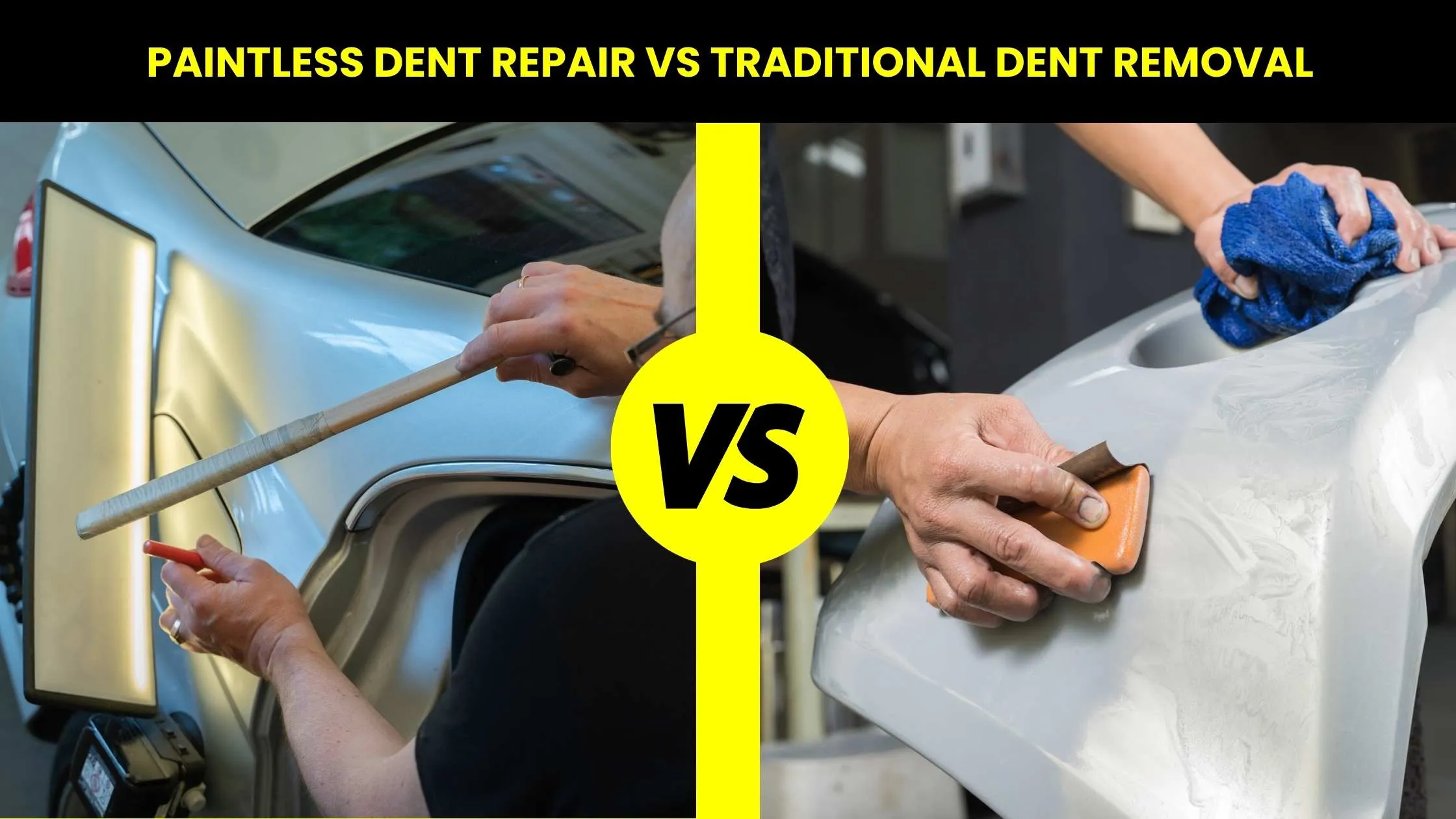
Fixing a dent yourself might save money, but it is not always the best choice. Understanding the options helps you make an informed decision.
Paintless Dent Repair (PDR) The Pro Standard
Professionals use Paintless Dent Repair, a technique where they gently massage the dent from behind using specialized tools. This method has an 80% to 90% success rate for eligible dents. It takes 10 to 30 minutes per dent and costs 50 to 150 dollars. The process preserves factory paint and often comes with a warranty.
DIY vs. PDR Quick Comparison
• Hair dryer on plastic only: works on plastic, does not work on metal, low damage risk, 5 to 15 minutes, costs nearly nothing, high success rate
• Heat-and-freeze on metal: does not work on plastic, rarely works on metal, high damage risk, 30 minutes or more, costs about 10 dollars, less than 30% success rate
• Professional PDR: works on plastic, works on metal, very low damage risk, 10 to 30 minutes, costs 50 to 150 dollars, over 90% success rate
For plastic dents, DIY with a hair dryer is a smart choice. For metal dents, professional PDR is faster, safer, and more reliable.
Prevent Damage During Repair
Even simple methods can go wrong if you are not careful. Knowing the common pitfalls helps you avoid making the problem worse.
Avoid These Common Mistakes
• Holding the hair dryer too close, which can melt plastic or blister paint
• Using a heat gun instead of a hair dryer, as it is too hot and often ruins paint
• Applying canned air to painted surfaces, which has a high risk of cracking
• Trying to fix creased dents, as these need mechanical pulling
• Skipping the test on a hidden area, as you should always test first on an inconspicuous spot
Safety First
• Wear heat-resistant gloves when handling hot plastic
• Use safety goggles if using any cooling agents
• Work in a well-ventilated area, as canned air propellants are inhalation hazards
• Never puncture or heat compressed air cans, as they can explode
When to Call a Pro
Do not risk making the problem worse. Seek professional help if the dent is on a metal body panel with intact paint, which is ideal for PDR. Also call a pro if the paint is chipped, cracked, or scratched, or if the dent is deep, creased, or larger than 2 inches. Your car may have aluminum panels common on luxury models, which require professional attention. If the dent was caused by someone else, DIY attempts may void insurance claims.
Many PDR shops offer free estimates and can fix small dents in under 30 minutes. It is often worth the small cost for guaranteed results.
Final Tips for Best Results
• Stick to plastic bumpers, as they are the only reliable candidates for hair dryer repair
• Use low, steady heat, and move the dryer constantly to avoid hot spots
• Push gently from behind, as force can cause new damage
• Let it cool naturally, and avoid ice, water, or canned air
• Polish if needed, using plastic cleaner to remove fine swirls
• Know when to stop, and if it is not working after two tries, it will not work
Frequently Asked Questions About Fixing Car Dents with a Hair Dryer
Does the hair dryer method work on all types of dents?
No, the hair dryer method only works reliably on plastic bumpers with shallow, uncreased dents. It does not work on metal body panels, creased dents, aluminum panels, or hail damage. The success rate on plastic bumpers is around 80% when done correctly, but metal dents require professional repair.
Can I use a heat gun instead of a hair dryer for better results?
No, you should never use a heat gun for dent repair. Heat guns produce temperatures up to 538 degrees Celsius, which will melt plastic, blister paint, and cause permanent damage. Hair dryers produce 80 to 150 degrees Celsius, which is enough to soften plastic bumpers without damaging them.
How long should I heat the dent with a hair dryer?
Heat the dent for 30 to 90 seconds, depending on the color of the bumper. Black bumpers absorb heat faster and need 30 to 45 seconds. Light-colored bumpers reflect heat and may need 60 to 90 seconds. Never hold the dryer in one spot for more than 5 seconds to avoid melting or warping the plastic.
Why does the heat-and-freeze method not work on metal?
The heat-and-freeze method fails on metal because metal does not have shape memory like plastic does. When metal is dented, it is often stretched beyond its elastic limit, meaning it cannot return to its original shape through thermal changes alone. Additionally, aluminum has no elastic memory at all, so thermal shock methods are completely ineffective on aluminum panels.
Is it safe to use canned air upside down on car paint?
No, it is not safe to use canned air upside down on car paint. The liquid propellant at -51 degrees Celsius can crack, craze, or delimate the paint due to thermal shock. It can also leave moisture that leads to rust over time. This method risks causing more damage than the original dent.
When should I choose professional dent repair over DIY?
Choose professional Paintless Dent Repair when the dent is on a metal body panel, when the paint is cracked or chipped, when the dent is deep or creased, when your car has aluminum panels, or when the dent was caused by someone else and you need to preserve insurance claims. Professional PDR costs 50 to 150 dollars but has a 90% success rate and preserves your factory paint.
Key Takeaways for Fixing Your Car Dent
A hair dryer can fix small dents, but only on plastic bumpers and only when done carefully. The popular heat-and-freeze method for metal dents is not effective and risks damaging your paint. For metal dents, professional Paintless Dent Repair is faster, safer, and more reliable. Remember to test on an inconspicuous area first, use steady heat without holding the dryer in one spot, and let the plastic cool naturally without ice or canned air. Save the hair dryer for your hair and the dent fixing for the experts when it matters.


