
Most cats hate water, and for good reason. After a bath, being wet doesn’t just make them uncomfortable; it can actually put their health at risk. Leaving your cat damp can lead to skin infections, hypothermia, and even respiratory illness, especially in kittens, seniors, or long-haired breeds. That’s why knowing how to dry a cat with a hair dryer the right way is essential. But here’s the catch: a standard human hair dryer can do more harm than good. The loud noise and intense heat can terrify your cat, damage their sensitive skin, or cause long-term fear of grooming.
The good news is that with the right tools, techniques, and patience, you can dry your cat safely and stress-free. This guide reveals exactly how to dry a cat with a hair dryer without panic, burns, or trauma. You’ll learn the safest equipment options, step-by-step drying methods, and expert-approved tricks to keep your cat calm. Whether you’re dealing with a Persian after a bath or a kitten caught in the rain, these proven strategies will help you get the job done right while keeping your cat dry, healthy, and happy.
Choose the Right Drying Equipment

Selecting the proper drying equipment is the most critical decision you’ll make when learning how to dry a cat with a hair dryer. The wrong tool can cause auditory trauma, burns, or lasting anxiety.
Use a Pet-Specific Hair Dryer
Standard human hair dryers emit 85–95 dB of noise, which is louder than a lawnmower, and blow air up to 140°F, far too hot for a cat’s sensitive skin. A pet-optimized dryer is the safest choice. These units run at 60–65 dB, similar to a normal conversation, and maintain a safe 85–95°F airflow within your cat’s comfort zone. Look for models with adjustable fan speeds, cool-air settings, and overheat protection. These features let you customize drying while minimizing stress and burn risk.
Try a High-Velocity Dryer on Cool
Professional groomers often use high-velocity blow dryers to dry cats quickly and thoroughly. These tools use powerful, room-temperature air to penetrate the undercoat without heat. When used correctly, they’re safe and efficient, especially for long-haired breeds. Always remove the cone nozzle and use a flat or water-peeler attachment for better control. Keep the dryer moving and never hold it closer than 6 inches from the skin. Use only on non-heated settings to avoid accidental overheating.
Consider a Dryer Box for Anxious Cats
If your cat panics at the sight of a dryer, a cage dryer or drying box like the AirSalon Max by Petkit may be the best solution. These enclosed units circulate warm, gentle air evenly around the cat without direct blasts. The transparent design lets your cat see you, and features like soft LED lighting, antibacterial coating, and a petting door help reduce fear. Set the temperature to 85–90°F, start with short cycles of 20–30 minutes, and offer treats inside to build positive associations.
Avoid Standard Human Hair Dryers
While it’s technically possible to dry a cat with a regular hair dryer, it’s strongly discouraged. The extreme noise can trigger auditory trauma and panic, while high heat settings increase the risk of burns, especially on thin-furred areas like the belly and inner thighs. Even on cool mode, many human dryers are too loud and intense for cats. If you must use one, keep it on cool setting only, hold it 12 inches away, and never force your cat to endure it. If they show signs of stress, stop immediately.
Prepare for Drying Before the Bath
Proper preparation before the bath makes drying smoother and safer for both you and your cat.
Trim Nails Ahead of Time
Wet, anxious cats are more likely to scratch. Trim your cat’s nails before the bath to protect yourself and reduce injury risk during drying. Use a pet nail clipper and only cut the clear tip, avoiding the pink quick. If your cat resists, file the nails instead or ask your vet for help.
Brush Thoroughly Before Wetting
Brushing before bathing removes tangles, loose fur, and debris, making drying faster and easier. Use a slicker brush to lift the coat and work out mats. For long-haired cats, gently pat or lift the fur against growth to break up clumps. This step prevents moisture from getting trapped in matted sections, which can lead to skin irritation or infection.
Start with Effective Towel Drying
Towel drying removes the majority of moisture before you even turn on a dryer, making the process faster and less stressful.
Use the Burrito Method for Maximum Absorption
Immediately after the bath, wrap your cat in a high-absorbency towel using the burrito method. Lay the towel flat, place your cat in the center, fold the top over their back, and wrap the sides snugly around their body. Hold gently for 1–2 minutes to soak up surface moisture. Use 2–3 dry towels if needed, especially for long-haired cats. For kittens or cats with sensitive skin, paper towels may be more effective and less irritating than cloth.
Avoid Rubbing: Pat or Squeeze Instead
Never rub your cat’s fur with a towel. This causes static, tangling, and discomfort. Instead, press or squeeze the towel against the coat to absorb water. Work from head to tail, paying extra attention to the underbelly, legs, and base of the tail, areas that stay wet the longest.
Protect Sensitive Areas During Drying
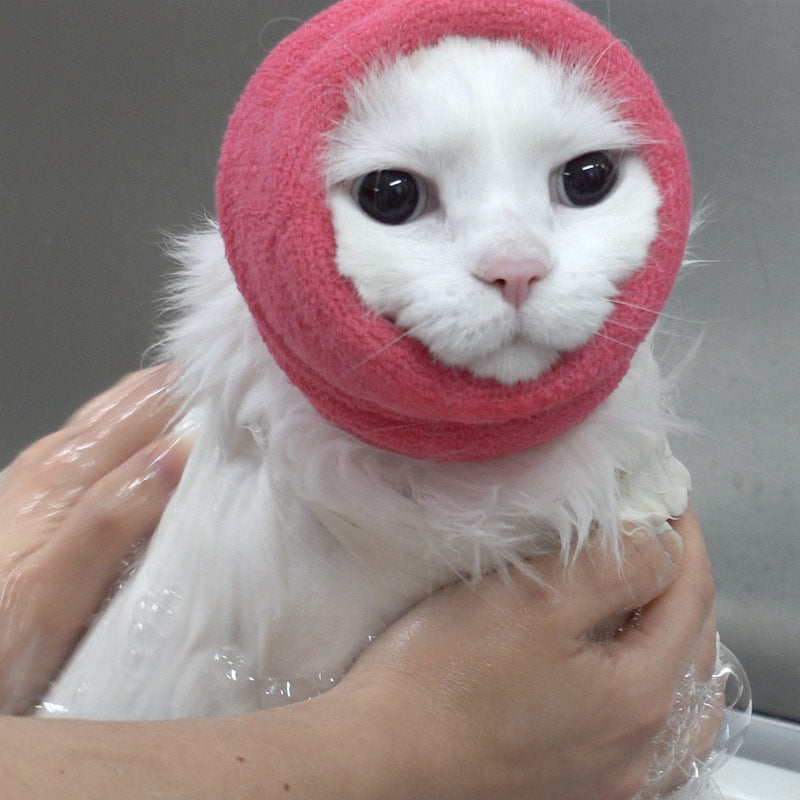
Cats have extremely sensitive ears and faces that require special protection during mechanical drying.
Shield Ears from Noise and Airflow
Cats can hear up to 79 kHz, making dryer noise painfully loud. Direct airflow into the ears can also cause discomfort or otitis externa, which is an ear infection. Use a Happy Hoodie, a soft fabric sleeve that covers the head and ears, or a cut-off sock folded for thickness as a DIY alternative. If your cat resists head coverings, gently fold the skin over the ears or use your thumb to block the ear canal while drying nearby areas.
Keep Facial Drying Gentle and Safe
Never aim a dryer directly at your cat’s face. The eyes, nose, and ears are highly sensitive. Instead, towel-dry the face first. If mechanical drying is needed, use a handheld dryer on cool setting held 12 inches or more away. Alternatively, place your cat in a cage dryer on low fan for 10–15 minutes to finish facial drying without stress. Periodically comb the face to prevent clumping and ensure even drying.
Dry Body Areas Step by Step
Knowing which areas to dry first and how to approach each body part ensures thorough drying without causing discomfort.
Focus on High-Moisture Zones First
Start drying at the tail and back, then move forward. Avoid blowing water onto already-dry areas. Prioritize zones that hold the most moisture: underarms, belly, base of tail, inner thighs, and paws. Lift the fur with a slicker brush while drying to expose the undercoat, prevent hot spots, and speed up the process. This also helps avoid burns by creating a barrier between the dryer and skin.
Dry Paws and Paw Pads Thoroughly
Wet feet can lead to slipping, chilling, and bacterial growth. Use a dry towel to rub backward between the toes. This helps separate damp fur. For stubborn moisture, use a toothbrush or small slicker brush to back-comb between toes. Finish with a handheld dryer on cool setting held at least 6 inches away. Check paw pads with your fingers and re-dry if they feel damp.
Support the Belly and Undercarriage
To dry the belly and groin, lift your cat gently under the armpits and support their weight. Roll them slightly onto their side if needed. Use a stand dryer or have a helper hold the dryer while you support the cat. Keep airflow diffused and avoid high heat. These areas are prone to matting and soiling, so complete drying is critical, especially for long-haired or obese cats.
Manage Temperature and Airflow Safely
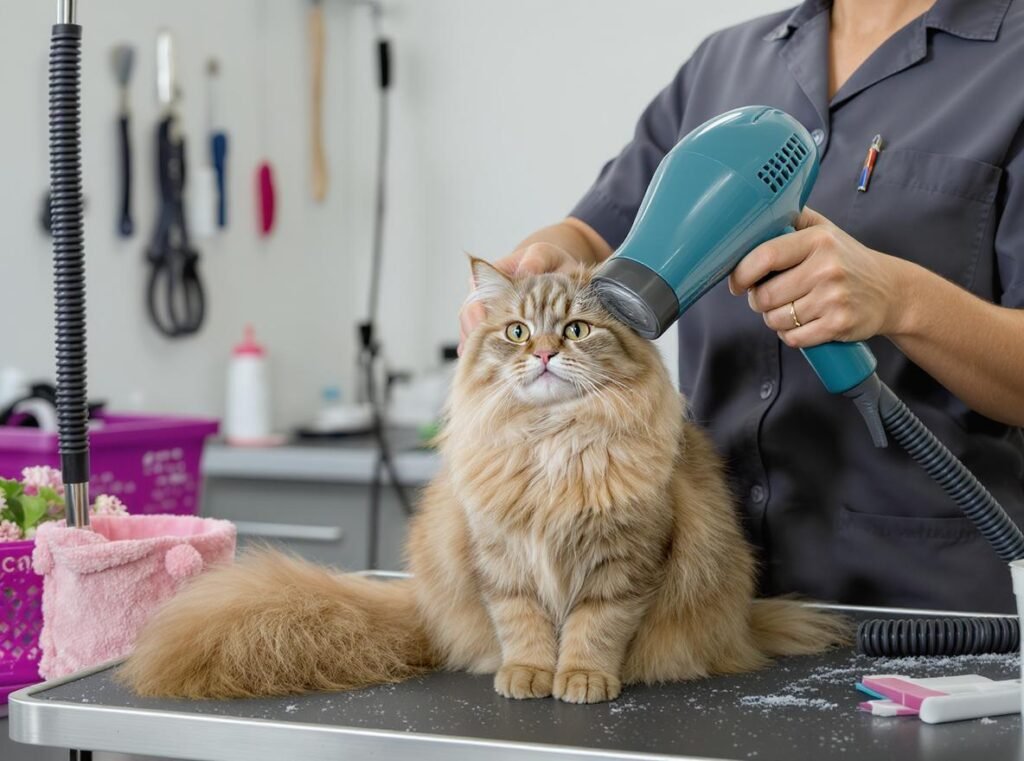
Proper temperature and airflow management is essential for safe drying and preventing burns or overheating.
Use Cool or Low-Heat Settings Only
Never use high heat. Cat skin is thinner than human skin and burns easily. Safe air temperature is 75–95°F. Use cool air when possible. Warm air is acceptable only in cold rooms and if your cat shows comfort. If the dryer feels hot to your hand, it’s too hot for your cat. Switch to cool or increase distance.
Maintain a Safe Distance
Keep the dryer 6–8 inches away from the skin, about the length of your forearm. High-velocity dryers on non-heated mode can be slightly closer but never touch the skin. Move the dryer slowly and continuously. Never hold it in one spot for more than a few seconds. Use a diffuser attachment or towel barrier to soften airflow for nervous cats.
Monitor Ventilation and Overheating
Ensure the dryer’s intake vent is unblocked. If the unit feels hot to the touch, turn it off immediately and let it cool. Overheating increases burn risk and can scare your cat. Use dryers with automatic shut-off and thermal sensors for added safety.
Reduce Stress and Build Positive Habits
A calm cat dries faster and more safely. Building positive associations with drying takes time but pays off long-term.
Acclimate Your Cat Before Bathing
Introduce the dryer days before the bath. Turn it on at a distance while your cat is calm. Pair the sound with treats, praise, or lickable food. Gradually decrease the distance over several sessions. This builds a positive association and reduces fear during actual drying.
Praise and Reward During Drying
Talk in a calm, soothing voice. Say good girl or you’re doing great throughout. Reward with treats immediately after drying, even if the session was short. For cooperative cats, end with play or affection. This reinforces that drying isn’t scary and makes future sessions easier.
Watch for Signs of Stress
Stop immediately if your cat shows flattened ears, hissing, growling, or swatting, attempting to flee, or excessive panting. Switch to towel drying or a cage dryer if stress occurs. Forcing the process worsens fear and can lead to long-term grooming resistance.
Special Cases and Expert Tips
Certain cats require modified approaches for safe, effective drying.
Dry Kittens with Extra Care
Kittens lose heat quickly and are prone to chilling and overheating. Use cool or low heat only. Dry in short sessions with breaks wrapped in a warm towel. Paper towels work well for initial drying. Never leave a kitten unattended during drying.
Handle Long-Haired Cats Differently
Persians, Maine Coons, and other long-haired breeds need longer drying times. Brush before and during drying to prevent matting. Use an HV dryer on low speed with a flat nozzle for legs and paws. Finish with a sanitary trim around the anus and underbelly to prevent soiling.
Support Medically Treated or Obese Cats
Cats with ringworm require frequent baths, and complete drying is crucial to prevent fungal regrowth. Dry in a warm room preheated for 1 hour. Obese or arthritic cats cannot groom themselves well, so regular drying supports hygiene and comfort.
Complete Final Checks and Aftercare
Proper finishing ensures your cat is fully dry and comfortable after the grooming session.
Comb and Detangle After Drying
Once dry, comb the coat with a fine-toothed comb to remove any remaining tangles. Use a de-mat decline groomer for gentle detangling. Fluffed fur is normal. Your cat may look three times their size, but this means the coat is properly dried and aerated.
Trim Paw Fur and Sanitize Key Areas
Trim excess fur between paw pads if it causes slipping. For long-haired cats, perform a sanitary trim around the genitals, anus, and underbelly to prevent poo matting and bacterial buildup.
Reward and Reconnect
End the experience on a positive note. Offer treats, cuddles, or a favorite toy. This helps your cat associate drying with safety and reward, not fear.
Frequently Asked Questions About Drying Cats
Can I use a human hair dryer on my cat?
While technically possible, using a standard human hair dryer is strongly discouraged. Human dryers emit 85–95 dB of noise, which is three times louder to cats due to their enhanced hearing, and can reach temperatures up to 140°F, causing burns on sensitive feline skin. Pet-specific dryers operate at safer temperatures and noise levels.
What temperature is safe for drying a cat?
Safe air temperature for cats is between 75–95°F. Always test the air on your own hand first. If it feels warm or hot to you, it’s too hot for your cat. Use cool air settings whenever possible, especially for kittens, senior cats, or anxious pets.
How do I dry my cat if they are scared of the hair dryer?
Start with towel drying using the burrito method to remove most moisture. For fearful cats, consider a cage dryer or drying box, which provides gentle, uniform warmth without direct airflow. You can also acclimate your cat to the dryer sound by turning it on at a distance while offering treats, gradually decreasing the distance over multiple sessions.
How long does it take to dry a cat completely?
Drying time varies based on coat length, thickness, and your cat’s tolerance. Short-haired cats may take 15–30 minutes, while long-haired breeds can take 45 minutes to over an hour. Rushing can leave damp spots that lead to skin issues, so take your time and check with your hands for any remaining moisture.
Should I brush my cat while drying?
Yes, brushing while drying helps prevent matting, exposes the undercoat for faster drying, and creates a barrier between the dryer heat and your cat’s skin. Use a slicker brush to lift the fur as you work, focusing on high-moisture areas like the underarms, belly, and base of tail.
What are signs that my cat is overheating during drying?
Watch for excessive panting, drooling, red or swollen skin, attempts to flee, or lethargy. If any of these occur, stop immediately and switch to towel drying. Always keep the dryer moving continuously and never focus on one spot. If the dryer feels hot to your hand, it’s too hot for your cat.
Key Takeaways for Drying Your Cat Safely
Drying your cat isn’t just about comfort. It’s a critical health step that prevents skin infections, hypothermia, and respiratory illness. Using the wrong dryer or technique can lead to burns, infections, or lasting anxiety. By choosing pet-safe equipment like low-noise, cool-air dryers or enclosed drying boxes, you protect your cat’s physical and emotional well-being. Remember to always towel-dry first, protect sensitive ears with a Happy Hoodie or similar covering, and keep the dryer 6–8 inches away on cool settings. Monitor for stress signs throughout the process and reward your cat with treats and affection to build positive associations. A calm, dry cat is a healthy cat. Stay patient, stay kind, and keep it positive.