You love the idea of a nourishing scalp oil, but one fear holds you back: will it make your hair look greasy? The truth is, scalp oil doesn’t have to mean greasy hair. When applied correctly, it can actually balance oil production, reduce flakiness, and boost shine, without leaving your roots slick or weighed down.
The key isn’t avoiding oil altogether. It’s using the right oil, the right amount, and the right technique. This guide reveals how to apply scalp oil effectively so you get all the benefits, hydration, growth support, and scalp health, without the greasy aftermath.
Choose the Right Oil for Your Hair Type
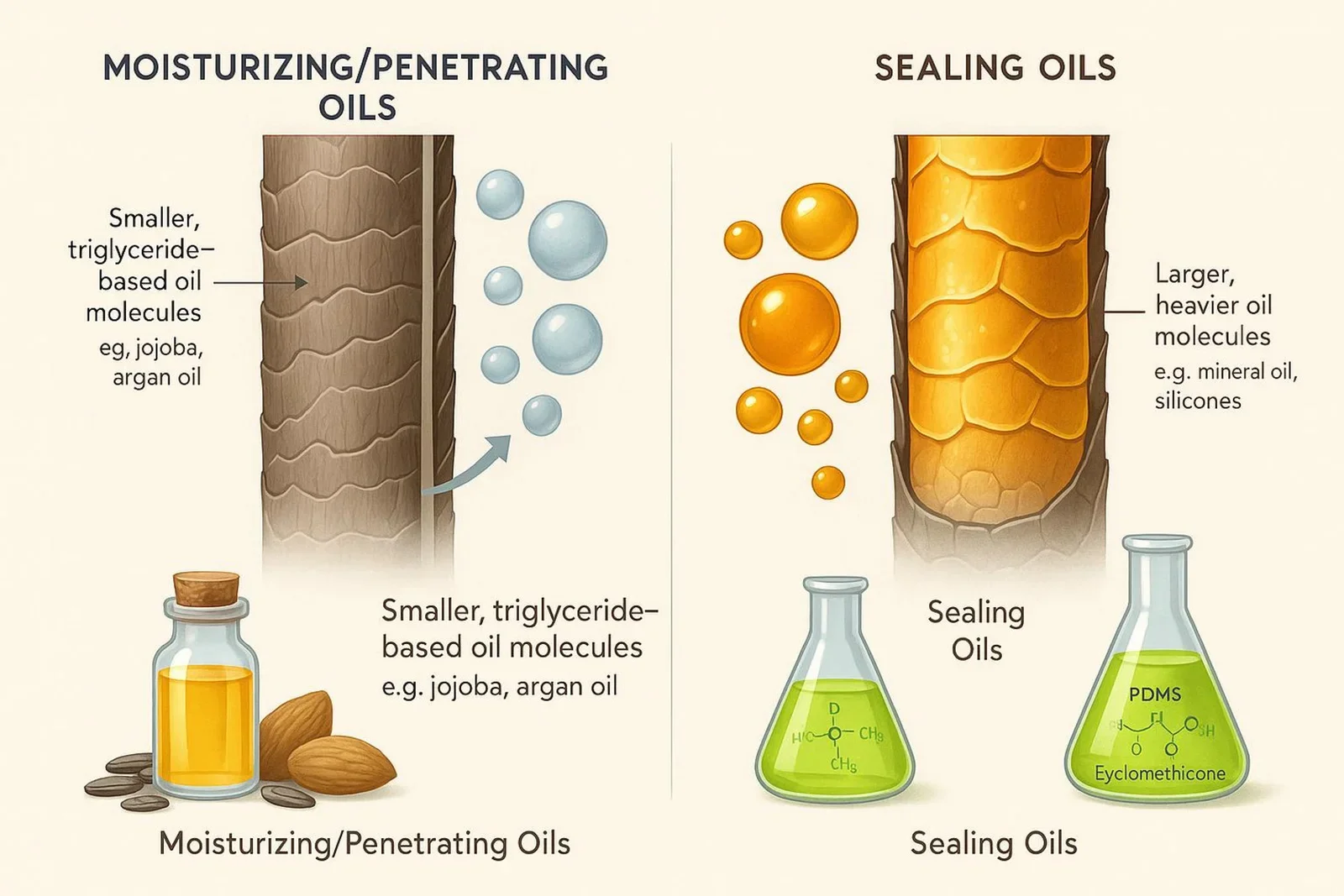
Not all oils are created equal. The wrong one can sit on your scalp, clog follicles, and make hair look oily fast. Match your oil to your hair and scalp needs to avoid greasiness.
Pick Lightweight, Fast-Absorbing Oils
For fine, thin, or oily hair, lightweight, non-comedogenic oils are essential. These mimic your natural sebum and absorb quickly:
- Jojoba oil: Nearly identical to human sebum, it regulates oil without clogging
- Squalane: Ultra-light, odorless, and absorbs in minutes
- Grapeseed oil: Low viscosity, adds shine without weight
- Argan oil: Nourishing but fast-absorbing, ideal for normal to oily scalps
Avoid Heavy or Occlusive Oils
These oils are too rich for most people and increase greasiness risk:
- Mineral oil: Does not penetrate, forms a greasy film on the surface
- Undiluted coconut oil: High in saturated fats, can clog pores especially on fine hair
- Lanolin: Thick and waxy, traps debris and slows absorption
Match Oil to Your Hair Texture
| Hair Type | Best Oils | Why It Works |
|---|---|---|
| Fine/Thin | Jojoba, squalane, argan | Light, won’t weigh hair down |
| Oily Scalp | Jojoba, rosemary-infused, squalane | Balances sebum, reduces greasiness |
| Dry/Flaky | Sesame, sweet almond, Bhringraj | Deeply moisturizing, soothes irritation |
| Coily/Kinky | Manketti, diluted castor, argan | Seals moisture, supports high porosity |
Apply the Correct Amount of Oil
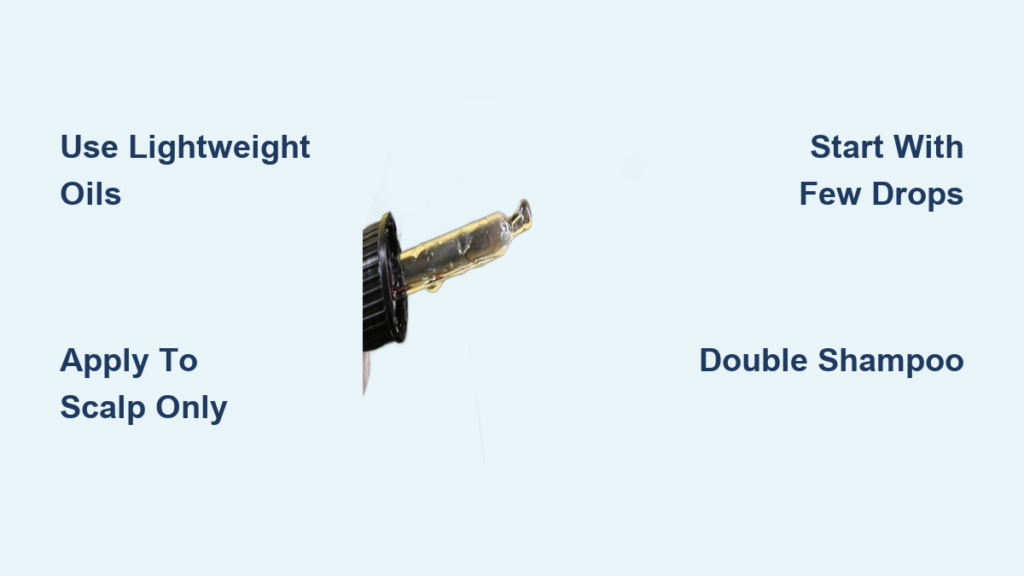
Using too much oil is the number one reason hair ends up greasy. Less is more. Start small and build up only if needed.
Use These Amount Guidelines
| Hair Type | Oil Amount | Application Tip |
|---|---|---|
| Fine/short hair | 3 to 5 drops | Use fingertips or dropper |
| Medium/straight | ¼ to ½ teaspoon | Focus on dry zones only |
| Long/thick hair | 1 to 2 teaspoons | Section hair for even coverage |
| Coily/kinky hair | 1 to 2 tablespoons | Warm oil first for better penetration |
Pro Tip: Sometimes even half a pump is enough. Always start with less.
Prep Your Hair and Scalp Properly
Applying oil to dirty hair traps sebum, sweat, and product residue, leading to greasiness and clogged follicles.
Only Oil Clean or Slightly Soiled Hair
- Wash your hair 1 to 2 days before oiling to remove buildup
- Never apply oil over styling products or heavy residue
Section Hair for Precision
- Divide hair into 4 to 6 sections using clips
- This ensures oil reaches the scalp, not just the lengths
- Allows for even coverage and prevents missed spots
Warm Oil for Better Absorption
- Do not microwave, heat degrades active compounds
- Use a double boiler: Place oil in a bowl over simmering water until warm
- Warm oil penetrates better than cold, reducing surface residue
Cold oil sits on top and is harder to wash out.
Apply Oil Directly to Scalp

Scalp oil is not a leave-in conditioner. Applying it to mid-lengths and ends increases greasiness risk.
Use Fingertips or Dropper for Control
- Part hair in small sections
- Apply oil only to the scalp, focusing on the crown, hairline, temples, and nape
- Avoid saturating any one area
- Use a dropper for precise application
Massage to Boost Absorption
- Use fingertip pads, not nails, to massage in small circles for 2 to 5 minutes
- This stimulates blood flow and distributes oil evenly
- Prevents pooling and supports hair thickness over time
Studies show regular scalp massage may increase hair density with consistent use.
Limit Treatment Time Based on Hair Type
Leaving oil on too long, especially overnight, increases greasiness especially for fine or oily hair.
Follow These Duration Guidelines
| Hair Type | Max Time | Notes |
|---|---|---|
| Fine/oily | 20 to 30 minutes | Avoid overnight use |
| Normal | 30 to 60 minutes | Ideal for weekly maintenance |
| Dry/damaged | Up to overnight | Protect with satin cap |
Overnight application can clog pores in fine hair.
Wash Out Thoroughly to Prevent Buildup
Even with correct application, residue can linger. Washing properly is non-negotiable.
Double Shampoo for Complete Removal
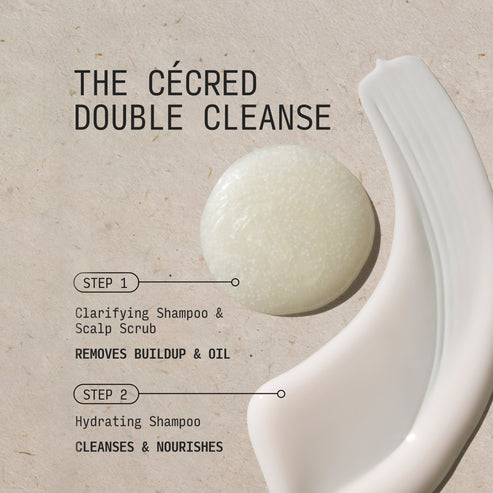
- First wash: Emulsify shampoo in hands, massage into scalp to break down oil
- Second wash: Focus on roots, rinse thoroughly
- One wash rarely removes all oil, double cleansing ensures a clean finish
Use Clarifying Shampoo Weekly
- If you notice buildup or dullness, use a clarifying shampoo every 2 to 4 weeks
- Helps dissolve oil residue without over-stripping
Rinse with Cool Water
- Finish with a cold rinse to seal the cuticle, lock in moisture, and boost shine
Avoid baking soda or ACV rinses more than once a month. They can disrupt pH and trigger rebound oiliness.
Alternative Uses That Won’t Cause Greasiness
You do not have to limit oil to pre-wash treatments. Used differently, it can hydrate and protect without greasy roots.
Seal Moisture with the LOC Method
For curly or coili hair, use oil as part of the Liquid-Oil-Cream routine:
- Liquid: Apply water or leave-in conditioner to damp hair
- Oil: Use 2 to 3 drops of lightweight oil to seal in moisture
- Cream: Lock in with a styling cream
Apply Only to Ends
- If you have oily roots or fine hair, skip the scalp entirely
- Use a drop of oil on dry ends to repair split ends and add shine
Tame Flyaways and Protect From Heat
- Use a micro-mist or half a pump of oil to smooth frizz
- Apply as heat protectant before blow-drying
- Control flyaways without causing buildup
Avoid These Common Mistakes
Even small errors can turn a healthy ritual into a greasy disaster.
Top Greasiness Triggers
- Using too much oil, start with less
- Applying to dirty hair, traps sebum and debris
- Skipping the second shampoo, leaves residue
- Using heavy oils on fine hair, coconut and olive oil are too rich
- Oiling daily, disrupts natural oil balance
- Applying to lengths instead of scalp, makes hair look oily fast
- Leaving on overnight unnecessarily, increases clog risk
Know the Difference: Scalp Oil vs. Leave-In Oil
Confusing these two leads to misuse and greasiness.
| Feature | Scalp Oil | Leave-In Oil |
|---|---|---|
| Purpose | Nourish scalp, support growth | Smooth ends, add shine |
| Application | Scalp only | Mid-lengths to ends |
| Wash Out? | Yes (pre-wash) | No (designed to stay in) |
| Frequency | 1 to 2 times per week | 2 to 3 times per week or daily |
How Often Should You Oil
Frequency depends on your hair type, not a one-size-fits-all rule.
| Hair Type | Recommended Frequency |
|---|---|
| Dry, brittle hair | 2 to 3 times per week |
| Normal hair | Once a week or every other week |
| Oily/fine hair | Every 2 weeks to once a month |
| Coily/kinky hair | 1 to 2 times per week |
Monitor your hair. If it looks greasy by day two, reduce frequency or switch to a lighter oil.
What Results to Expect
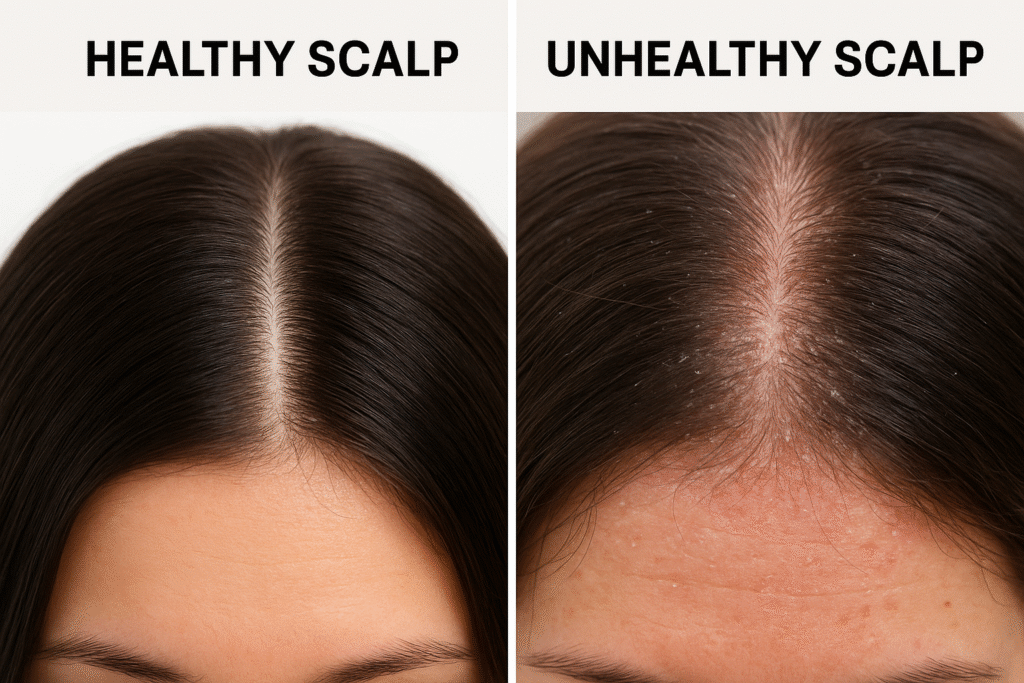
When done right, scalp oiling should not make hair greasy. Instead, you will notice softer, shinier hair from healthier roots, reduced flakiness and itching, less breakage and split ends, improved manageability, and potential increase in hair density over time.
Clinical studies show consistent use reduces broken hair by up to 93% in 12 weeks.
Key Takeaways for Grease-Free Scalp Oiling
- Warm oil gently using a double boiler, never microwave
- Section hair for precise, even application
- Massage for 2 to 5 minutes to boost absorption
- Use minimal amounts, start with less
- Double shampoo to remove all residue
- Choose fast-absorbing oils like squalane or jojoba
- Clarify monthly to prevent buildup
- Store oil in a cool, dark place, most last 6 to 12 months
Bonus: Scalp oiling is not just about hair, it is a self-care ritual. In Ayurveda, hair oiling means both love and nourishment. Let it be a moment of mindfulness, not stress.
Frequently Asked Questions About Using Scalp Oil Without Greasiness
Can I use scalp oil on oily hair?
Yes, but cautiously. Oily hair can still have a dry or flaky scalp due to imbalanced sebum production. Use a lightweight, fast-absorbing oil like squalane or rosemary-infused oil and apply only to dry patches. Limit to once every 7 to 10 days.
Should I apply scalp oil to wet or dry hair?
Dry or slightly damp hair is ideal for application. Avoid soaking wet hair as water hinders oil absorption. Lightly misting dry hair with water can aid even spreading.
How long should I leave scalp oil in?
Minimum time is 20 to 30 minutes. The ideal range is 1 hour for most hair types. Maximum time for dry hair is overnight. Fine or oily hair should not exceed 30 minutes.
Can I leave scalp oil in overnight?
Yes, but only if you have dry, damaged, or coarse hair. Always cover with a satin cap to protect bedding and enhance absorption. Wash out thoroughly the next day.
Can I oil my hair every day?
No. Daily oiling disrupts the scalp’s natural oil regulation and leads to buildup, clogged follicles, and greasy hair. Limit to 1 to 2 times per week.
Does scalp oil help repair damaged hair?
Indirectly, yes. A healthy scalp supports stronger hair growth. While oil does not repair broken keratin bonds, it prevents further damage, reduces breakage, mends the appearance of split ends, and improves elasticity and resilience.