If you are struggling with thinning hair, a slow growth rate, or a dry, flaky scalp, you have likely heard about the natural remedy of rosemary and olive oil for hair growth. This time-tested combination is backed by both traditional herbal wisdom and emerging scientific evidence. Rosemary essential oil has been shown to perform as effectively as 2% minoxidil in clinical studies, while olive oil deeply nourishes the scalp and strengthens hair from root to tip. Together, these ingredients boost circulation, reduce inflammation, and condition the hair shaft without harsh chemicals.
In this guide, you will learn exactly how to prepare and use rosemary-infused olive oil for maximum hair growth benefits, including step-by-step infusion methods, application techniques, safety precautions, and realistic timelines for results. With consistent use over 4 to 6 weeks, many users report reduced shedding, improved scalp health, and visible regrowth along the hairline and part.
Why Rosemary and Olive Oil Stimulate Hair Growth
Rosemary works as a powerful circulatory stimulant when applied to the scalp. It increases blood flow to hair follicles, delivering more oxygen and nutrients needed for healthy hair growth. This enhanced circulation helps awaken dormant follicles and supports the anagen phase of the hair cycle.
Clinical studies demonstrate that rosemary essential oil is as effective as 2% minoxidil in promoting hair growth over 6 months, with similar improvements in hair count and reduced shedding. Rosemary also contains rosmarinic acid and carnosic acid, potent antioxidants that protect hair follicles from UV rays, pollution, and free radicals.
Olive oil adds vitamin E and polyphenols that further boost antioxidant defense while reducing scalp inflammation and dandruff. Its oleic acid and squalene content mimic natural sebum, moisturizing without clogging pores. This makes it ideal for dry, curly, or damaged hair types.
Selecting the Best Carrier Oil for Your Hair Type
Olive oil serves as the primary carrier oil for most rosemary infusions. It is rich, emollient, and deeply conditioning, perfect for hair that lacks moisture. However, your hair type should determine how you use it.
Olive Oil Best Suits These Hair Types
Curly, coily, thick, or chemically damaged hair benefits most from olive oil as a base. The heavy emollient properties provide deep moisture and frizz control.
Alternative Carrier Oils by Hair Concern
Consider these alternatives based on your specific hair needs. For fine or oily hair, jojoba or sunflower oil works better because it is lightweight and regulates sebum. For breakage or protein loss, coconut oil penetrates the hair shaft and reduces protein leaching. For scalp balance, jojoba oil mimics natural sebum and prevents buildup.
Pro Tip: Blend olive oil with jojoba oil in a 1:1 ratio to reduce heaviness while maintaining nourishment.
Making Rosemary-Infused Olive Oil at Home

Two methods exist for creating your own infusion. The slow cold infusion method preserves heat-sensitive compounds and yields a gentle, long-lasting oil ideal for regular use.
Slow Cold Infusion Method
Gather these materials before starting. You will need half a cup of dried organic rosemary leaves, one cup of organic cold-pressed extra-virgin olive oil, a sterilized glass jar with lid, cheesecloth or a fine strainer, and an amber glass bottle for storage.
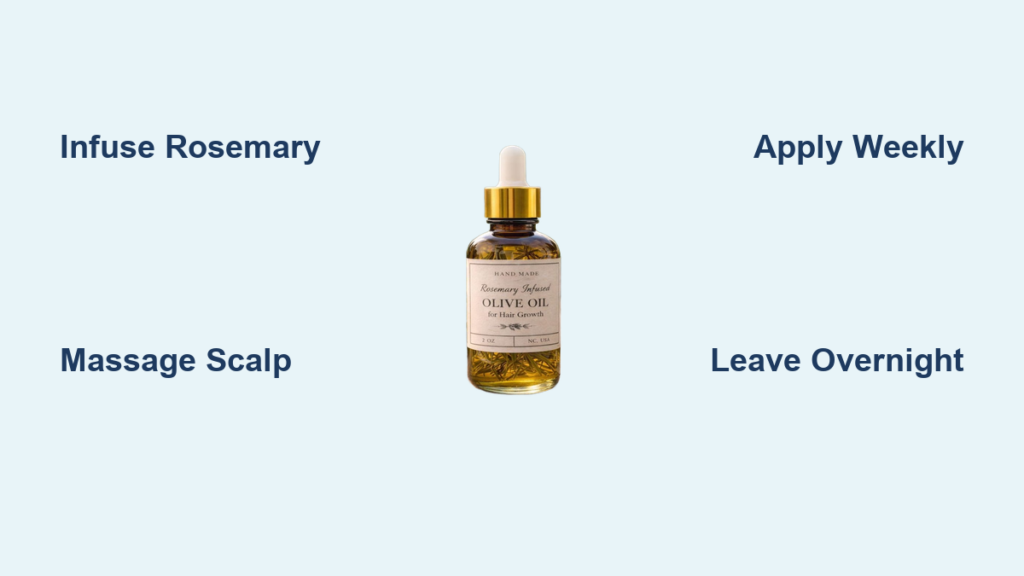
Follow these steps precisely. Fill your jar halfway with dried rosemary, then pour olive oil over the herbs, leaving one inch of oil above the plant material. Stir gently to release air bubbles, then seal and shake well. Store in a cool, dark place for 4 weeks, shaking the jar 2 to 3 times per week. After the infusion period, strain through cheesecloth, squeezing the herbs thoroughly to extract all the oil. Transfer to an amber bottle, label with the date, and store away from light and heat.
The infusion timing affects potency significantly. Two weeks yields basic strength, 4 weeks provides optimal extraction, and up to 16 weeks creates maximum potency for therapeutic use.
Warning: Never use wet or fresh herbs without wilting them first for 1 to 2 days. Moisture causes mold and spoilage.
Quick Heat Infusion Method
If you need oil faster, use the stovetop method. Combine half a cup of rosemary with one cup of olive oil in a saucepan. Heat on low for 30 to 60 minutes, never allowing the oil to boil. Remove when the oil smells strongly of rosemary, then cool slightly and strain through cheesecloth. Bottle and label immediately.
Critical: Use low heat only. High temperatures destroy the active compounds you are trying to extract.
Creating a Fast-Acting Essential Oil Blend
Skip the waiting period entirely by creating a ready-to-use blend in minutes. This method uses pre-distilled essential oils instead of whole herb infusion.
Enhanced Hair Growth Oil Recipe
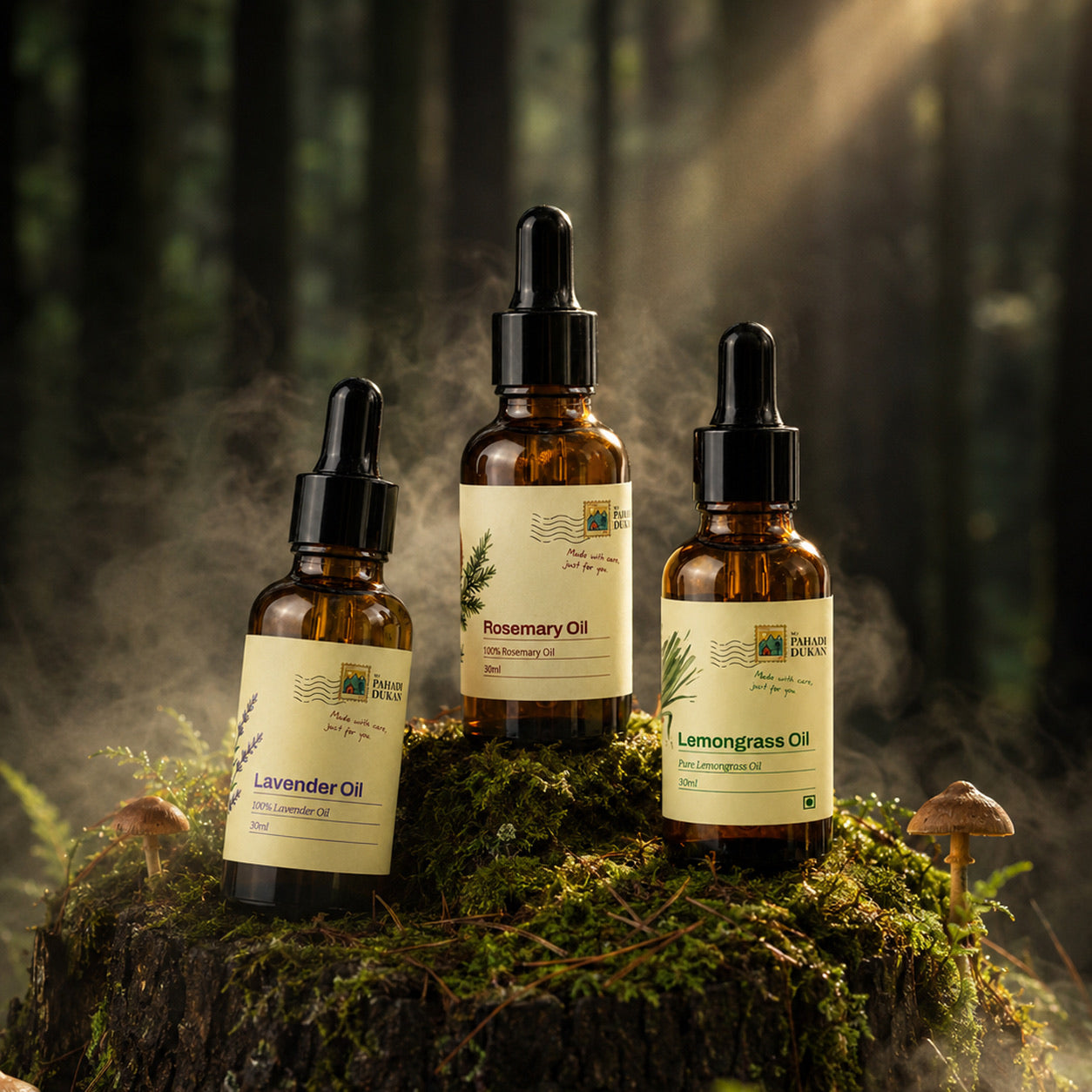
Combine 4 ounces of olive oil with 10 drops of rosemary essential oil, 10 drops of lavender essential oil, and 3 drops of lemongrass essential oil in a glass bottle. Shake well before each use. Apply directly to the scalp using your fingers or a dropper.
This blend sits at approximately 2.5% concentration, which is safe for most users. Never apply undiluted essential oils directly to the scalp.
Patch Test Required: Apply a pea-sized amount behind your ear or on your inner forearm. Wait 24 to 48 hours and watch for redness, itching, or swelling before using on your scalp.
Applying Rosemary Oil for Maximum Hair Growth
The application technique matters as much as the oil itself. Massaging the scalp boosts blood flow and enhances oil absorption, both critical for stimulating follicles.
Step-by-Step Application Process
Section your hair into 4 to 6 parts for even coverage. Use a dropper or your fingers to apply 1 to 2 teaspoons of oil directly to the scalp. Massage using circular motions for 5 to 10 minutes to stimulate circulation. Distribute any remaining oil through the lengths of your hair if the ends are dry. Cover with a shower cap for overnight treatment, which is recommended for deep penetration. Wash out thoroughly, using double shampoo if needed to remove all residue.
Frequency: Apply 1 to 2 times per week for consistent results. Minimum dwell time is 30 minutes, but overnight treatment yields better results.
Alternative Application Methods
Add 3 to 5 drops of your infused oil to regular shampoo for a daily booster. Mix into a DIY castile soap base for ongoing treatment. Note that direct scalp application remains more effective than these indirect methods.
Safety Precautions and Common Mistakes to Avoid
Always patch test before your first full application. Apply a pea-sized amount to your inner forearm and wait 24 to 48 hours. Discontinue immediately if you notice redness, itching, or swelling.
Do not use this treatment if you have known allergies to rosemary, olive oil, or related plants in the mint family. Avoid applying to damaged or inflamed scalp conditions such as open wounds, psoriasis, or eczema without consulting a dermatologist first.
Prevent contamination by using sterile, dry equipment. Never introduce water into your oil mixture. Discard the oil if it smells rancid, appears cloudy, or shows any signs of mold. Replace your oil after 12 months, even if unopened, or immediately if it develops an off smell or appearance.
Realistic Timeline and Expected Results

Hair growth takes time, and natural remedies require patience. Understanding what to expect helps you stay consistent.
Week 1 to 2
Your hair will feel softer and shinier. The scalp may feel more moisturized. No visible growth occurs yet during this initial phase.
Week 4 to 6
Reduced shedding becomes noticeable in the shower or brush. Less dandruff and scalp irritation appear. Some users report seeing new baby hairs along the hairline during this period.
Month 3 and Beyond
Increased thickness and density become visible. Regrowth in thinning areas becomes apparent. Hair feels stronger and more resilient overall.
Pro Tip: Take monthly photos to track progress. Changes are often subtle at first and easy to miss without documentation.
Supporting Hair Growth with Lifestyle Changes
Topical treatments work best when combined with healthy habits. Your diet and stress levels directly impact hair follicle function.
Eat for hair health by consuming adequate protein since hair is made of keratin. Include eggs, fish, and legumes regularly. Ensure you get enough iron and zinc to prevent deficiency-related shedding. Add biotin and B-vitamins to support follicle function. Include omega-3 fatty acids to reduce scalp inflammation.
Manage stress because chronic stress triggers telogen effluvium, a condition causing excessive shedding. Practice meditation, yoga, or deep breathing regularly.
Adopt a gentle hair care routine. Avoid tight ponytails, heat styling, and chemical treatments. Use sulfate-free shampoos and limit brushing to a wide-tooth comb.
Infused Oil Versus Essential Oil Blends: Which to Choose

| Feature | Infused Oil | Essential Oil Blend |
|---|---|---|
| Prep Time | 2 to 4 weeks (cold) | 3 minutes |
| Potency | Moderate, gradual | High, fast-acting |
| Irritation Risk | Low | Slightly higher |
| Best For | Long-term maintenance | Quick results, convenience |
Best practice: Use infused oil for weekly treatments and keep an essential oil blend on hand for travel or convenience.
Who Should Avoid This Treatment
While generally safe, rosemary and olive oil treatments are not suitable for everyone.
Avoid this treatment if you have an allergy to rosemary or olive oil. Skip it if you have an oily scalp or are acne-prone, as the oils may worsen these conditions. Do not use it as a substitute for medical treatment if you have medical hair loss such as alopecia areata or thyroid-related issues.
Important: This remedy is not a substitute for professional medical diagnosis. See a dermatologist if your hair loss is sudden, patchy, or severe.
Frequently Asked Questions About Rosemary and Olive Oil for Hair Growth
How long does it take to see results from rosemary and olive oil hair treatment?
Most users begin noticing reduced shedding and improved scalp health within 4 to 6 weeks of consistent use. Visible regrowth typically appears around month 3, though individual results vary based on hair type, underlying causes of hair loss, and consistency of application.
Can I use fresh rosemary instead of dried for the infusion?
Fresh rosemary can be used but must be wilted first for 1 to 2 days to remove moisture. Using wet herbs introduces water into the oil, which causes mold and spoilage. Dried organic rosemary is recommended for best results and longest shelf life.
How often should I apply rosemary-infused olive oil to my scalp?
Apply the oil 1 to 2 times per week for best results. More frequent use may cause buildup, while less frequent application may not provide sufficient stimulation for hair growth. Leave the oil on for at least 30 minutes, or overnight for deep penetration.
Can I leave rosemary oil in my hair overnight?
Yes, overnight application is recommended for maximum benefits. Cover your hair with a shower cap to prevent transfer to your pillow and to create warmth that enhances absorption. Wash out thoroughly in the morning using double shampoo to remove all residue.
Does rosemary oil work for all types of hair loss?
Rosemary and olive oil work best for mild thinning, slow growth, and dry scalp conditions. They are less effective for genetic pattern baldness, hormonal hair loss, or autoimmune conditions like alopecia areata. These conditions require medical treatment, and you should consult a dermatologist for proper diagnosis.
Can I mix rosemary essential oil directly into my regular shampoo?
Yes, you can add a few drops to your shampoo, but this method is less effective than direct scalp application. The shampoo dilutes the oil and rinses it away quickly, reducing contact time with the scalp. For best results, apply the oil directly to the scalp before shampooing.
Key Takeaways for Using Rosemary and Olive Oil to Boost Hair Growth
Rosemary and olive oil offer a safe, natural, and effective way to support hair growth, particularly for those experiencing mild thinning, dry scalp, or slow growth. The combination works by stimulating blood flow to follicles, protecting against oxidative stress, reducing inflammation, and deeply conditioning the hair shaft.
For best results, use dried organic rosemary and cold-pressed olive oil. Cold-infuse for 4 weeks for the strongest oil. Massage into the scalp 1 to 2 times weekly and leave on for at least 30 minutes, with overnight treatment being ideal. Wash out thoroughly to prevent buildup and store in dark glass away from light and heat.
Pair this topical treatment with good nutrition, stress management, and a gentle hair care routine for the best outcomes. With patience and persistence, you can achieve healthier, stronger, and fuller hair naturally.