You’ve washed and styled your hair, but frizz creeps in by midday. Flyaways pop up with every breeze. Your ends feel rough, and your shine has faded. Instead of reaching for another product, the fix might be simpler than you think. Just a drop of hair oil on dry hair can transform your look in seconds.
Using hair oil on dry hair isn’t just a quick fix. It’s a smart, targeted strategy to smooth, protect, and enhance your strands between washes. Unlike deep conditioning treatments that require time and rinsing, applying oil to dry hair delivers instant results: tamed frizz, added shine, and split end protection. In this guide, you’ll learn exactly how to use hair oil on dry hair the right way.
Spot-Treat Frizzy Ends and Flyaways
Treating dry hair with oil works best when you use it like a precision tool. Instead of coating your entire head, focus on the areas that need it most: the ends and surface level frizz zones.
Apply Oil from Mid-Length to Ends
The lower half of your hair is the oldest and most exposed to damage. This is where dryness, split ends, and breakage typically occur. Apply oil only from mid-shaft to tips to restore softness and prevent further damage.
Use the following amounts based on your hair length:
- Use half to one drop for short to medium hair
- Use up to two drops for long or thick hair
- Warm the oil between your palms first to help it spread evenly
- Glide fingers gently through the ends without rubbing aggressively
Pro Tip: After blow-drying or air-drying, run oiled fingertips over the ends to seal the cuticle and lock in smoothness.
Tame Flyaways Around the Hairline
Flyaways are often caused by static or dryness, especially near the temples and crown. A tiny amount of oil instantly smooths them.
Apply oil to flyaways using these steps:
- Place a micro-drop on your pointer finger
- Lightly brush over stray hairs using the side of your fingertip, not the pad, to avoid greasing
- For stubborn baby hairs, wrap a soft toothbrush or spoolie with a bit of oil and smooth gently
Warning: Too much oil near the hairline will make roots look flat or oily. Less is more.
Choose the Right Oil for Your Hair Type
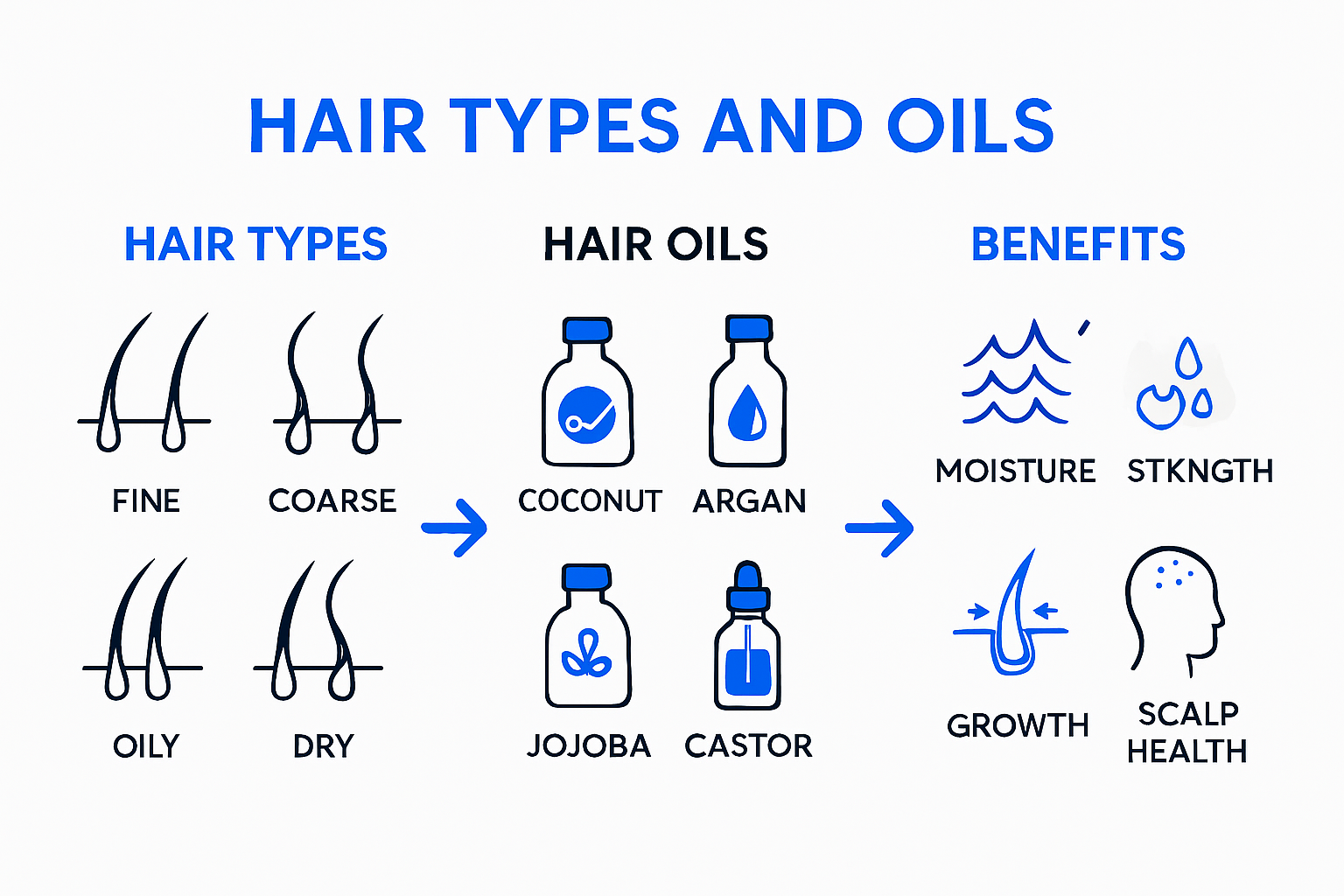
Not all oils work the same on dry hair. The wrong choice can leave your hair greasy, weighed down, or under-nourished. Match your oil to your texture and concerns.
Lightweight Oils for Fine or Oily Hair
If your hair is fine, thin, or prone to oiliness, use fast-absorbing oils that add shine without residue.
These lightweight oils work well:
- Argan oil: Rich in vitamin E, absorbs quickly, ideal for daily touch-ups
- Jojoba oil: Mimics natural scalp sebum, balances moisture, great for dry ends with oily roots
- Grapeseed oil: Light texture, high in linoleic acid, perfect for humidity protection
Avoid: Heavy oils like pure castor or unrefined coconut. They will drag fine hair down.
Richer Oils for Thick, Coarse, or Damaged Hair
Thicker strands can handle more nourishing formulas, especially if they are porous or heat-damaged.
These richer options work well:
- Coconut oil: Penetrates the hair shaft, reduces protein loss, excellent for prewash or post-wash care
- Avocado oil: Deeply moisturizing, rich in oleic acid and vitamins A, D, and E
- Bacuri butter blends: Reparative and high in fatty acids, ideal for brittle or chemically treated hair
Pro Tip: Even with thick hair, start small. You can always add more, but removing excess oil means rewashing.
Warm Oil Before Application
Cold or thick oil does not spread well and can clump on dry hair, leaving patches of greasiness. Warming it ensures even distribution and better absorption.
Rub Oil Between Palms
Follow these steps to warm your oil:
- Dispense your desired amount into one palm
- Press both palms together and rub gently for five to ten seconds
- You will feel the oil thin out and warm slightly, which boosts its slip and spreadability
Visual Cue: The oil should look almost invisible when you open your hands. If it is still beaded, you used too much.
Why Warm Oil Works Better
Warming oil before application provides several benefits:
- Melts solid or semi-solid oils like coconut for smoother application
- Helps open the hair cuticle slightly, allowing better penetration
- Prevents uneven coating and sticky buildup
Use Oil as a Heat Protectant

Heat styling dehydrates hair, leading to brittleness and break. Applying a few drops of oil before or after heat tools creates a protective barrier.
Apply Before Blow-Drying or Straightening
Use oil as a heat protectant with these guidelines:
- Use one drop warmed and distributed through mid-lengths to ends
- Focus on previously damaged or frequently styled sections
- Follow with your regular heat protectant spray if needed. Oil complements but does not replace dedicated thermal shields.
Note: Oil alone is not enough to prevent extreme heat damage. Pair it with a silicone-based or polymer heat protectant for maximum defense.
Use After Styling for Shine and Seal
Once your style is set, add oil for a polished finish:
- Use half a drop warmed and smoothed over the surface
- This step enhances gloss, tames any new frizz, and locks in the style
Best for: Sleek ponytails, blowouts, or flat-ironed styles that need lasting polish.
Prevent Split Ends with Daily Conditioning
Regular oiling of dry ends strengthens hair over time and reduces the formation of splits.
Apply Oil Every Other Day or Daily
For dry, damaged, or high-porosity hair, light daily oiling on ends only is safe and beneficial.
Follow these guidelines:
- Use one drop maximum, warmed and smoothed on tips
- Ideal time is morning or night, after styling or before bed
Key Benefit: Oils like coconut and argan improve tensile strength and reduce breakage during brushing.
Avoid Over-Oiling
Too much oil leads to buildup, attracts dirt, and can make split ends worse by masking damage instead of addressing it.
Watch for these warning signs:
- If ends feel gummy or look dull, you are using too much
- Wash hair thoroughly every few days to clear residue
Avoid Common Application Mistakes
Even with the right oil, poor technique can ruin results. These mistakes are easy to make but even easier to fix.
Using Too Much Oil
This is the number one error. More oil does not mean more moisture. It means greasiness.
Fix this problem with these solutions:
- Start with half a drop. You can always add more later.
- Blot excess with a dry towel or sprinkle a bit of translucent powder on roots.
Applying Oil to the Scalp Unnecessarily
Unless you are using a scalp-specific formula, avoid the roots.
Consider these guidelines:
- Oil on the scalp can clog follicles, cause buildup, and trigger excess sebum.
- Exception: If you have a dry, flaky scalp, use a rosemary or tea tree blend, but double-cleanse when washing.
Skipping Water-Based Moisture
Oil seals in hydration. It does not add it. Dry hair needs water first.
Follow this approach:
- For curly or coily types, lightly spritz hair with water or a leave-in mist before applying oil.
- This combination, water plus oil, is the gold standard for true moisturization.
Rule of Thumb: Think hydrate then seal. Oil is the lid, not the liquid inside.
Best Times to Use Oil on Dry Hair
Timing matters. Apply oil on dry hair in the right context to maximize benefits.
For Daytime Touch-Ups
Revive flat, frizzy, or dull hair between washes.
Use this method:
- Use half a drop on ends and flyaways.
- Great for post-commute refresh or pre-meeting polish.
Post-Styling Polishing Step
Finish any style with oil for a sleek, salon-quality look.
Apply with these steps:
- Smooth over braids, buns, or waves to eliminate fuzz.
- Instantly elevates second-day hair.
Before or After Heat Styling
Use as a pre-treatment to protect or post-treatment to repair.
Apply using these guidelines:
- Apply before blow-drying to reduce porosity.
- Use after curling to smooth and extend style life.
Recommended Oils for Dry Hair Use
| Oil | Best For | Key Benefit |
|---|---|---|
| Argan Oil | All hair types, especially fine | Lightweight, shiny finish, antioxidant-rich |
| Jojoba Oil | Oily roots plus dry ends | Balances moisture, mimics natural oils |
| Coconut Oil | Thick, dry, damaged hair | Penetrates shaft, prevents protein loss |
| Sweet Almond Oil | Normal to dry hair | Softens, adds shine, gentle for daily use |
| Bacuri Butter Blends | Brittle, treated hair | Deeply reparative, eco-friendly |
| Rosemary Oil (diluted) | Thinning hair | Stimulates scalp, supports growth |
Note: Always dilute essential oils like rosemary or peppermint in a carrier oil. Never apply directly.
Frequency Guidelines by Hair Type
How often you should oil dry hair depends on your texture and condition.
| Hair Type | Frequency | Application Tip |
|---|---|---|
| Healthy, strong hair | One to two times per week | Use for shine and frizz control |
| Dry or damaged hair | Every other day to daily | Focus on ends only |
| Heat-styled hair | Before and after styling plus two to three times per week | Protect and repair |
| Fine or oily hair | Once per week or as needed | Spot-treat only, use ultra-light oils |
Start slow: Try once a week, then increase if needed. Watch for greasiness or buildup.
Overnight Oil Treatments Pre-Wash
While not strictly on dry hair, many people apply oil to dry strands before bed as a deep conditioning step.
How to Do It Right
Follow these steps for overnight treatment:
- Apply oil to dry hair before sleeping. Focus on ends. Add to scalp if dry.
- Cover with a silk scarf or microfiber cap to prevent transfer and boost absorption.
- Leave on for thirty minutes to overnight.
- Wash out in the morning with two shampoos. First removes oil. Second cleanses scalp and removes residue.
Pro Tip: Use an old pillowcase to protect your bedding.
Real-World Tips from Experts
Test Your Routine Gradually
Start with these guidelines:
- Begin with one drop once a week.
- After two to three uses, assess: Is hair smoother? Shinier? Heavier?
- Adjust amount, frequency, or oil type based on results.
Try These Market Favorites
Consider these popular options:
- Living Proof No Frizz Nourishing Styling Oil: Lightweight, grease-free, perfect for daily dry-hair use
- UpCircle Scalp and Hair Oil (Bacuri and Rosemary): Natural, upcycled ingredients, works for prewash and spot treatment
- Damage Remedy Coconut Miracle Oil Treatment: Penetrating formula for dry, coarse, or damaged hair
Understand the Wet vs. Dry Debate
Some say oil works better on wet hair for deep conditioning. Others swear by dry-hair application for styling.
The truth is both are correct, just for different purposes:
- Wet hair works best for deep penetration and nourishment.
- Dry hair works best for frizz control, shine, and protection.
Use wet for treatment and dry for touch-up.
Key Takeaways for Using Hair Oil on Dry Hair
Using hair oil on dry hair is one of the simplest, most effective ways to maintain healthy-looking hair between washes. When done right, it tames frizz, adds shine, protects against heat, and prevents split ends, all with minimal effort.
Remember these essential rules:
- Less is more: Start with half a drop. You can always add more later.
- Target ends and flyaways: Avoid roots unless treating scalp.
- Warm the oil: Ensures even spread and better absorption.
- Pair with water: Oil seals moisture but does not replace it.
- Match oil to hair type: Lightweight for fine hair, richer for coarse.
Whether you are touching up your look, protecting from heat, or keeping ends healthy, a well-placed drop of oil can make all the difference. Use it wisely, and your hair will stay smooth, strong, and shiny every day.
Frequently Asked Questions About Using Hair Oil on Dry Hair
Can I apply hair oil to dry hair without washing first?
Yes, you can apply hair oil to dry hair without washing. In fact, this is the best way to use oil for quick touch-ups. Apply a small amount to frizzy ends and flyaways to smooth your style between washes. Focus on the mid-lengths to tips rather than the roots to avoid greasiness.
How much hair oil should I use on dry hair?
Start with half a drop to one drop maximum. More oil does not mean better results. Too much will leave hair looking greasy and weighed down. You can always add more if needed, but removing excess oil requires washing the hair again.
Which hair oil is best for dry, frizzy hair?
Argan oil is an excellent choice for dry, frizzy hair. It is lightweight, absorbs quickly, and is rich in vitamin E and fatty acids. For thicker or more damaged hair, coconut oil provides deeper penetration. Choose lightweight oils for fine hair to avoid weighing it down.
Can I use hair oil on dry hair every day?
You can use hair oil on dry hair daily if you apply it only to the ends. Daily application to the roots is not recommended as it can cause buildup and clogged follicles. For fine or oily hair, limit use to once or twice per week. Dry or damaged hair may benefit from daily end treatment.
Does hair oil help with split ends on dry hair?
Yes, regular oil application to dry ends helps prevent split ends from forming. Oil conditions the ends, improves tensile strength, and reduces breakage during brushing. It seals in existing moisture and protects against daily mechanical damage. For best results, apply a small amount to ends every other day.
Should I apply hair oil before or after heat styling?
Apply a small amount of oil both before and after heat styling for best protection. Before blow-drying or flat ironing, use one drop to reduce porosity and protect against dehydration. After styling, apply half a drop to smooth frizz and add shine. Oil complements but does not replace dedicated heat protectant products.