Garlic oil is becoming a popular natural remedy for hair loss, dandruff, and weak, brittle strands. Rich in sulfur, allicin, selenium, and vitamin C, it strengthens hair at the root, fights scalp infections, and boosts circulation to stimulate growth. Unlike chemical treatments, garlic oil works holistically by nourishing the scalp, reducing breakage, and creating the optimal environment for new hair to thrive. This guide shows you exactly how to use garlic oil safely and effectively for thicker, healthier hair.
Prepare Fresh Garlic Oil at Home

Making garlic oil at home ensures maximum potency and allows you to control the ingredients. The process takes about 30 minutes and yields enough oil for several treatments.
Choose the Right Carrier Oil
Select a carrier oil that matches your scalp and hair type. Coconut oil works best for dry, damaged hair because it penetrates deeply and fights microbes. Olive oil is ideal for thick or curly hair, adding moisture and shine. Jojoba oil is perfect for oily scalps since it mimics natural sebum without clogging pores. Using a high-quality carrier oil enhances absorption and reduces irritation risk.
Crush Garlic to Activate Allicin
Peel 10 to 15 fresh garlic cloves and crush them into a paste using a mortar and pestle or the flat side of a knife. Crushing triggers the release of allicin, garlic’s key antimicrobial compound. The finer the paste, the more potent your oil will be. Freshly crushed garlic delivers stronger results than pre-minced or powdered forms.
Infuse Oil Using Low Heat
Warm one-half to one cup of carrier oil in a saucepan over low to medium heat. Never let it smoke or boil. Add the garlic paste and simmer for 5 to 10 minutes for a mild formula ideal for sensitive skin, or 15 to 20 minutes for maximum potency. Stir occasionally to prevent burning. Extended heating increases nutrient extraction but also raises irritation potential.
Strain and Store Properly
Remove from heat and cool completely. Strain through cheesecloth or a fine mesh sieve into a dark glass bottle. Label with the date and store in a cool, dark place. The oil lasts up to one month. Discard if it smells rancid or changes color. Add 5 drops of lavender or rosemary essential oil to mask the garlic scent.
Apply Garlic Oil Correctly for Best Results
Proper application technique determines whether you see results or experience irritation. Follow these steps to maximize benefits safely.
Always Patch Test First
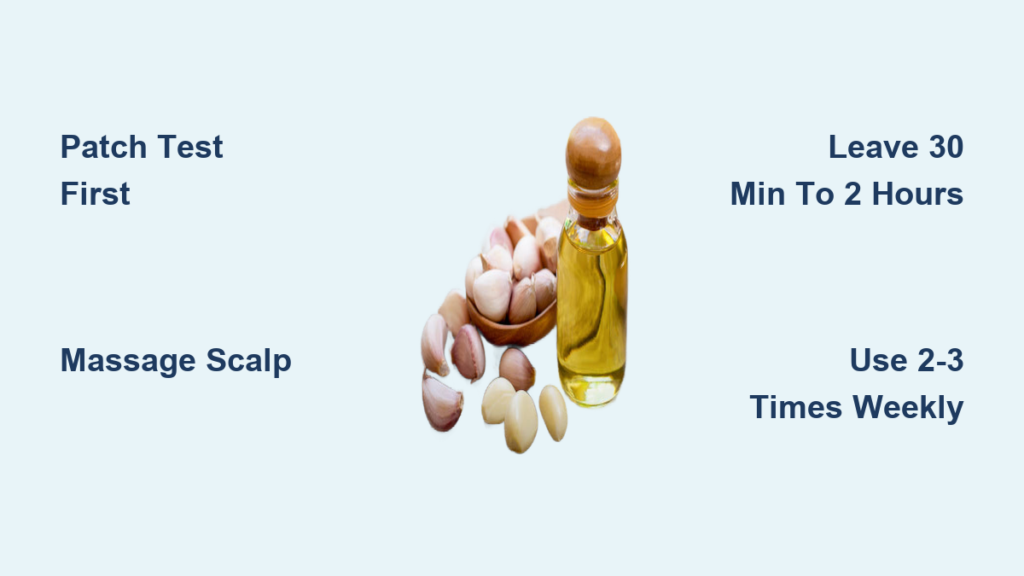
Garlic is potent and can cause burns or allergic reactions. Before full application, apply a dime-sized amount behind your ear or on your inner forearm. Wait 24 hours. If redness, burning, or rash appears, do not use on your scalp. Skipping this step risks chemical burns, especially with undiluted or prolonged use.
Massage Into Scalp for Maximum Absorption
Section your hair and apply oil directly to the scalp using fingertips or a dropper. Use circular motions to massage for 3 to 5 minutes. This boosts blood flow, delivering nutrients to follicles and enhancing growth stimulation. Look for slight pinkness in the scalp, which indicates improved circulation.
Leave On for Optimal Duration
Choose based on your goal. Leave on for 30 to 60 minutes for dandruff or mild thinning. Leave on for 2 hours for general growth and strength. Leave on overnight for deep treatment, using a shower cap to protect bedding. Avoid leaving on longer than 8 hours to prevent irritation.
Wash Out Thoroughly
Rinse with lukewarm water, as hot water increases sensitivity. Shampoo twice if needed to remove residue. Use a gentle, sulfate-free formula or anti-dandruff shampoo for best results. Incomplete rinsing leads to lingering odor and buildup.
Use 2 to 3 Times Weekly
More frequent use increases irritation risk. Stick to 2 to 3 applications per week for 8 to 12 weeks to assess results. Overuse can cause inflammation and temporary shedding.
Target Specific Hair Concerns
Garlic oil can be customized to address different hair and scalp issues. Here is how to tailor your treatment.
Boost Hair Growth With Rosemary Blend

Combine 2 tablespoons garlic-infused oil, 5 drops rosemary essential oil, and 1 tablespoon jojoba oil. Rosemary oil has been clinically shown to match minoxidil in promoting hair growth for some types of alopecia. Massage into scalp, leave for 2 hours, then wash out. Use 3 times weekly for 8 weeks to see visible regrowth. Expect fine, soft new hairs to appear in thinning areas within 6 to 8 weeks.
Treat Dandruff and Itchy Scalp
Apply pure garlic oil or mix with 5 drops tea tree oil per tablespoon. Both fight Malassezia, the fungus behind many dandruff cases. Leave on for 30 to 60 minutes, not exceeding 1 hour, especially if scalp is inflamed. Rinse with anti-dandruff shampoo. Avoid this treatment if you have open sores or red, painful skin, as garlic can worsen irritation.
Perform Overnight Deep Conditioning
Coat scalp and ends with garlic oil before bed. Cover with a shower cap to protect bedding. For better absorption, wrap head in a warm towel for 10 minutes. Wash out in the morning using a clarifying or moisturizing shampoo. This method works best for severely dry, brittle hair or post-chemical treatment recovery.
Avoid Common Mistakes
Many people fail to see results or experience irritation because of common errors. Here is what to avoid.
Never Use Raw Garlic on Scalp
Whole or sliced raw garlic causes chemical burns and blisters. Always infuse in oil first to dilute active compounds safely. Raw garlic is too potent for direct scalp application.
Do Not Overapply or Overuse
Using too much or too often leads to contact dermatitis, increased shedding, and greasy, clogged follicles. Stick to 1 to 2 tablespoons per session and 2 to 3 uses weekly. More is not better when it comes to garlic oil.
Do Not Skip the Patch Test
Even if you have used garlic before, your scalp may react differently. Always test before full application. Burns heal slowly and can worsen hair loss.
Avoid Hot Water After Application
Hot water strips natural oils and amplifies irritation. Always rinse with lukewarm water. This applies to both application and washing out the oil.
Combine With Lifestyle for Maximum Growth
Garlic oil works best when paired with healthy habits. Topical treatment alone cannot compensate for poor nutrition or lifestyle factors.
Eat Hair-Boosting Foods
Support your treatment with internal nutrition. Include biotin from eggs, almonds, and sweet potatoes. Add zinc from pumpkin seeds and lentils. Get omega-3s from salmon and chia seeds. Eat vitamin E from spinach and sunflower seeds. Deficiencies in these nutrients contribute to hair loss, and oil alone cannot compensate.
Stay Hydrated Daily
Drink 2 to 3 liters of water daily. Dehydration weakens hair structure and slows growth. Scalp hydration matters just as much as topical applications.
Reduce Heat Styling
Avoid flat irons, curlers, and blow dryers. Heat damages keratin and increases breakage, undoing garlic oil’s strengthening effects. Let your hair air dry whenever possible.
Trim Split Ends Regularly
Cut every 6 to 8 weeks to prevent further splitting. Strong roots will not help if your ends keep breaking. Regular trims maintain hair health from root to tip.
Manage Stress Levels
High cortisol triggers telogen effluvium, a form of temporary shedding. Practice yoga, meditation, or regular walks to lower stress. Chronic stress undermines all your efforts to grow healthy hair.
Know the Limitations
Understanding what garlic oil cannot do prevents disappointment and helps you seek proper treatment when needed.
Garlic Oil Will Not Block DHT
Garlic oil does not inhibit dihydrotestosterone, the hormone behind male and female pattern baldness. For androgenetic alopecia, medical treatments like minoxidil or finasteride are necessary. Garlic oil supports scalp health but cannot address hormonal hair loss.
No Regrowth on Scarred Scalp
If follicles are destroyed due to scarring alopecia, garlic oil cannot revive them. It only works on viable, dormant follicles. If your scalp is scarred, you will not see regrowth from garlic oil alone.
Not a Substitute for Medical Care
See a dermatologist if you experience sudden, excessive shedding, patchy bald spots, or scalp pain or severe scaling. These may signal thyroid issues, PCOS, or autoimmune conditions needing diagnosis. Persistent hair loss requires professional evaluation.
Maximize Results With Carrier Oil Synergy
The carrier oil you choose affects how well garlic oil works for your hair type.
Coconut Oil Enhances Penetration
Coconut oil molecules are small enough to enter the hair shaft, carrying garlic nutrients deeper. It also prevents protein loss and adds shine. This makes it the best choice for most hair types.
Olive Oil Adds Intense Moisture
Olive oil is rich in antioxidants that protect against environmental damage. It works well for coarse, frizzy hair that needs deep conditioning.
Jojoba Oil Balances Oily Scalps
Jojoba oil is non-greasy and sebum-like, regulating oil production while delivering garlic benefits without buildup. It is ideal for people with oily scalps who still want the benefits of garlic.
A great blend for most hair types is 2 parts coconut oil, 1 part garlic infusion, and 5 drops rosemary oil.
Track Progress Over Time
Results do not appear overnight. Understanding the timeline helps you stay committed to the routine.
1 to 2 Weeks: Clearer, Calmer Scalp
Expect reduced dandruff, less itching, and smoother texture. Your scalp feels healthier and less flaky.
3 to 4 Weeks: Less Hair Fall
Notice fewer strands on your brush or in the drain. Shedding decreases as roots strengthen.
6 to 8 Weeks: Thicker, Fuller Hair
Thinning areas appear denser. New fine hairs may be visible, especially at the temples or crown.
8 to 12 Weeks: Visible Regrowth
Significant improvement in hair vitality, shine, and coverage occurs, provided follicles were active and usage was consistent. Results vary depending on your underlying cause of hair loss.
Choose Between Garlic and Onion Oil
Both oils offer benefits, but they work differently. Knowing which to use helps you get the best results.
Garlic Oil: Best for Infections
Garlic is superior for treating fungal dandruff, bacterial overgrowth, and itchy, inflamed scalp. Higher sulfur and allicin content make it more potent but also more irritating. Choose garlic oil when addressing scalp infections.
Onion Oil: Gentler for Daily Use
Onion oil is better suited for dry, brittle hair, mild thinning, and long-term maintenance. It has a milder smell and lower irritation risk. Choose onion oil for gentle daily use.
Can You Mix Them
Yes, but patch test first. Combining increases both potency and irritation potential. Dilute well and use no more than twice weekly.
Store and Handle Safely
Proper storage maintains potency and prevents waste.
Use Dark Glass Bottles
Protect oil from light degradation. Amber or cobalt bottles preserve potency longer than plastic. Light breaks down the active compounds in garlic oil.
Keep Cool and Dark
Store in a cupboard away from sunlight and heat sources. High temperatures shorten shelf life significantly.
Label and Date
Write the preparation date on the bottle. Discard after one month to avoid rancidity. Rancid oil can cause irritation and lacks beneficial properties.
Reduce Smell After Use
Add lavender or peppermint essential oil to the blend. Rinse with apple cider vinegar solution, using 1 part ACV to 3 parts water. Use scented shampoo or dry shampoo the next day. The smell fades within hours and does not indicate effectiveness.
Final Tips for Success
These additional pointers help you get the most from your garlic oil treatments.
Always dilute in carrier oil. Never apply raw garlic. Always infuse in coconut, olive, or jojoba oil to make it safe and effective.
Be consistent for 8 to 12 weeks. Results take time. Stick with the routine for at least 2 months before judging effectiveness.
Combine topical and internal care. Use garlic oil and eat a balanced diet rich in hair-supporting nutrients for best outcomes.
Stop immediately if irritated. Discontinue use if burning lasts more than 5 minutes or rash develops. Seek medical help if blistering occurs.
Consult a dermatologist for persistent loss. If hair fall continues beyond 3 months, get tested for underlying causes like thyroid issues or hormonal imbalances.
Frequently Asked Questions About Garlic Oil for Hair
How long does it take to see results from garlic oil?
Most users see initial improvements in scalp health within 1 to 2 weeks. Reduced shedding typically appears around 3 to 4 weeks. Visible regrowth in thinning areas usually takes 6 to 8 weeks. Maximum results appear after 8 to 12 weeks of consistent use.
Can I leave garlic oil on my scalp overnight?
Yes, you can leave garlic oil on overnight if you use a shower cap to protect your bedding. This deep treatment works well for severely dry hair or post-chemical recovery. Rinse thoroughly in the morning with lukewarm water and shampoo.
Does garlic oil help with hormonal hair loss?
Garlic oil does not block DHT, the hormone responsible for hormonal baldness. It cannot reverse genetic hair loss or revive miniaturized follicles. Medical treatments like minoxidil or finasteride are needed for androgenetic alopecia.
How often should I use garlic oil for best results?
Use garlic oil 2 to 3 times per week. More frequent use increases irritation risk without improving results. Stick to this schedule for 8 to 12 weeks to assess effectiveness.
Why does garlic oil smell so strong?
The strong smell comes from sulfur compounds, particularly allicin. This odor is normal and does not indicate effectiveness. The smell fades after washing. Adding essential oils like lavender can help mask the scent.
Can I use garlic oil on colored or chemically treated hair?
Yes, but proceed with caution. Colored or chemically treated hair is more fragile and may be more sensitive to garlic oil. Use a milder infusion with shorter heating time. Always patch test first, and consider using a smaller amount initially.
Key Takeaways for Using Garlic Oil on Your Hair

Garlic oil is a powerful, low-cost natural remedy that improves scalp health and supports natural hair growth when used correctly. The key to success lies in proper preparation, consistent application, and realistic expectations.
Always infuse fresh garlic in a carrier oil rather than using raw garlic directly. Coconut, olive, or jojoba oils each offer unique benefits depending on your hair type. Perform a patch test before full application to avoid allergic reactions or burns.
Apply garlic oil 2 to 3 times weekly, massaging it into your scalp for 3 to 5 minutes to boost circulation. Leave it on for 30 minutes to 2 hours, or overnight for deep treatment. Rinse thoroughly with lukewarm water and gentle shampoo.
Combine topical treatment with a healthy lifestyle. Eat nutrient-rich foods, stay hydrated, reduce heat styling, manage stress, and trim split ends regularly. Internal wellness supports external treatments.
Understand the limitations. Garlic oil works for scalp infections, mild thinning, and poor circulation. It cannot reverse genetic baldness or revive scarred follicles. Seek medical advice for persistent hair loss.
Results appear within 8 to 12 weeks with consistent use. Track your progress and adjust your routine as needed. With patience and proper technique, garlic oil can help you achieve thicker, stronger, healthier hair.