
You wash, condition, and style your hair, but does it still feel dry, brittle, or lifeless? If your routine is not delivering the softness and shine you want, you are probably missing a crucial step: using a hair mask correctly. Unlike regular conditioner, a hair mask delivers deep repair and intense hydration, but only when applied the right way. Both products are essential in any hair care routine, yet they serve very different purposes.
Knowing how to use hair mask and conditioner effectively can transform damaged strands into healthy, bouncy, and vibrant hair. This guide provides step-by-step instructions, expert-backed timing tips, and customized insights for every hair type. Whether you have fine, oily hair or thick, coily curls, you will learn exactly how to maximize your treatments without buildup or wasted effort.
Hair Mask vs. Conditioner: Understanding the Difference
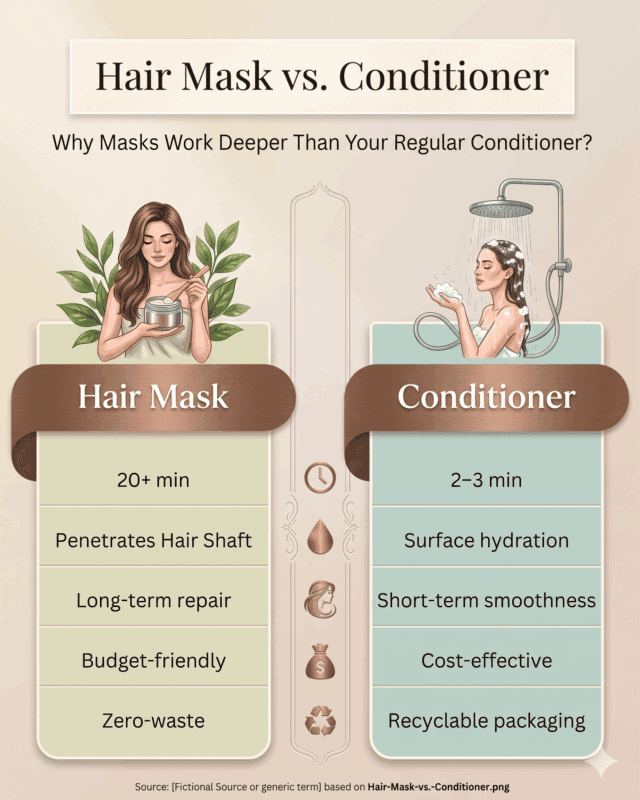
Understanding how a hair mask differs from conditioner is the first step to using both effectively. They are not interchangeable in function, even if they feel similar in the bottle.
Conditioner: Daily Detangling and Surface Care
Think of your conditioner as daily maintenance. It is designed to be used after every shampoo to smooth the hair cuticle, add light moisture, and make detangling easier. Most formulas contain mild conditioning agents like silicones or cationic surfactants that coat the outer layer of the hair, giving instant softness and shine.
Key traits include a lightweight and fluid texture that acts on the cuticle only. The recommended dwell time is 30 seconds to 2 minutes, making it ideal for daily use on all hair types.
Hair Mask: Weekly Repair and Deep Nourishment
A hair mask is your hair is weekly reset button. Packed with concentrated oils, butters, proteins, and humectants, it penetrates deep into the hair cortex to repair damage, restore moisture, and strengthen weak strands.
Key traits include a thick, creamy, or oil-based consistency that targets the internal hair structure. The recommended dwell time is 5 to 20 minutes, or overnight if the product is specifically labeled for extended use.
When to Use a Hair Mask Instead of Conditioner
You do not need both every time, but you should replace your conditioner with a mask regularly for deep care.
Use a Mask in Place of Conditioner When
Your hair feels dry or straw-like. You have recently colored, bleached, or heat-styled. It is winter or you are exposed to sun, wind, or chlorine. You notice increased breakage or split ends.
Simply skip the conditioner and apply the mask after shampooing. One weekly swap is enough for most people.
Keep Using Both When
You have severely damaged or coily (4C) hair. Layer a light conditioner over the mask for extra moisture and slip. You are using a bond-repair treatment. Some formulas require no additional conditioner, so always check instructions.
Step-by-Step: How to Apply a Hair Mask
Follow this science-backed method to ensure your mask actually works and does not just sit on the surface.
Shampoo First
Start with clean hair, unless you are using a pre-shampoo oil treatment. Shampoo removes dirt, oil, and buildup so the mask can penetrate effectively. Use a gentle, sulfate-free formula if your hair is dry or damaged. For heavy product buildup, use a clarifying shampoo once a month, but avoid overuse as it can strip natural oils.
Towel-Dry to Damp
After rinsing shampoo, gently squeeze out excess water. Then, blot with a microfiber towel or cotton T-shirt, never rub. Soaking wet hair cannot absorb nutrients well. Damp hair ensures even distribution and better uptake of active ingredients.
Apply from Mid-Lengths to Ends
Use a quarter-sized amount for shoulder-length hair, more for longer or thicker strands. Focus on the mid-lengths and ends, the oldest and most damaged parts of your hair. Avoid the roots unless the formula is lightweight or specifically designed for scalp use.
Comb Through for Even Distribution
Use your fingers to spread the mask, then follow with a wide-tooth comb. Start from the ends and work upward to detangle and align the cuticle. This ensures every strand gets treated and boosts shine.
Let It Sit for the Right Time
Leave the mask on for the recommended duration. Quick masks need 1 to 5 minutes. Standard deep treatments need 5 to 10 minutes. Intensive repair needs 10 to 20 minutes. Overnight masks are only for products specifically labeled for extended use.
Do not assume longer is better. Overuse can lead to buildup, limpness, or protein overload in protein-rich formulas.
Rinse Thoroughly with Cool Water
Rinse with lukewarm to cool water for at least 2 to 3 minutes. Cool water seals the cuticle, locking in moisture and boosting shine. Keep rinsing until hair no longer feels slippery, water runs clear, and no residue remains.
How Often Should You Use a Hair Mask
Frequency depends on your hair type and condition. Use this guide to find your sweet spot.
For dry or frizzy hair, use a mask 2 to 3 times per week to boost hydration, especially in winter. For damaged or color-treated hair, use 1 to 2 times per week to prevent breakage and fading. For fine or oily hair, use every 2 to 3 weeks with lightweight formulas applied only to ends. For low-porosity or 4C hair, use 1 to 2 times per week as heat helps absorption. For healthy hair, use once per week or biweekly to maintain strength and shine.
Choosing the Right Mask for Your Hair Concern

Using the wrong formula can make things worse. Match your mask to your hair is specific needs.
Dry Hair
Look for coconut, shea butter, avocado, honey, or banana. These ingredients provide intense hydration.
Damaged or Bleached Hair
Look for keratin, amino acids, or hydrolyzed proteins. These rebuild the hair structure.
Frizzy or Humid-Prone Hair
Look for argan oil, glycerin, ceramides, or silicones. Pair with an anti-frizz serum for all-day smoothness.
Color-Treated Hair
Look for UV filters, antioxidants, or sunflower seed extract. These protect vibrancy and prevent fading.
Fine or Oily Hair
Look for lightweight, fast-rinse, volumizing formulas. Avoid heavy butters and apply only to ends.
4C or Coily Hair
Look for rich creams with shea butter and oils. Use heat (cap or warm towel) to boost absorption.
Special Techniques for Better Results
Maximize your mask is power with these pro-level upgrades.
Use Heat for Deeper Penetration
Cover your hair with a shower cap or warm towel during treatment. The steam effect opens the cuticle, letting oils and proteins sink in deeper. For faster results, use a low-heat blow dryer over the cap for 5 to 10 minutes.
Try an Overnight Mask Carefully
Only use products specifically labeled for overnight wear. Apply to damp hair before bed and protect your pillow with a silk scarf or pillowcase. Never leave a regular rinse-out mask on overnight as it can cause buildup or greasiness.
Use a Pre-Shampoo Oil Treatment
Apply oils like coconut or argan to dry hair 30 minutes to overnight before washing. The oil penetrates the cuticle more effectively without water competition.
Try a Leave-In Mask
Some masks are designed to stay in. Apply to damp hair after washing, no rinsing needed. Perfect for busy routines and ongoing protection.
Common Mistakes to Avoid
Even with the right product, these errors can ruin your results.
Applying to roots causes greasiness, especially in fine or oily hair. Stick to mid-lengths and ends. Using too much product leads to buildup and hard-to-rinse residue. Start with a small amount and add only if needed. Skipping the comb-through means uneven distribution and some strands get no benefit. Always comb through. Leaving on too long, unless labeled for extended wear, can weigh hair down. Never exceed 20 minutes. Rinsing with hot water opens the cuticle and strips moisture. Always finish with cool or lukewarm water. Using on dirty hair means buildup blocks penetration. Always start with clean, freshly shampooed hair. Expecting instant fixes, severely damaged hair takes 4 to 6 weeks of consistent use to improve.
DIY Masks vs. Professional Products
DIY Masks
Homemade blends like avocado with honey or egg with yogurt are budget-friendly and natural, but they come with risks. They offer poor penetration, messy application, and inconsistent results. There is also risk of protein overload with eggs and bacterial growth if stored. DIY masks are best for occasional pampering, not serious repair.
Professional Masks
Lab-formulated masks contain advanced ingredients like hyaluronic acid, ceramides, and UV filters. They penetrate deeply, are clinically tested, and offer targeted solutions. For real damage control, go professional.
When to See a Stylist Instead of Just Using a Mask
At-home care works for maintenance, but not for crisis.
See a stylist if your hair is breaking off or shedding excessively. You have had a chemical burn or failed perm. Your scalp is itchy, flaky, or irritated. You see no improvement after 6 to 8 weeks of mask use. You are unsure what your hair needs.
Professionals offer scalp analysis, steam treatments, and customized plans.
Seasonal Masking: Adjust for Climate
Your environment changes your hair is needs.
Winter (Dry Air)
The problem is brittle, static-prone hair. The fix is using intensive moisturizing masks twice per week and adding weekly oil treatments.
Summer (Humidity and UV)
The problem is frizz, color fade, and loss of definition. The fix is switching to anti-frizz, UV-protective masks and using leave-ins with heat defense.
Sample Weekly Routines by Hair Type
Damaged Hair
Monday: Shampoo plus hair mask plus leave-in. Wednesday: Co-wash only. Friday: Shampoo plus hair mask plus leave-in. Sunday: Light oil treatment on ends only.
Normal Hair
Tuesday: Shampoo plus conditioner plus leave-in. Friday: Shampoo plus hair mask plus leave-in.
Fine Hair
Monday: Shampoo plus conditioner plus lightweight leave-in. Thursday: Shampoo plus conditioner plus lightweight leave-in. Every other week: Swap conditioner for lightweight mask on ends only.
Curly or Coily Hair
Sunday: Pre-poo oil plus shampoo plus hair mask plus leave-in plus curl cream. Wednesday: Co-wash plus light conditioner plus leave-in plus curl cream. As needed: Refresh with water plus leave-in.
Key Takeaways for Using Hair Mask and Conditioner
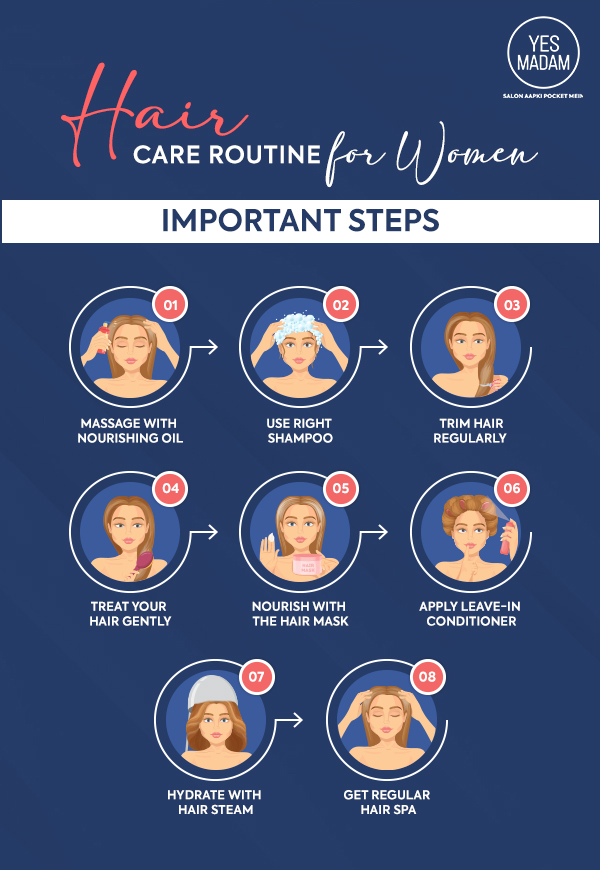
Knowing how to use hair mask and conditioner properly turns good hair days into great ones. Pick the right formula by matching it to your hair type and concern. Apply to clean, damp hair focusing on mid-lengths to ends only. Use heat like a shower cap or towel to boost absorption. Rinse thoroughly with cool water to seal the cuticle. Use 1 to 2 times per week, not daily. Layer with a leave-in to lock in moisture. Adjust seasonally as winter needs more moisture and summer needs frizz control.
Skip the guesswork. Use conditioner daily, swap in a mask weekly, and watch your hair transform stronger, smoother, and healthier with every wash.
Frequently Asked Questions About Hair Mask and Conditioner
Can I use a hair mask every day?
No. Daily use causes product buildup, over-conditioning, and greasy, limp hair. Use 1 to 2 times per week maximum.
Should I use a hair mask before or after coloring?
Apply a mask 1 to 2 days prior to coloring to strengthen hair and minimize damage. After coloring, wait 48 to 72 hours to allow the color to set before using a mask.
My hair feels worse after using a mask. What went wrong?
Possible causes include wrong formula for your hair type, inadequate rinsing, applying to roots, using too frequently, or protein overload from protein-rich masks.
Can hair masks fix split ends?
No product can repair split ends. They must be trimmed. However, masks can prevent further splitting and improve overall appearance.
Is it better to apply a mask to damp or dry hair?
Rinse-out masks should be applied to damp (not soaking wet) hair. Oil-based or pre-poo masks can be applied to dry hair the night before washing.
Do you need both a conditioner and a hair mask?
Yes, for most people. They serve different roles. Conditioner provides daily maintenance while mask offers weekly deep treatment. Use conditioner after every wash and substitute with a mask 1 to 2 times per week.