If you’re looking for a natural, affordable way to boost hair growth and improve overall hair health, flaxseed gel might be the solution you’ve been missing. Packed with omega-3 fatty acids, vitamin E, and mucilage, this DIY hair treatment nourishes the scalp, strengthens strands, and reduces breakage. Unlike synthetic gels that dry out hair, flaxseed gel hydrates, protects, and supports a healthy follicle environment.
In this guide, you’ll learn exactly how to make flaxseed gel at home, apply it for maximum growth benefits, avoid common mistakes, and keep it fresh. Whether you have curly, coily, wavy, or fine hair, this natural gel can be customized to your needs, and with just a few simple ingredients, you can start seeing results in weeks.
Make Flaxseed Gel at Home
Creating your own flaxseed gel is fast, cheap, and requires only two ingredients. The gel forms when whole flaxseeds are boiled in water, releasing a nutrient-rich mucilage that coats and strengthens hair.
Basic Flaxseed Gel Recipe
Ingredients:
- ¼ cup whole brown flaxseeds
- 2 cups filtered water
Steps:
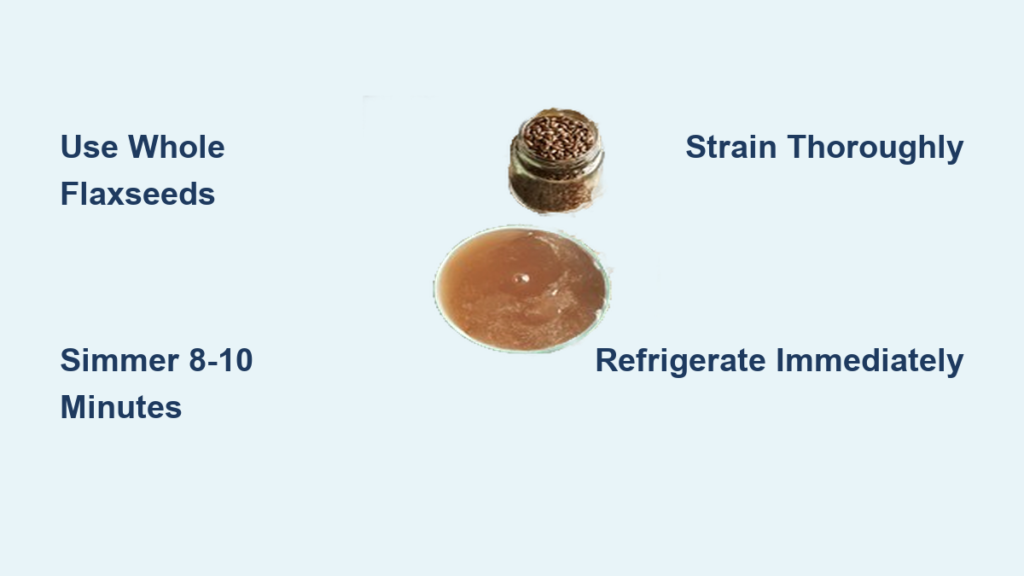
- Combine flaxseeds and water in a small saucepan.
- Bring to a boil over medium heat, stirring occasionally.
- Reduce heat and simmer for 8 to 10 minutes until the liquid thickens to a runny egg-white consistency.
- Remove from heat immediately. Overcooking makes the gel too thick.
- Strain through a fine-mesh sieve, cheesecloth, or clean stocking into a glass jar.
- Let cool before sealing.
- Store in the refrigerator for up to 2 weeks.
Pro Tip: You can reuse the same seeds once by adding fresh water and repeating the process. The second batch will be weaker but still usable.
Boost Your Gel with Add-Ins
Enhance your flaxseed gel with natural ingredients tailored to your hair goals.
Add Aloe Vera for Scalp Soothing
- Mix 1 to 2 tablespoons of pure aloe vera gel into the warm flaxseed gel after staining.
- Ideal for dry, itchy, or sensitive scalps. Aloe vera reduces irritation and boosts hydration.
Mix in Coconut Oil for Deep Moisture
- Stir in 1 teaspoon of melted coconut oil or sweet almond oil after cooling slightly.
- Best for thick, coarse, or high-porosity hair that needs extra sealing.
Use Essential Oils for Growth and Preservation
- Add 5 to 10 drops of rosemary or lavender essential oil after cooling.
- Rosemary stimulates circulation to the scalp. Lavender calms inflammation and extends shelf life.
Warning: Always do a patch test before using essential oils to avoid allergic reactions.
Apply Flaxseed Gel for Hair Growth
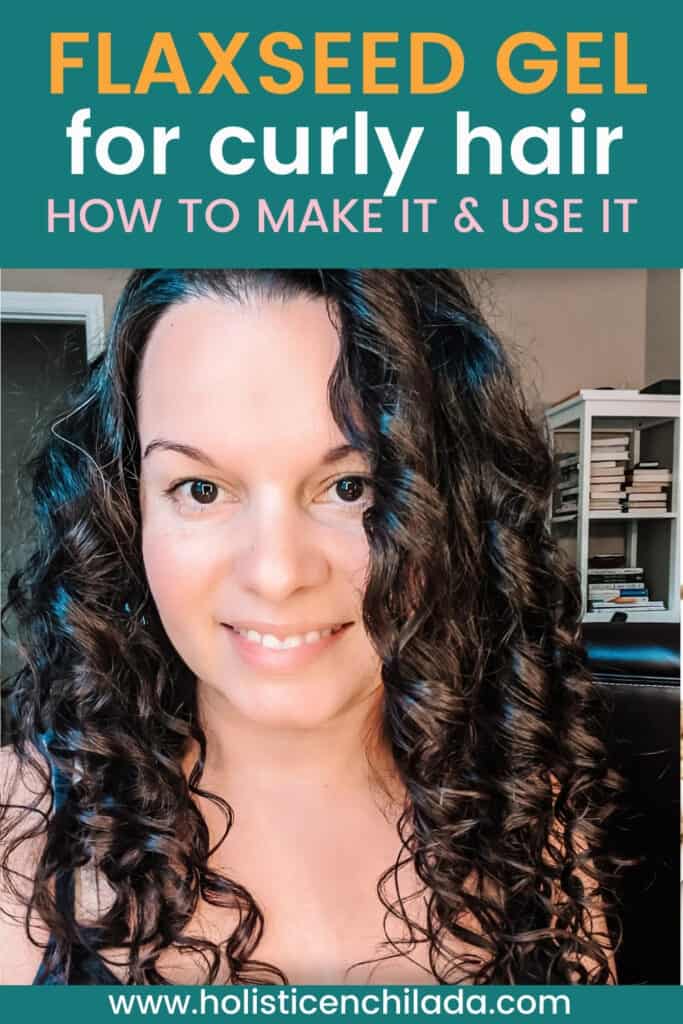
Using flaxseed gel is not just about styling. It delivers nutrients directly to your scalp and strands to encourage stronger, longer hair.
Prep Hair for Best Absorption
Flaxseed gel works best on clean, damp hair. Follow these steps:
- Wash and condition your hair thoroughly.
- Rinse out all product residue.
- Towel-dry until damp, not dripping.
- Section hair if needed for even application.
Why it matters: Applying to dry hair can cause flaking and uneven distribution. Damp hair absorbs the gel better and prevents stiffness.
Massage Gel Into Scalp for Growth
To stimulate hair growth:
- Scoop a generous amount of gel. Start with 1 to 2 tablespoons.
- Use fingertips to massage directly into the scalp, focusing on thinning areas or edges.
- Leave on for 15 to 20 minutes as a treatment.
- Rinse thoroughly, then shampoo and condition.
Expert Tip: Do this 2 to 3 times per week for best results. For deeper treatment, leave a light layer on overnight and wear a shower cap.
Use for Styling and Definition

Flaxseed gel naturally defines curls and tames frizz without crunch.
For Curly and Coily Hair (Type 3 to 4)
- Apply a walnut-sized amount to soaking wet hair.
- Use the praying hands method to smooth gel down sections.
- Scrunch upward to encourage curl clumping.
- Air-dry or diffuse.
- Once dry, gently scrunch to break the cast, revealing soft, defined curls.
For Wavy Hair (Type 2)
- Scrunch gel into damp hair to enhance natural wave.
- Avoid over-application to prevent weighing down fine waves.
- Diffuse or air-dry for touchable texture and reduced puffiness.
For Straight or Fine Hair
- Use a pea-sized amount.
- Apply only to ends or flyaways.
- Smooth over edges to lay them down without heaviness or greasiness.
Pro Tip: Flaxseed gel is excellent for softening locs, sealing splits, and aiding retwisting when applied lightly.
Maximize Results with Frequency and Routine
Consistency is key to seeing real changes in hair strength and length.
How Often to Use Flaxseed Gel
| Purpose | Frequency |
|---|---|
| Scalp treatment for growth | 2 to 3 times per week |
| Styling curls or waves | After every wash |
| Leave-in conditioner | As needed, post-wash |
| Pre-shampoo treatment | Once per week |
Note: Flaxseed gel is gentle enough for daily use, especially as a leave-in or styling aid.
Ideal Weekly Routine for Growth
- Day 1: Wash hair, apply flaxseed gel to scalp, leave 20 minutes, then rinse and style.
- Day 3: Reapply as a light leave-in to damp hair after refreshing curls.
- Day 5: Repeat scalp treatment.
- Day 7: Clarify with a mild shampoo to prevent any buildup.
Store Flaxseed Gel Properly
Because it is all-natural, flaxseed gel spoils quickly if not stored correctly.
Refrigeration Is Required
- Shelf life in fridge: Up to 2 weeks
- At room temperature: Spoils in 1 to 3 days. Do not store unrefrigerated.
Storage Tips:
– Use a clean glass jar with a tight lid.
– Label with the date made.
– Make small batches to ensure freshness.
Signs Your Gel Has Gone Bad
- Cloudy or discolored appearance
- Sour or fermented smell
- Mold spots or bubbles
- Separation that will not remix
If any of these appear, discard immediately. Using spoiled gel can irritate the scalp.
Extend Shelf Life Naturally
- Add 5 to 10 drops of rosemary essential oil or grapefruit seed extract. These are natural preservatives.
- Include vitamin E oil. One capsule prevents oxidation.
Avoid adding essential oils if you are sensitive or new to flaxseed gel. Test first.
Avoid Common Mistakes
Even with the best intentions, mistakes can reduce effectiveness or cause irritation.
Overcooking the Gel
- Problem: Gel becomes too thick and hard to strain.
- Fix: Simmer only until it reaches a thin, slippery consistency like egg whites. Remove from heat promptly.
Using Too Much Gel
- Problem: Causes stiffness, flaking, or buildup.
- Fix: Start small. Use a dime to walnut-sized amount depending on hair length and thickness. Add more only if needed.
Applying to Dry Hair
- Problem: Leads to flakiness and uneven hold.
- Fix: Always apply to damp or wet hair for smooth, even distribution.
Skipping the Strain
- Problem: Leftover seeds can tangle hair or clog pores.
- Fix: Use a fine-mesh strainer, cheesecloth, or clean sock to filter completely.
Using Ground Flaxseed
- Problem: Will not form proper gel consistency.
- Fix: Use whole flaxseeds only. They release mucilage when boiled.
Not Patch Testing
- Problem: Possible allergic reaction, though rare.
- Fix: Apply a small amount behind your ear or on your forearm. Wait 24 hours. If no redness or itching, it is safe to use.
Remember: Flaking is normal with overuse and can be brushed out. It is not dandruff. It is excess gel drying on the surface.
Know Safety and Precautions
While flaxseed gel is safe for most people, a few precautions are important.
Allergic Reactions
- Do not use if you are allergic to flax or linseed.
- Patch test before full application.
- Discontinue use if you experience itching, redness, or swelling.
Hormonal Considerations
- Flaxseeds contain lignans, which have weak estrogen-like effects.
- If you are pregnant, breastfeeding, or have hormone-sensitive conditions, consult your doctor before using flaxseed products topically.
Never Ingest Homemade Gel
- Raw flaxseed is poorly digested and may cause digestive issues.
- Homemade gel is for external use only.
- For internal benefits, consume ground flaxseed in food or supplements.
Choose the Right Hair Type and Texture
Flaxseed gel works for all hair types when used correctly.
Best for Curly and Coily Hair
- Enhances curl definition
- Reduces frizz
- Prevents shrinkage
- Helps with edge control
User Feedback: It is amazing at creating nice curl clumps to reduce frizz.
Great for Wavy Hair
- Boosts natural wave pattern
- Adds body without weight
- Controls puffiness
Safe for Fine or Straight Hair
- Use sparingly to avoid heaviness.
- Apply only to ends or edges.
- Adds subtle shine and softness.
Ideal for Locs
- Softens and moisturizes
- Helps with retwisting
- Seals and defines without buildup
Tip: Apply small amounts during maintenance for best results.
Compare Flaxseed Gel vs. Commercial Products
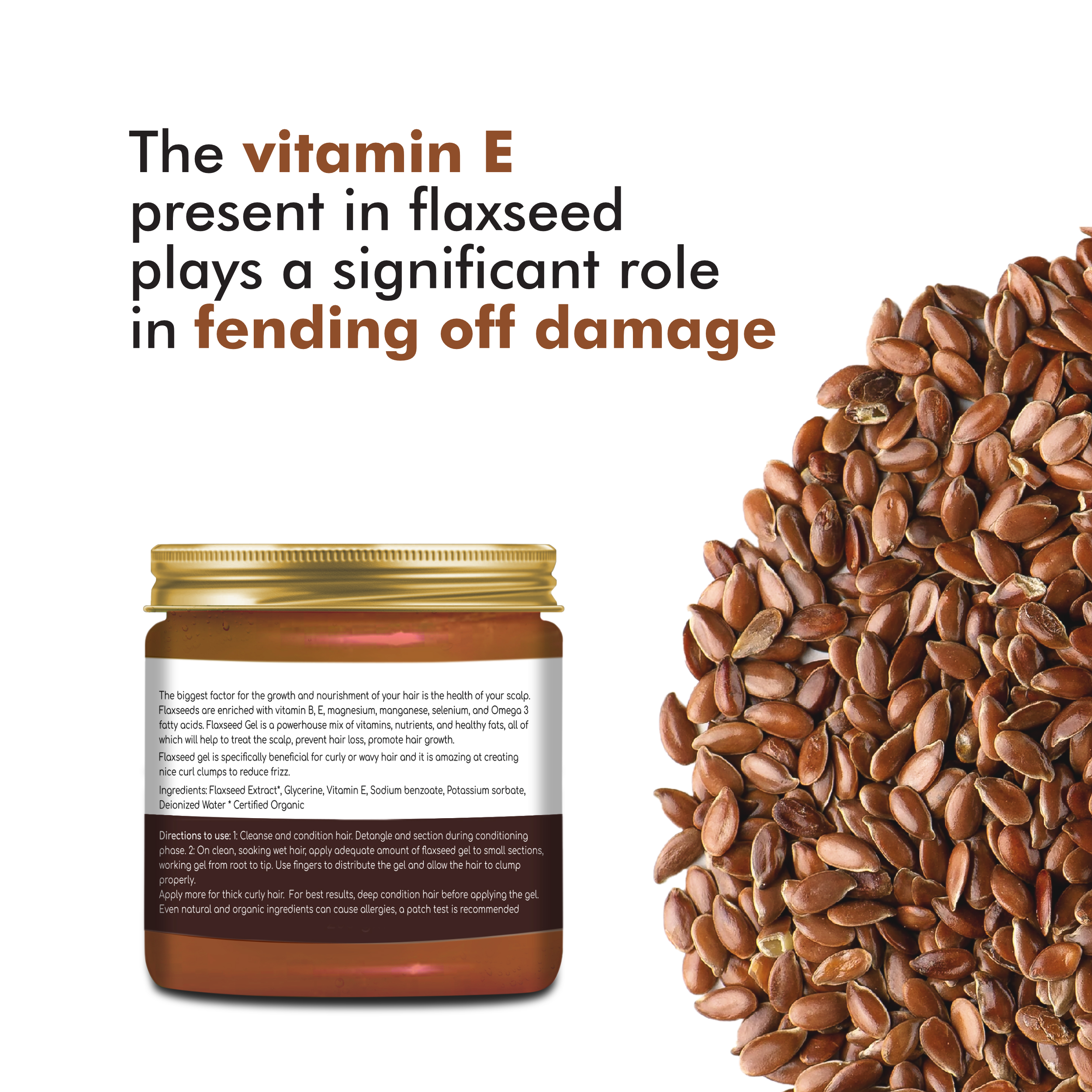
Why choose flaxseed gel over store-bought options?
| Feature | Flaxseed Gel | Commercial Gels |
|---|---|---|
| Hold | Flexible, soft cast | Often stiff, crunchy |
| Ingredients | Natural, edible | Synthetic polymers, alcohols |
| Moisture | High, humectant | Often drying |
| Build-up | Minimal, easy to wash out | Can accumulate, needs clarifying |
| Cost | About $0.05 per use | $10 to $50 per bottle |
| Eco Impact | Biodegradable, zero waste | Plastic waste, chemical runoff |
Bottom Line: Flaxseed gel wins in health, cost, and sustainability, even if it requires more prep.
Expert Tips for Best Results
Hair professionals and long-term users share their top strategies.
Celeste Arnold (Stylist)
- Use as a pre-shampoo mask. Apply, leave 15 minutes, then shampoo.
- Mix with collagen powder. Add before cooling for added protein strength.
- Ideal for defining curls and laying edges on 4c hair.
Holly Zoccolan (Holistic Coach)
- Works best on curly and wavy textures.
- Add essential oils for scent and preservation.
- Always prep with clean, conditioned hair.
Kimberly Lewis (CurlMix)
- Try the advanced recipe with xanthan gum and marshmallow root for smoother texture and longer shelf life.
- Include visual guides or videos if teaching others.
Long-Term User (4+ Years of Use)
- Apply to towel-dried hair, not soaking wet, for easier routine integration.
- Reuse seeds once.
- Works on all textures, including fine curls and thick waves.
Summary: Best Practices for Hair Growth
Follow these 10 steps for optimal results:
- Use whole flaxseeds. Never ground.
- Simmer 8 to 10 minutes until gel forms.
- Strain thoroughly with cheesecloth or fine mesh.
- Store in fridge. Lasts up to 2 weeks.
- Patch test before first use.
- Wash hair first. Apply to clean, damp strands.
- Massage into scalp 2 to 3 times weekly for growth.
- Style with praying hands or scrunching for definition.
- Break the cast by gently scrunching dry hair.
- Start small. Adjust amount based on hair type.
Frequently Asked Questions About Flaxseed Gel for Hair Growth
How long does it take to see results from using flaxseed gel for hair growth?
Most users report noticing improvements in hair texture and reduced breakage within 3 to 4 weeks of consistent use. For visible length retention and growth, plan to use the gel regularly for at least 2 to 3 months. Results depend on your current hair health, diet, and overall hair care routine.
Can I use flaxseed gel on color-treated or chemically processed hair?
Yes, flaxseed gel is safe for color-treated hair. It is free from harsh chemicals that can strip color. In fact, its moisturizing properties help protect processed hair from drying out. Apply to damp hair after coloring to maintain vibrancy and softness.
Does flaxseed gel help with hair loss or thinning?
Flaxseed gel may help reduce hair loss caused by breakage by strengthening the hair shaft with omega-3s and vitamin E. It improves scalp health and circulation, which can support follicle function. However, it is not a treatment for pattern baldness or medical hair loss conditions.
Can I use flaxseed gel on my eyebrows or beard?
Yes, you can apply flaxseed gel to eyebrows or facial hair for added shine and control. Use a small amount to avoid stiffness. It can help style brows or condition beard hair. Always patch test first if you have sensitive skin.
How do I know if my flaxseed gel has gone bad?
Discard the gel if you notice a sour smell, cloudy discoloration, mold, or bubbles that will not remix. Any change in texture or odor indicates bacterial growth. When in doubt, throw it out. Fresh gel should have a neutral, slightly nutty smell.
Can I combine flaxseed gel with other hair products?
Yes, flaxseed gel layers well with other products. Apply it to damp hair before your regular styling cream or butter. You can also mix it with aloe vera gel or a light oil for added moisture. Avoid mixing with heavy products that may cause buildup.
Key Takeaways for Using Flaxseed Gel for Hair Growth
Flaxseed gel stands out as a powerful, natural tool for healthier, stronger, and longer hair. Its nutrient profile provides a strong scientific basis for hair benefits, combining omega-3 fatty acids, vitamin E, lignans, and mucilage to nourish follicles, reduce breakage, and enhance shine. With proper use, flaxseed gel is more than a styling aid. It is a holistic treatment that supports growth from root to tip.
Start by making small batches at home using whole flaxseeds and filtered water. Store everything in the refrigerator and use within 2 weeks. Apply the gel to clean, damp hair, massaging it into the scalp 2 to 3 times weekly for growth benefits, or use it as a styling product for curl definition. Adjust the amount based on your hair type, and always patch test before your first full application.