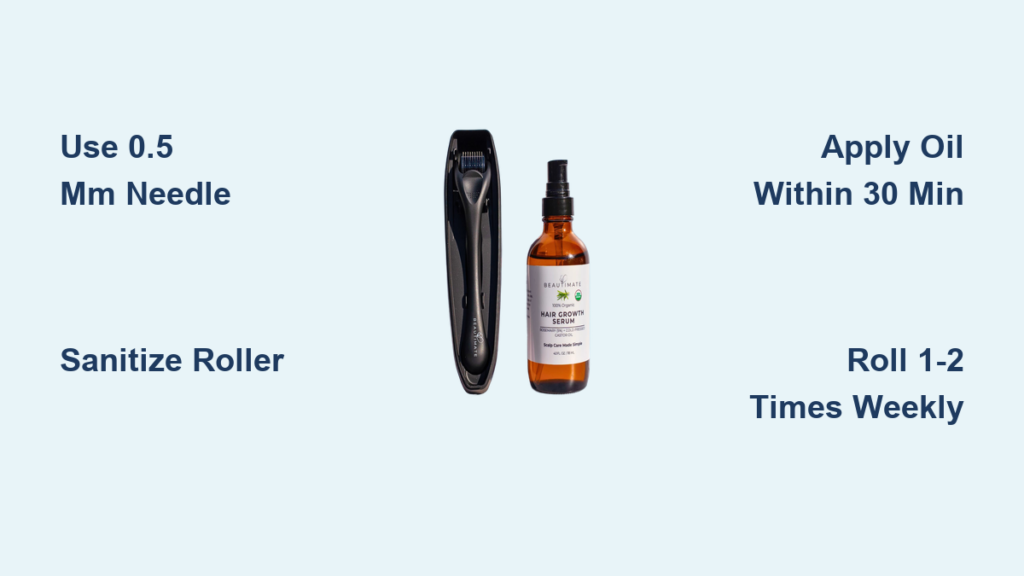
If you’re struggling with thinning hair, a receding hairline, or just want to boost scalp health, combining a derma roller with rosemary oil is one of the most effective natural strategies available. This powerful duo leverages microneedling to stimulate dormant follicles and rosemary oil to nourish them, creating a synergistic effect that enhances hair density, thickness, and regrowth.
Scientific studies show that microneedling outperforms 2% minoxidil in some cases, and rosemary oil performs as well as minoxidil but with fewer side effects. In this guide, you’ll learn exactly how to use a derma roller with rosemary oil for maximum results, from choosing the right needle length to applying rosemary oil correctly and avoiding common mistakes.
Choose the Right Derma Roller for Hair Growth

Select the Optimal Needle Length
The needle length determines how deep the micro-injuries go and directly impacts safety and effectiveness for hair growth.
For beginners, 0.25 to 0.3 mm offers the best starting point. This length enhances product absorption without breaking the skin deeply and can be used 2 to 3 times per week. For mild thinning, 0.5 mm stimulates collagen and follicle activity effectively and works well once or twice weekly. For moderate to advanced hair loss, 1.0 to 1.5 mm reaches deeper dermal layers where it creates the strongest wound-healing response, but limit use to once per week to avoid irritation.
Pro tip: Start with 0.5 mm if you’re new to microneedling. Gradually increase to 1.0 mm after 4 to 6 weeks of consistent use. Never exceed 1.5 mm unless under professional supervision, as risk of bleeding, infection, and scarring increases significantly.
Pick Your Device Type
| Device | Best For | Recommended Frequency |
|---|---|---|
| Derma Roller | Full scalp coverage, budget-friendly | Weekly |
| Derma Stamp | Precision work on hairline and temples | Weekly |
| Dermapen | Clinical-grade depth control | Professional use |
For home use, a 580-needle 0.5 mm derma roller or adjustable derma stamp offers the best balance of safety, coverage, and results.
Prepare Your Scalp and Tools Before Treatment
Cleanse Your Scalp Thoroughly
Always start with a clean, dry scalp to prevent pushing bacteria into open micro-channels. Wash your hair with a gentle shampoo, removing all oils, dirt, and styling product buildup. Do not apply conditioner before treatment. Towel-dry completely or leave slightly damp if preferred.
Sanitize the Derma Roller
Failure to disinfect is the number one cause of infection. Soak the needle head in 70% isopropyl alcohol for 5 to 10 minutes before and after each use. Never submerge the handle. Wipe it with a clean cloth instead. Air-dry on a clean towel, then store in a sealed case.
Never share your device with anyone. Cross-contamination can lead to fungal or bacterial infections that may damage your scalp further.
Perform Scalp Microneedling Correctly
Section Your Hair for Complete Coverage
Divide your scalp into 4 to 6 sections using clips. Separate front left and right, crown, back left and right, and nape if treating neck hair. This ensures even coverage and prevents missed spots.
Roll in Multiple Directions
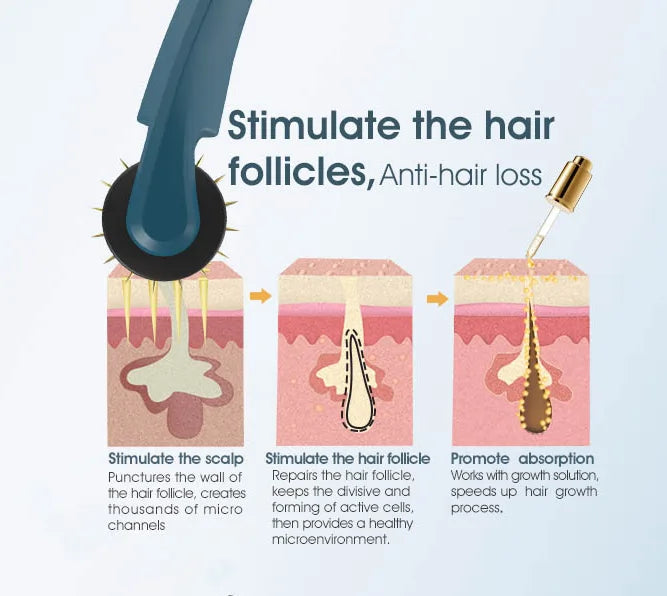
Use gentle, even pressure and never force the roller. Roll each section in four directions: vertically from front to back, horizontally side to side, diagonally from top-left to bottom-right, and diagonally from top-right to bottom-left. Perform 4 to 6 passes per direction, totaling 10 to 15 rolls per section.
Focus extra time on thinning areas including the hairline, temples, crown, and part lines. These areas respond best to microneedling due to higher follicular sensitivity.
Stop immediately if you feel pain, see bleeding, or develop significant redness. You’re using too much pressure or the wrong needle length. A typical session should take 5 to 10 minutes total.
Apply Rosemary Oil Immediately After Rolling
Why Timing Matters
Micro-channels stay open for up to 30 minutes post-rolling. Applying rosemary oil during this window boosts absorption up to 100 times more than surface application alone. Delaying application significantly reduces penetration and effectiveness.
Use Properly Diluted Oil
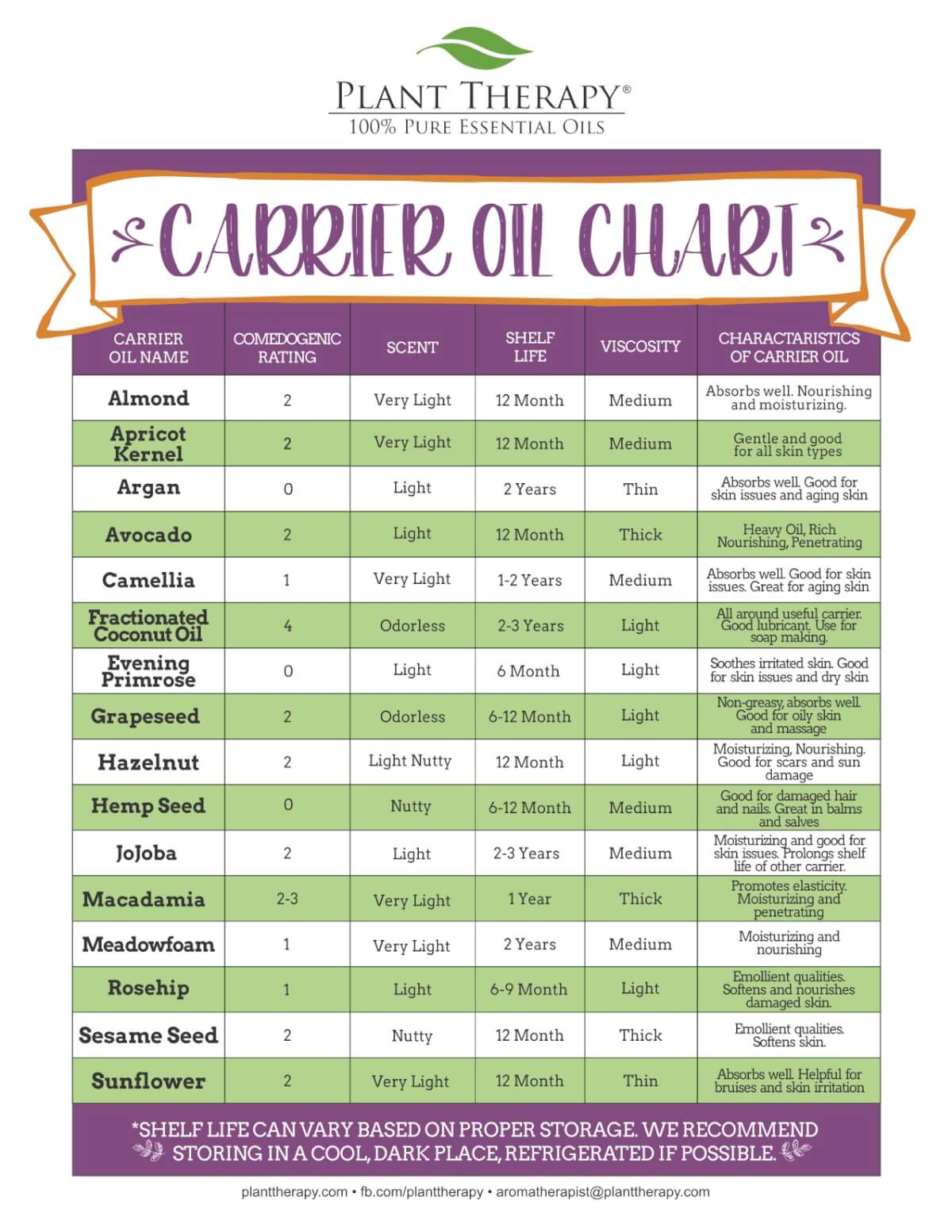
Never apply undiluted essential oil to microneedled skin. Mix 3 to 5% rosemary essential oil in a carrier oil, using 6 to 10 drops per teaspoon of jojoba, castor, coconut, or almond oil. Castor oil is particularly beneficial because it’s rich in ricinoleic acid, which offers anti-inflammatory and deeply moisturizing properties.
Apply 2 to 4 drops per scalp section. Warm the oil slightly in your hands before application. Massage gently in circular motions for 3 to 5 minutes, covering all treated areas thoroughly.
Best practice: Leave the oil on overnight. Wash out with a mild shampoo the next morning.
Follow the Optimal Treatment Schedule

How Often to Microneedle
| Needle Length | Recommended Frequency |
|---|---|
| 0.3 to 0.5 mm | 2 times per week if well-tolerated |
| 1.0 mm | Once per week |
| 1.5 mm | Once per week maximum |
Overuse causes inflammation, delays healing, and may worsen shedding. More is not better.
How Often to Apply Rosemary Oil
Rosemary oil is safe and beneficial for daily use. Apply it after every microneedling session for maximum absorption, or use it every other day on non-rolling days to maintain scalp health.
Rotation tip: Use rosemary oil after microneedling and minoxidil on alternate nights to avoid irritation from combining actives.
Know What Results to Expect and When

Realistic Timeline for Hair Growth
During weeks 2 to 4, expect temporary shedding which is normal as weak hairs make way for new growth. You may notice improved scalp texture and reduced itching.
By weeks 6 to 8, hair fall decreases significantly and baby hairs often appear in thinning areas. Hair looks healthier and shinier.
From weeks 8 to 12, visible density increase becomes apparent with thicker strands and reduced scalp visibility.
At 3 to 6 months, most users report measurable regrowth and fuller crown or hairline coverage.
After 4 to 6 months, optimal results typically emerge for most users. Results vary by age, genetics, and consistency. Stick with the routine for at least 3 to 6 months before evaluating effectiveness.
Avoid These Common Mistakes
Do Not Over-Roll or Use Dull Needles
Rolling more than once per day or more than 3 times per week damages the scalp. Replace your derma roller every 10 to 15 uses when needles become bent or dull. Damaged needles cause tearing and inconsistent results.
Never Skip Sanitization
A dirty roller introduces bacteria into micro-wounds, risking folliculitis, infection, and scarring. Clean before and after every single use without exception.
Avoid Treatment on Inflamed Skin
Do not use this method if you have active acne, psoriasis, eczema, open wounds, recent sunburn, or chemical treatment damage. Wait until your skin is fully healed before starting treatment.
Combine with Other Treatments Safely
Using Minoxidil Alongside Rosemary Oil
Yes, you can combine these treatments, but don’t apply them at the same time immediately after rolling. Option one: use rosemary oil after microneedling and apply minoxidil on alternate nights. Option two: wait 24 hours after rolling before applying minoxidil if your scalp is sensitive.
Microneedling increases minoxidil absorption significantly, so you may need less product than usual.
Mixing Rosemary Oil with Other Oils
Effective blends include rosemary plus castor oil for thickening and reducing inflammation, rosemary plus peppermint oil for cooling and circulation boost, and rosemary plus jojoba oil to mimic natural sebum and prevent dryness. Always dilute essential oils in a carrier oil before applying to microneedled skin.
Who Should Skip This Treatment
Contraindications
Do not use this treatment if you have active scalp infections including fungal, bacterial, or viral issues. Avoid if you suffer from keloid scarring tendencies. Skip treatment if you are pregnant or breastfeeding until consulting your doctor first.
Do not use if you have bleeding disorders or take blood thinners. Avoid if undergoing chemotherapy or have autoimmune alopecia unless under professional supervision.
Consult a dermatologist if you’re unsure about your hair loss type or cause before starting any treatment protocol.
Maintain Long-Term Results
Keep a Consistent Routine
To sustain growth, continue microneedling 1 to 2 times per week. Apply rosemary oil daily or every other day. Replace your device every 3 to 6 months.
After 6 months, you can reduce frequency but don’t stop entirely. Follicles may revert to previous states without ongoing stimulation.
Support Hair Health Holistically
Maximize results by maintaining a balanced diet high in protein, iron, zinc, biotin, and omega-3s. Manage stress effectively since chronic stress triggers shedding. Get adequate sleep of 7 to 8 hours nightly. Avoid tight hairstyles, excessive heat tools, and harsh chemical dyes.
When Professional Help Is Needed
Consult a dermatologist if you’re unsure of your hair loss type, have thyroid issues, lupus, or hormonal imbalances, or want to combine microneedling with finasteride, spironolactone, or PRP treatments.
A dermatologist can confirm viable follicles, recommend optimal needle depth for your specific situation, and rule out underlying conditions that may require medical treatment.
Final Tips for Maximum Hair Growth
Pro tips from experienced users include rolling at night so redness fades by morning, using a warm shower cap to enhance oil penetration, taking monthly photos to track progress objectively, and massaging for at least 5 minutes to maximize circulation benefits.
Real user feedback shows consistent results: “I saw baby hairs in my temples after 8 weeks. Using the roller made my rosemary oil finally work.” Users report reduced shedding, stronger hair, and improved scalp comfort.
Frequently Asked Questions About Using Derma Roller with Rosemary Oil
How often should I use a derma roller for hair growth?
Use your derma roller 1 to 2 times per week. More frequent use may damage the scalp and hinder recovery. Adjust frequency based on needle length and how well your skin tolerates treatment.
Can I use the derma roller on my entire scalp?
Yes. Cover the whole scalp with extra focus on areas experiencing thinning, balding, or poor density. Section your hair systematically to ensure no area gets missed.
Does derma rolling hurt?
No, when done correctly you should feel a mild pricking sensation but no pain. Adjust your pressure accordingly. Pain indicates excessive force or incorrect technique.
What size needle is best for hair growth?
For home use, 0.3 mm is ideal for beginners. For most users seeking meaningful results, 0.5 to 1.5 mm works best. Start low and increase gradually as your scalp adapts.
Can I leave rosemary oil on overnight after derma rolling?
Yes. Leaving oil on for several hours or overnight maximizes absorption and nourishment. Wash it out with a mild shampoo the next morning.
How long does a derma roller last?
Typically 3 to 6 months with weekly use. Replace when needles become bent, dull, or difficult to roll smoothly. Dull needles cause tissue damage rather than beneficial stimulation.
Key Takeaways for Using Derma Roller with Rosemary Oil
Using a derma roller with rosemary oil is a science-backed, natural way to reactivate thinning hair. The combination of mechanical stimulation through microneedling and biochemical nourishment from rosemary oil creates a synergistic effect that enhances absorption and supports follicle regeneration.
Success depends on choosing the right needle length starting at 0.5 mm, sanitizing your device before and after every use, applying diluted rosemary oil within 30 minutes post-rolling, and maintaining consistency for 3 to 6 months before evaluating results.
This method isn’t a miracle cure, but with proper technique, patience, and regular application, it delivers real, lasting improvements in hair density and scalp health. Combine this treatment with a healthy lifestyle, balanced nutrition, and stress management for the best possible outcomes.