
You’re getting ready for work, blow dryer in hand, and the moment you switch it on—snap—the bathroom lights go out. The breaker trips again. It’s frustrating, but more than that, it’s a warning. A hair dryer tripping a circuit breaker isn’t just an annoyance, it’s a sign your home’s electrical system is struggling to keep up with modern demands. Most hair dryers use 1,500 to 2,000 watts, drawing up to 16.67 amps on a standard 120-volt circuit, pushing the limits of older 15-amp circuits. The good news? You can diagnose and fix this safely.
In this guide, you’ll learn how to identify whether the problem is with your appliance, circuit, breaker, or wiring, and what permanent solutions like installing a dedicated 20-amp circuit can eliminate the issue for good.
Identify the Real Cause
Before replacing breakers or rewiring, determine whether the tripping is due to overload, appliance faults, or aging components. Jumping to conclusions can waste time and money. The key is isolating variables to pinpoint the source.
Isolate the Hair Dryer Load
Test if the dryer trips the breaker by itself. This simple step reveals whether shared devices are pushing the circuit over its limit.
- Turn off the bathroom circuit at the panel.
- Unplug every device on that circuit, don’t forget fans, lights, chargers, or heated mirrors.
- Restore power and plug in only the hair dryer.
- Run it on high heat for a full minute.
If it still trips, the issue likely lies with the breaker, wiring, or outlet.
If it works fine, then shared loads are the culprit. You’ll need to map the circuit to find hidden draws.
Pro Tip: Use a plug-in nightlight or radio on other outlets to quickly identify which ones go dead when the breaker flips.
Check for Appliance Defects
Even high-wattage dryers shouldn’t trip breakers if the circuit is properly sized. A defective dryer can draw excess current or leak to ground.
Warning signs of a bad dryer:
- Burning smell or sparks
- Discoloration on the plug or outlet
- Intermittent power or strange noises
- Trips breakers on multiple circuits
Test: Plug the dryer into a kitchen GFCI outlet (usually on a 20-amp circuit). If it trips there too, the appliance is likely faulty. Replace or repair it.
Measure Actual Current Draw

Guessing wattage isn’t enough. Use a clamp-on ammeter (~$20–$50) to measure real-time amp draw.
Steps:
- Shut off the breaker.
- Open the panel and locate the hot wire for the bathroom circuit.
- Clamp the meter around one hot wire (not the neutral or ground).
- Restore power and run the dryer on high.
- Read the amperage.
Expected readings:
- 1,500W = ~12.5A
- 1,875W = ~15.6A
- 2,000W = ~16.7A
If the reading exceeds the label, the dryer has an internal short.
If it matches but still trips, the breaker may be weak or the circuit undersized.
Decode Breaker Behavior
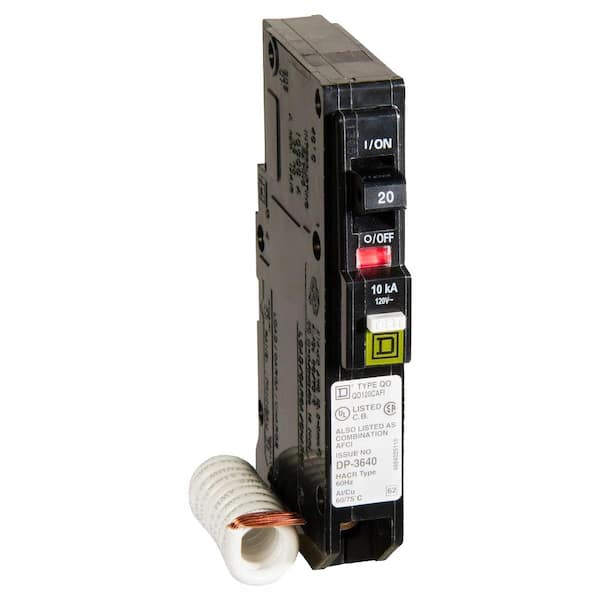
Not all trips are the same. How and when the breaker trips tells you what kind of protection triggered it, overload, ground fault, or arc fault.
Overcurrent vs. Ground Fault Trips
Overcurrent (overload):
- Caused by too many amps on the circuit
- Breaker heats up internally and trips after a few seconds
- Common with 15-amp circuits running high-wattage dryers
Ground Fault (GFCI):
- Triggered by current leakage (as low as 5mA)
- Trips instantly, even with small moisture or dust
- GFCI outlets or breakers have a “Test” button
If the breaker has a test button and trips immediately, it’s a GFCI issue, not overload.
Test for GFCI Sensitivity
Moisture in the bathroom can cause false GFCI trips, even from normal appliance leakage.
Diagnostic test:
- Plug the dryer into a non-GFCI outlet (e.g., garage or living room) with similar circuit rating.
- If it runs without tripping, the original GFCI may be overly sensitive or contaminated.
Fix:
- Replace old or worn GFCI outlets
- Ensure the outlet isn’t damp, dry thoroughly before use
- Clean dust from plug and socket
Map Your Circuit Loads
You can’t manage what you don’t know. Many tripping issues stem from hidden loads, devices you don’t realize are on the same circuit.
Find All Connected Devices
- Turn off the bathroom breaker.
- Walk through your home testing outlets, lights, and appliances.
Common culprits:
- Bathroom exhaust fan (~1–2A)
- LED vanity lights (~0.5–1A)
- Heated mirror (~1–2A)
- Phone charger or diffuser (~0.1–0.5A)
Cumulative effect: A 1,875W dryer (15.6A) plus fan (1.5A) plus lights (1A) equals 18.1A, well over a 15-amp limit.
Calculate Total Circuit Load
Use this formula: Total Watts = (Amps × 120V) or use watts listed on device labels.
| Device | Watts | Amps |
|---|---|---|
| Hair Dryer (High) | 1,875W | 15.6A |
| Exhaust Fan | 120W | 1.0A |
| LED Lights | 60W | 0.5A |
| Phone Charger | 10W | 0.08A |
| Total | 2,065W | 17.18A |
This exceeds both the 15-amp breaker rating and the 14.4A continuous load limit (80% rule). Even short use risks tripping.
Upgrade the Circuit (Best Fix)
The most effective long-term solution is installing a dedicated 20-amp circuit for your bathroom or high-use drying area. This eliminates shared load conflicts and complies with modern electrical code.
Install a Dedicated 20-Amp Circuit
Why it works: A 20-amp circuit supports up to 2,400 watts (1,920W continuous), easily handling 1,875W dryers even with minor loads.
Requirements:
- 12 AWG copper wire (14 AWG is only for 15A)
- 20-amp GFCI breaker (required for bathrooms)
- NEMA 5-20R outlet (T-shaped neutral slot)
Benefits:
- No competition with other devices
- Supports full-power drying
- Meets NEC 210.11(C)(3) code for bathrooms
Note: This requires running new cable from the panel to the outlet. Hire a licensed electrician, working in panels involves lethal voltage.
Replace Weak or Old Breakers
Breakers degrade over time, especially after repeated tripping. A 25+ year old breaker may trip at 13–14 amps instead of 15.
Signs of a failing breaker:
- Discoloration or burning smell at panel
- Loose fit in the panel slot
- Frequent tripping with no load
- Known hazardous brands (FPE Stab-Lok, Zinsco, Challenger)
Solution: Replace with a new 20-amp GFCI or thermal-magnetic breaker. Cost: $30–$50 per unit (plus labor).
Optimize Dryer Use (Quick Fixes)
If rewiring isn’t possible now, reduce load through smarter operation.
Use Lower Heat Settings
Most dryers have multiple power levels:
- High: ~1,875W (~15.6A)
- Medium: ~1,500W (~12.5A)
- Low: ~1,200W (~10A)
Switching to medium or low can keep total load under 15A, especially with other devices running.
Pro tip: Use high heat to start, then switch to medium to finish, cuts peak load without sacrificing results.
Avoid Concurrent High-Draw Appliances
Don’t run the dryer while:
- Microwave is on (~1,500W)
- Space heater is active (~1,500W)
- Washing machine or dishwasher is cycling
- AC unit kicks on
Peak household usage (morning or evening) increases tripping risk. Dry hair during off-peak hours when possible.
Switch to a Lower-Wattage Dryer
Choose a model rated 1,200–1,500W for older circuits.
Modern options:
- Ionic or ceramic dryers with efficient motors
- AC/DC motor technology for high airflow at lower wattage
- Variable heat settings for load control
Trade-off: May take longer to dry thick hair, but prevents breaker trips.
Upgrade Electrical Infrastructure
For older homes, circuit-level fixes may not be enough. The entire system may need modernization.
Upgrade to a 200-Amp Panel
Homes with 100-amp service or fuse boxes often can’t support modern loads.
When to upgrade:
- Panel is full and can’t add new circuits
- Frequent tripping across multiple rooms
- Planning to add EV charger, heat pump, or solar
Benefits:
- Room for dedicated circuits
- Supports AFCI/GFCI dual-protection breakers
- Integrates surge protection
Cost: $1,500–$4,000 (varies by region and complexity)
Install AFCI/GFCI Protection
Modern codes require arc fault (AFCI) and ground fault (GFCI) protection in living areas and bathrooms.
- AFCI prevents fires from arcing in damaged wires
- GFCI protects against shock in wet areas
- Dual-function breakers combine both
Safety and Maintenance Tips
Prevent future issues with regular checks and safe habits.
Inspect Outlets and Plugs
Loose or damaged outlets cause resistance, heat, and tripping.
Check for:
- Wobbly plug fit
- Warm or discolored faceplate
- Flickering lights when dryer runs
- Cracks or scorch marks
Fix: Replace with tamper-resistant (TR) GFCI outlets. Tighten terminal screws to prevent arcing.
Never Upgrade Breaker Without Upgrading Wire
Danger: Replacing a 15-amp breaker with a 20-amp without upgrading to 12 AWG wire creates a fire hazard.
- 14 AWG wire melts at ~15–20A
- A 20-amp breaker won’t trip until 20A+
- Result: Wire overheats before breaker trips
Rule: Breaker size must match wire gauge. 14 AWG = 15A max. 12 AWG = 20A max.
Avoid Extension Cords and Power Strips
They add resistance and reduce voltage, increasing current draw.
Never use:
- Long or thin extension cords
- Daisy-chained power strips
- Non-grounded adapters
Use the dryer directly plugged into the wall outlet only.
When to Call an Electrician
Some fixes require professional help, don’t risk shock or fire.
Call a Licensed Electrician If You
- Need to install a new circuit or upgrade the panel
- Suspect wiring damage, arcing, or overheating
- See discoloration, burning smell, or buzzing in the panel
- Have repeated trips after ruling out appliance issues
- Live in a rental (modifications require landlord approval)
Builder tip: If your home is under warranty, the builder may replace faulty breakers at no cost.
Long-Term Prevention Plan
Breaker trips are warnings. Address them now to avoid bigger risks.
Immediate Actions
- Test dryer on a kitchen 20-amp circuit
- Unplug all non-essential devices before use
- Use lower heat settings
- Avoid running microwave, AC, or heater simultaneously
Medium-Term Fixes
- Replace breakers over 25 years old
- Upgrade outlets to GFCI and tamper-resistant
- Perform circuit mapping to avoid overloads
Long-Term Solutions
- Install dedicated 20-amp GFCI circuit for bathroom
- Upgrade to 200-amp electrical panel
- Ensure compliance with NEC standards for kitchens and bathrooms
Frequently Asked Questions About Preventing Hair Dryer Trips
Why does my hair dryer trip the breaker only in the bathroom?
Bathroom circuits are often on 15-amp breakers with shared loads like exhaust fans, lights, and outlets. Hair dryers draw 15+ amps, which exceeds the safe capacity. Kitchens typically have dedicated 20-amp circuits, which handle high-wattage appliances better.
Can a hair dryer cause an electrical fire?
Yes, if the circuit is overloaded repeatedly or wiring is damaged. A tripping breaker is a safety mechanism. Ignoring it can lead to overheated wires, degraded insulation, and fire risk. Address the root cause promptly.
Should I replace my 15-amp breaker with a 20-amp breaker?
Only if the wiring is 12 AWG. Replacing a 15-amp breaker with a 20-amp without upgrading wire creates a fire hazard because the wire will overheat before the larger breaker trips. Always match breaker size to wire gauge.
Do GFCI outlets prevent hair dryer trips?
No. GFCI outlets protect against ground faults (shock) not overloads. They trip when current leaks to ground, which can happen with moisture or internal appliance leakage. They don’t prevent circuit overload from high-wattage devices.
How do I know if my breaker is too old?
Breakers over 25–30 years may trip at lower amperage than their rating due to internal wear. Look for known faulty brands like Federal Pacific Electric (FPE) Stab-Lok, Zinsco, or Challenger. Frequent tripping, discoloration, or burning smells at the panel are warning signs.
Is it safe to use my hair dryer while other appliances are running?
It depends on the circuit capacity. Avoid running high-wattage appliances like microwaves, space heaters, or air conditioners simultaneously with your hair dryer on the same circuit. Check total load before use.
Key Takeaways for Preventing Hair Dryer Breaker Trips
A tripping hair dryer isn’t just inconvenient, it’s a signal. By understanding your circuit limits, testing loads, and upgrading when needed, you can stop the snaps, protect your home, and dry your hair with confidence. The most effective permanent fix is installing a dedicated 20-amp circuit with GFCI protection. For everything else, start with isolation testing, use lower heat settings when possible, and call a licensed electrician when the problem persists or involves panel work. Don’t ignore repeated trips, they are your home’s way of telling you something needs attention.