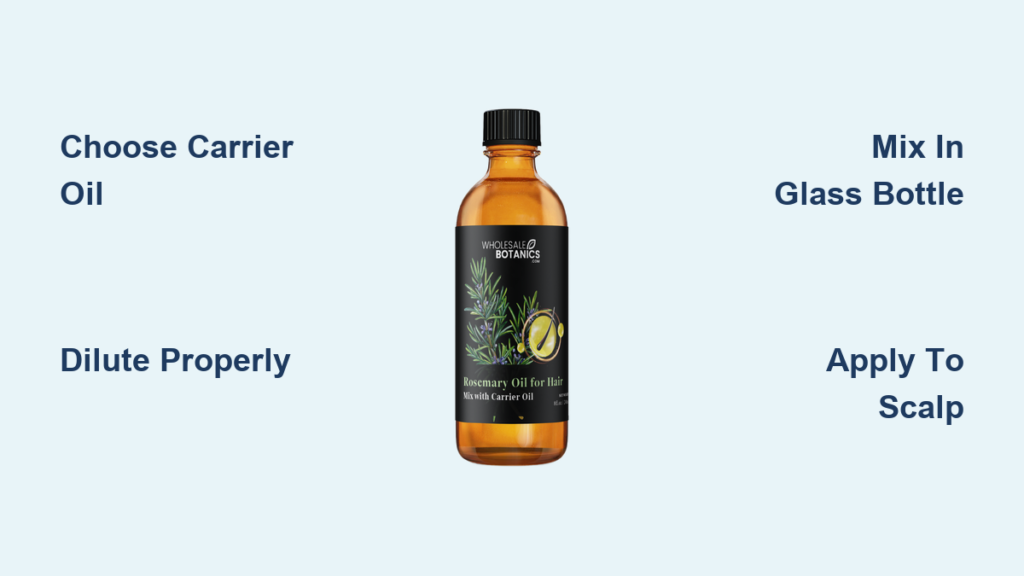
If you’re struggling with thinning hair, slow growth, or a dry, flaky scalp, you’re not alone. Millions of people search for natural solutions every year, and rosemary oil consistently ranks among the most researched and effective options. Backed by science and centuries of traditional use, this essential oil doesn’t just smell refreshing. It actively stimulates hair follicles, improves scalp circulation, and strengthens hair from root to tip.
But here’s the catch: you cannot use rosemary essential oil straight from the bottle. It is too potent and will irritate your scalp. The real magic happens when you mix it correctly with a carrier oil. This guide shows you exactly how to do that, covering the best dilution ratios, top carrier oils for different hair types, easy DIY recipes, and pro application tips that maximize results in as little as six to eight weeks.
Choose the Right Carrier Oil for Your Hair Type
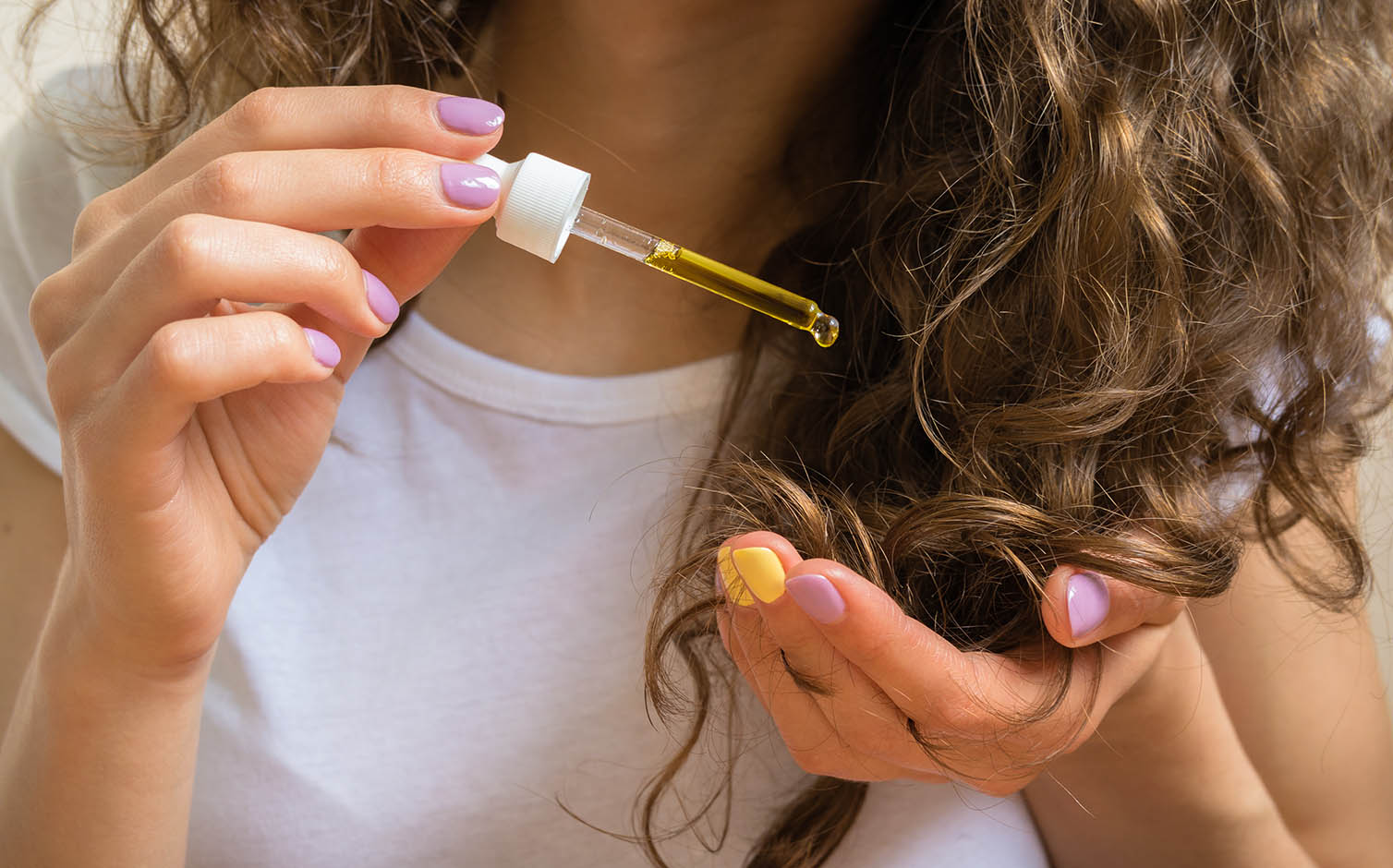
The carrier oil you select determines how well your rosemary blend absorbs, how it feels on your scalp, and how effectively it supports hair growth. Each oil brings unique benefits, so match yours to your hair type and specific goals.
Best Carrier Oils for Growth and Scalp Health
Castor oil ranks highest for accelerating growth because it contains high levels of ricinoleic acid, which boosts blood flow to hair follicles. It has a thicker consistency, so mix it with lighter oils if you have fine hair.
Jojoba oil mimics your scalp’s natural sebum, making it ideal for balancing oil production. This oil works exceptionally well for people with oily scalps or those prone to acne breakouts along the hairline.
Coconut oil penetrates deep into hair shafts to prevent protein loss, making it perfect for dry or damaged hair. However, it may feel too heavy for fine or thin strands.
Argan oil is lightweight yet rich in vitamin E. It adds shine while repairing split ends, making it a favorite for frizzy or color-treated hair.
Sweet almond oil soothes scalp irritation, reduces flakiness, and improves overall hair softness. This makes it an excellent choice for sensitive scalps prone to itching or redness.
Pro Tip: Combine oils for balanced results. Try castor oil mixed with jojoba oil in a one-to-three ratio for growth without greasiness.
Use Safe Dilution Ratios

Using too much rosemary oil can cause redness, itching, or even temporary hair fallout. Proper dilution ensures safety, promotes absorption, and maintains effectiveness for long-term use.
Recommended Mixing Ratios
For every one ounce or thirty milliliters of carrier oil, add five to ten drops of rosemary essential oil. This achieves a two to three percent concentration, which is considered optimal for topical scalp application.
For sensitive skin or first-time users, start with three drops per teaspoon of carrier oil. You can gradually increase the amount if no irritation occurs after several applications.
Never apply rosemary oil at one hundred percent concentration. Pure essential oil is ineffective for hair growth and poses significant risks of skin irritation.
Rule of Thumb: Begin with five drops per thirty milliliters and increase only if your scalp tolerates the blend well after multiple uses.
Mix Rosemary Oil Step by Step
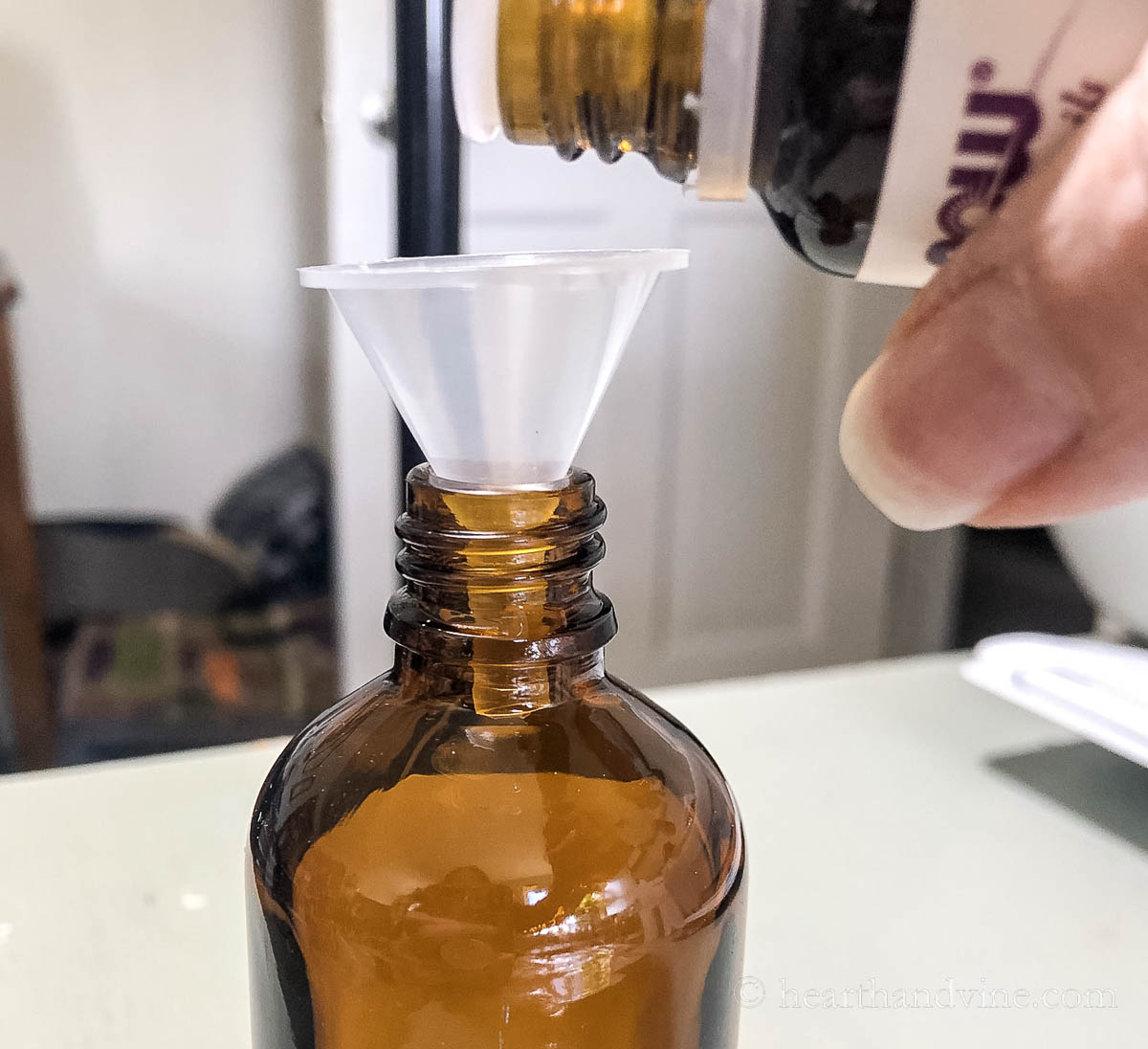
Creating your rosemary hair oil blend takes only a few minutes but impacts your results for weeks to come. Follow these steps for a potent and shelf-stable mixture.
What You Will Need
Gather one hundred percent pure rosemary essential oil, your chosen carrier oil or oils, an amber or cobalt glass bottle in the two to four ounce range, a measuring dropper or small funnel, and a label with a marker for dating your creation.
Simple Mixing Process
Pour thirty milliliters of your carrier oil into the glass bottle using the funnel if needed. Add five to ten drops of rosemary essential oil, starting with the lower number if you are new to using this oil.
Close the bottle tightly and shake vigorously for thirty seconds to ensure thorough blending. Label the bottle with all ingredients and the current date. Store in a cool, dark place away from direct sunlight and heat sources.
Reminder: Shake the bottle well before each use. Oils can separate over time, and shaking ensures an even concentration with every application.
Try Proven DIY Recipes

Custom blends enhance results by combining complementary oils that target growth, thickness, and scalp health. These formulas have been tested and refined for maximum effectiveness.
Basic Growth Blend
Mix thirty milliliters of jojoba oil with five drops of rosemary oil. This balanced, lightweight combination works well for daily use on most hair types.
Rosemary and Lavender Calming Mix
Combine thirty milliliters of sweet almond oil with five drops of rosemary oil and five drops of lavender oil. This blend reduces stress-related shedding and soothes an itchy scalp.
Stimulating Peppermint Rosemary Oil
Mix thirty milliliters of grapeseed oil with five drops of rosemary oil and three drops of peppermint oil. The tingling sensation boosts circulation, making this perfect for a morning scalp massage to wake up your follicles.
Deep Repair Serum
For dry or damaged hair, combine thirty milliliters of argan oil with five drops of rosemary oil. Add one vitamin E capsule if available for extra nourishment and shine.
Overnight Growth Accelerator
Mix fifteen milliliters of castor oil with fifteen milliliters of jojoba oil and five drops of rosemary oil. Apply at night and wash out in the morning for intensive follicle stimulation.
Apply Correctly for Best Results
Even the best blend fails if applied incorrectly. Proper technique ensures deep absorption and maximum follicle activation for visible results.
How to Apply Your Rosemary Oil Blend
Section your hair into manageable parts while your scalp is clean and either dry or slightly damp. Using a dropper or your fingertips, apply the oil directly to your scalp, focusing on areas where thinning is most noticeable.
Massage in circular motions for two to three minutes. This mechanical action boosts blood flow to the follicles and ensures even distribution of the oil.
Work any remaining oil down toward the hair ends if desired, but focus primarily on the roots and scalp. Leave the oil on for at least thirty minutes, or overnight for deeper treatment.
Visual Cue: Your hair should have a slight sheen after application. If you see puddles of oil, you have used too much.
Use Consistently for Visible Growth
Results do not happen overnight. Clinical studies show rosemary oil performs similarly to two percent minoxidil, but only with consistent use over six or more weeks.
Recommended Application Frequency
Apply your rosemary blend two to three times per week for ideal results. This frequency provides enough stimulation without overwhelming your scalp.
For daily use, keep dilution low by using jojoba or grapeseed oil as your carrier. These lighter oils absorb quickly and won’t leave residue.
For intensive therapy, apply every night and wash every two to three days. This approach maximizes follicle stimulation but requires more careful cleansing to prevent buildup.
Pro Tip: Track your progress with monthly scalp photos. Look for reduced shedding and new baby hairs along your hairline or part line.
Avoid Common Mistakes
Even small errors can reduce effectiveness or cause irritation. Steer clear of these frequent missteps to get the best results from your rosemary oil routine.
What Not to Do
Never skip patch testing. Always apply a small amount to your inner arm first and wait twenty-four hours to check for reactions.
Avoid using plastic bottles. Essential oils degrade plastic and can leach chemicals into your blend. Use dark glass bottles only.
Never mix with water alone. Oils and water do not blend effectively. Always use a carrier oil as your base.
Do not over-apply. Too much oil clogs follicles and attracts dirt, which can actually slow growth rather than accelerate it.
Do not expect instant results. Hair cycles take time. Commit to your routine for at least eight weeks before evaluating effectiveness.
Warning: Never ingest rosemary oil. This guide covers topical use only.
Store Properly to Preserve Potency
Rosemary oil loses strength quickly when exposed to light, heat, or air. Proper storage extends shelf life and maintains effectiveness throughout your treatment period.
Best Storage Practices
Keep your blend in an amber or cobalt glass bottle to protect against UV degradation. Store in a cool, dark cabinet rather than the bathroom, where humidity can damage the oils.
The typical shelf life ranges from six to twelve months, depending on your carrier oil. Coconut oil and jojoba oil tend to last longest.
Signs of Spoilage: A rancid smell, cloudy appearance, or new skin irritation after previously tolerated use indicate your oil has degraded and should be replaced.
Understand the Key Benefits
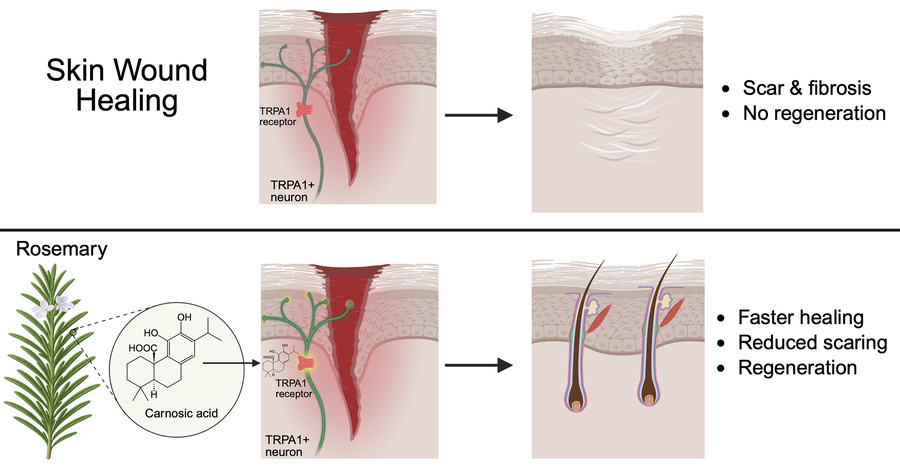
Rosemary oil works so well because its active compounds deliver multiple benefits in a single treatment. The two most important compounds are carnosic acid and rosmarinic acid, which provide antioxidant and anti-inflammatory effects.
Proven Hair and Scalp Benefits
Rosemary stimulates hair follicles in ways comparable to minoxidil, according to clinical research. It reduces hair loss by strengthening roots and preventing premature shedding.
The antimicrobial action fights dandruff and maintains a healthy scalp environment. Improved circulation to the scalp delivers more nutrients to follicles, supporting faster growth.
Antioxidants in rosemary protect hair from UV damage and environmental pollution. The oil also reinforces hair shafts to prevent breakage while adding natural shine and softness without product buildup.
Frequently Asked Questions About Mixing Rosemary Oil for Hair Growth
Can I dilute rosemary oil with water?
No, essential oils do not dissolve in water. However, you can create a water-based spray by mixing two teaspoons of sweet almond oil with five to six drops of rosemary oil and filtered water in a spray bottle. Shake thoroughly before each use.
Is leaving diluted rosemary oil in my hair overnight safe?
Yes, overnight application is safe and often recommended. The extended contact time boosts absorption and enhances results. Cover your hair with a shower cap to protect your bedding.
What if I have sensitive skin?
Start with three drops of rosemary oil per thirty milliliters of jojoba or sweet almond oil. Perform a patch test behind your ear and wait twenty-four hours before full application.
Can I combine rosemary oil with other hair treatments?
Yes, rosemary oil pairs well with minoxidil, biotin serums, or keratin treatments. Apply your rosemary blend first, let it absorb for several minutes, then follow with other products.
How long before I see results?
Most users notice reduced shedding within four weeks and visible new growth within six to eight weeks of consistent use. Individual results vary based on hair type, underlying health, and how faithfully you follow the routine.
Follow Best Practices for Success
Maximize your results by following this simple checklist. This roadmap guides you through every step of the process from start to finish.
| Step | Action |
|---|---|
| 1 | Pick your carrier oil based on your hair type |
| 2 | Measure five to ten drops of rosemary oil per thirty milliliters of carrier |
| 3 | Mix in an amber or cobalt glass bottle |
| 4 | Patch test on your inner arm and wait twenty-four hours |
| 5 | Apply to scalp and massage for two to three minutes |
| 6 | Use two to three times weekly, increasing to daily if tolerated |
| 7 | Be patient and wait six to eight weeks for visible results |
Final Note: Consistency matters more than perfection. A simple blend used regularly outperforms complex routines done sporadically. Stick with your routine, and you will see stronger, fuller, healthier hair growing naturally.