
If you’ve ever turned on your hair dryer only to be met with a strange noise, burning smell, or no power at all, you’ve likely asked: how long does a hair dryer last? The answer isn’t simple. Most quality dryers last 3 to 5 years, but with proper care, some can function efficiently for 10 years or more. Your usage habits, storage environment, and cleaning routine play a bigger role than you might think.
In this guide, you’ll learn exactly what determines lifespan, how to spot failure signs early, and practical steps to make your dryer last a decade or longer.
Average Lifespan by Dryer Type
Understanding how long does a hair dryer last begins with knowing what you’re working with. Different price points offer dramatically different longevity expectations.
Budget Models Under $50
Most entry-level dryers last 2 to 3 years with regular use. These models typically use brushed motors, basic heating coils, and lack removable filters. Without easy maintenance access, lint builds up quickly, restricting airflow and overheating components. While affordable upfront, their shorter lifespan means more frequent replacements.
Mid-Range Dryers $50 to $150
Dryers in this range, such as popular Conair or Revlon models, average 3 to 5 years of reliable service. Many include ceramic or ionic technology, removable filters, and better heat control. With monthly cleaning and proper storage, some users report these lasting 6 to 8 years, especially when used 2 to 3 times per week.
Professional and High-End Models $150 Plus
Premium dryers from brands like GHD, T3, Laifen, and Conason are built for longevity. Featuring brushless DC motors, dual voltage support, and thermal sensors, they’re engineered for 1,500 plus hours of operation, equivalent to 6 to 7 years of daily use. Some users report GHD and T3 models still working after 9 to 10 years, making them a smart long-term investment.
Key Factors That Determine How Long Your Hair Dryer Lasts
.png?width=1024&height=768&name=Brushed%20vs%20brushless%20motors%20comparison%20chart%20(Canva).png)
Several interconnected factors determine whether your dryer fails after two years or lasts a decade.
Motor Type Matters Most
The motor is the heart of your dryer, and choosing the right type significantly impacts longevity.
Brushless DC Motors
Found in high-speed dryers like the Laifen Swift or Conason P1C, brushless DC motors eliminate carbon brushes that wear out in traditional models. Benefits include:
- 4 to 6 years longer lifespan compared to brushed motors
- Quieter operation during use
- Lower heat output during operation
- Higher energy efficiency overall
These motors are less prone to burnout, even under daily use, and are a top predictor of long-term reliability.
Traditional Brushed Motors
Common in budget and older models, brushed motors degrade as carbon contacts wear down. Most fail after 800 hours of use, about 2 to 3 years for daily users. They also generate more heat, increasing stress on internal wiring and plastic components.
How Often You Use Your Dryer
Your drying frequency directly impacts wear and tear on the motor and heating elements.
| Usage Level | Expected Lifespan | Key Maintenance Tips |
|---|---|---|
| Daily 5 to 7 times per week | 3 to 5 years | Clean filter monthly; avoid max heat setting |
| Regular 3 to 4 times per week | 5 to 7 years | Clean every 3 months; store in dry area |
| Occasional 1 to 2 times per week | 7 to 10 plus years | Minimal maintenance needed |
Even high-end dryers degrade faster with daily use, but smart habits can delay failure significantly.
Maintenance Tips to Make Your Hair Dryer Last Longer
Poor maintenance is responsible for 65 percent of premature dryer failures. A clean filter alone can add 3 to 5 years to your dryer’s life.
Clean the Filter Monthly
Regular filter cleaning is the single most impactful maintenance task. Here’s how to do it properly:
- Locate the rear filter cover on your specific model
- Remove the filter and tap out lint and debris
- Use a soft brush or compressed air for stubborn buildup
- Reinstall only when completely dry
A clogged filter forces the motor to overwork, increasing internal temperatures and accelerating wear on all components.
Deep Clean Every 6 to 12 Months
Beyond monthly filter cleaning, perform these deeper maintenance tasks:
- Remove all accessible grills and external covers
- Blow out internal dust with compressed air
- Wipe heating chamber with electronics-safe cleaner
- Inspect all components for discoloration or corrosion
This prevents heat retention in internal components and helps avoid electrical shorts that can cause sudden failure.
Proper Storage: Protecting Your Dryer from Early Failure
Where you store your dryer matters more than most people realize.
Avoid Bathroom Humidity
Storing your dryer in a steamy bathroom exposes it to moisture damage, a leading cause of early failure. Humidity:
- Corrodes internal wiring over time
- Degrades plastic housings
- Promotes mold growth and electrical shorts
Solution: Store in a dry cabinet, drawer, or bedroom instead. Keeping humidity below 50 percent can add 1 to 2 years to lifespan.
Ideal Storage Conditions
- Temperature under 75 degrees Fahrenheit
- Away from sinks, showers, and direct sunlight
- On a shelf or wall hook, not under heavy objects
- In a protective case or cloth bag
Even short post-shower exposure adds up over time, so think carefully about where your dryer lives between uses.
Cord Care: Preventing Premature Hair Dryer Failure
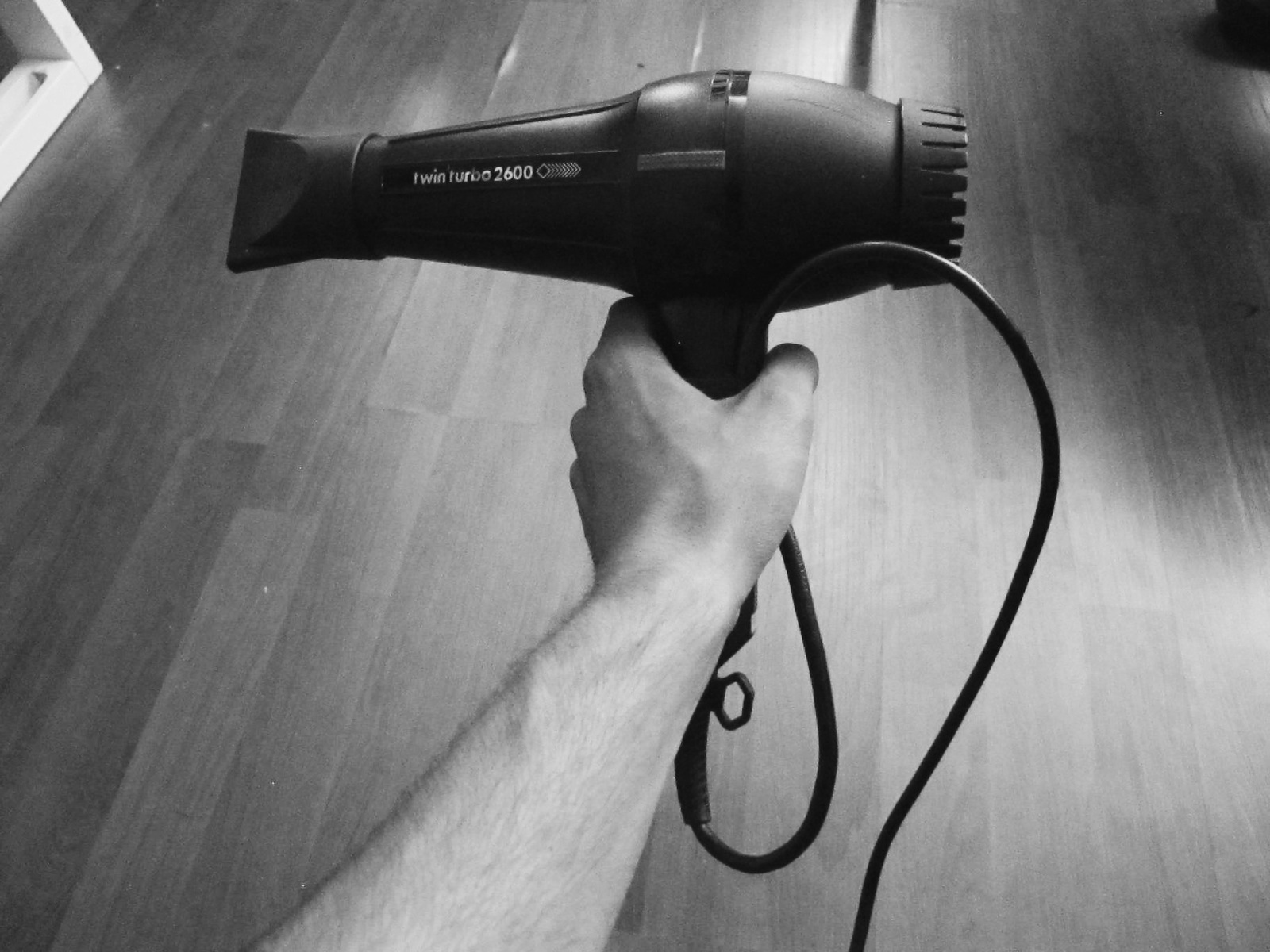
Cord damage accounts for 1 in 5 premature replacements. Most damage comes from improper wrapping techniques.
The Figure-Eight Coiling Method
Proper cord storage prevents internal wire breakage that leads to electrical failures. Follow these steps:
- Lay the cord straight on a flat surface
- Form a large figure-eight shape with the cord
- Hold one loop in each hand and slide off both hands simultaneously
- Secure with a Velcro tie, avoiding tight knots
This technique distributes stress evenly along the cord, preventing the internal wire breakage that occurs from tight bending.
Additional Cord Protection Tips
- Inspect monthly for fraying, stiffness, or discoloration
- Use cord protectors at stress points near the plug and dryer base
- Never yank the cord from the outlet
- Avoid contact with hot dryer housing during and after use
Tightly wrapping the cord around the dryer body is a common mistake that loosens internal connections over time.
Electrical Environment and Power Safety
Avoid Circuit Overload
Plugging your dryer into an outlet shared with flat irons, curling wands, or heaters increases resistance and strains the motor. One stylist reported repeated dryer failures due to using multiple high-draw tools on the same circuit, even without tripping the breaker.
Best practices include:
- Use a dedicated bathroom outlet whenever possible
- Plug high-wattage tools in one at a time
- Use a surge protector in areas with unstable power
Warning Signs of Electrical Stress
Watch for these indicators of unsafe electrical conditions:
- Flickering lights when the dryer turns on
- Warm outlets or plugs after use
- Buzzing sounds from the wall
- Discoloration on the plug or housing
If you notice any of these warning signs, stop using the dryer and consult an electrician.
Warning Signs Your Hair Dryer Needs Replacement

Knowing when to replace your dryer is crucial for both safety and hair health.
Burning Smell
A persistent burning odor means the dryer is overheating from clogged filters, melting insulation, or an electrical short. Stop using immediately and replace rather than attempting repair.
Sparks or Arcing
Visible blue sparks from the plug, handle, or body indicate serious electrical failure. One Revlon user reported arcing after 8 years of use and promptly discarded the unit for safety. This poses a fire hazard and requires immediate replacement.
Rattling or Grinding Noise
Unusual sounds suggest failing motor bearings, a broken impeller, or loose internal parts. If the noise persists after cleaning the filter, the motor is likely failing and replacement is necessary.
Reduced Airflow or Heat
Even with a clean filter, if your dryer takes longer to dry your hair, blows weak air, or has inconsistent heat, it’s likely suffering from motor wear or failing heating elements.
Smoke or Melted Plastic
Smoke, charring, or warped housing means advanced overheating. This is a serious fire risk. Unplug immediately and discard the unit.
Physical Damage
Cracks, frayed wires, or loose switches compromise safety. Any structural damage means you should replace now rather than risk electrical failure.
Most Durable Hair Dryer Brands and Models

Certain brands consistently receive praise for reliability and long service life.
GHD
User reports indicate GHD dryers purchased in 2015 still functioning well in 2024, representing over 9 years of reliable service. The brand is known for consistent engineering and robust build quality.
T3
Multiple users cite T3 Featherweight models lasting 6 plus years. One user has owned theirs since 2018 and reports continued excellent performance. The brand is trusted for both performance and durability.
Conair
Conair frequently appears in longevity discussions, with users reporting models lasting 10 to 15 years. One user had a Conair bought in 2012 that was still working fantastically in 2024.
Laifen
The Swift Special model offers a 5 to 8 year average lifespan, featuring brushless motor technology, quiet operation at 59 decibels, and fast drying capabilities marketed for salon-grade longevity.
Sam Villa and Babyliss
Sam Villa is favored by professionals for balanced design and durable motors. One Babyliss user reported their model approaching 5 years of use with an expectation it could last another 10 to 15 years.
How to Make Your Hair Dryer Last 10 Years or More
Achieving a decade of service requires professional-level care and attention.
Maintenance Checklist
| Frequency | Task |
|---|---|
| After every use | Wipe exterior; let cool before storing |
| Monthly for daily users | Clean filter; inspect cord for damage |
| Every 3 months | Full visual inspection of all components |
| Every 6 months | Compressed air cleaning inside the unit |
| Annually | Performance test measuring drying time and heat consistency |
| As needed | Replace filters or repair damaged cords |
Pro Longevity Tips
- Let the dryer cool 5 to 10 minutes before wrapping the cord or storing
- Never block the rear intake grill with your hand or a towel
- Use low or medium heat 80 percent of the time, reserving high heat only for thick hair
- Store in a dry, cool place outside the bathroom
- Replace proactively at 6 years if used daily, even if still functioning
Frequently Asked Questions About Hair Dryer Lifespan
How long does a hair dryer typically last with daily use?
With daily use, a quality hair dryer typically lasts 3 to 5 years. Professional-grade models with brushless motors can extend this to 5 to 7 years with proper maintenance. Daily use subjects the motor and heating elements to more thermal stress, accelerating wear on internal components.
Can a hair dryer last 10 years or more?
Yes, with proper care, a quality hair dryer can last 10 years or more. Users report Conair, GHD, and T3 models lasting a decade or longer when maintained properly. Key factors include monthly filter cleaning, proper storage in dry environments, and avoiding high heat settings for routine drying.
What is the most common reason hair dryers fail early?
The most common reason for early failure is poor maintenance, specifically clogged filters. Approximately 65 percent of premature failures are caused by lint and debris buildup that restricts airflow, forcing the motor to overheat. Regular filter cleaning is the single most effective way to extend your dryer’s life.
Do more expensive hair dryers last longer?
Generally, yes. Higher-end models with brushless DC motors, thermal protection systems, and removable filters tend to last significantly longer than budget options. Professional-grade dryers are engineered for 1,500 plus hours of operation compared to approximately 800 hours for standard home models.
Should I replace my hair dryer proactively even if it still works?
Yes, consider proactive replacement if your dryer is over 6 years old with daily use, if performance has noticeably declined, or if newer models offer technology that benefits your hair type. Waiting for complete failure risks hair damage from inconsistent heat and potential safety hazards from degraded wiring.
Key Takeaways for Maximizing Hair Dryer Lifespan
A hair dryer doesn’t have to be a disposable appliance. With monthly filter cleaning, proper storage away from bathroom humidity, and smart usage habits like using lower heat settings most of the time, a quality model can serve you reliably for 10 years or more.
Invest in brushless motor technology for the best longevity, protect your cord with proper wrapping techniques, and pay attention to warning signs like burning smells or unusual noises. Replace proactively at the first sign of trouble to protect both your hair and your safety.
Your hair and your wallet will thank you for treating this everyday tool with the care it deserves.


