You reach for your flat iron or blow dryer, run a brush through your hair, and pause. Did you spray on heat protection? If not, you are not alone. But here is the truth: skipping heat protectant is like stepping into the sun without sunscreen. While it will not stop all damage, heat protection hair spray is scientifically designed to reduce the structural harm caused by styling tools like flat irons, curling wands, and blow dryers. It does not make your hair invincible, but it does create a crucial defense layer.
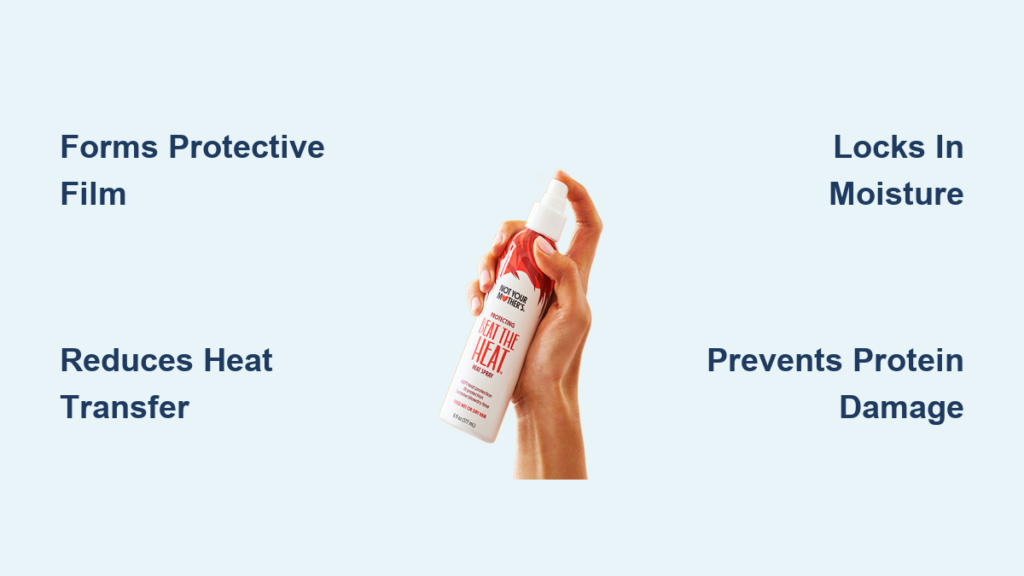
Heat protection sprays work by forming a protective film around the hair shaft, shielding it from temperatures that can start damaging keratin at just 130°C (266°F). Without this barrier, repeated exposure leads to brittleness, split ends, moisture loss, and irreversible protein breakdown, especially in color-treated or chemically processed hair. The best sprays combine silicones, polymers, and conditioning agents to insulate hair, seal in moisture, and reduce friction during styling. They are not magic, but they are far from marketing fluff.
In this guide, you will learn exactly how heat protection spray works, what ingredients actually deliver results, how brands test their claims, and why proper application matters just as much as the product itself.
How Heat Damages Your Hair

High heat does not just style your hair. It changes its structure at a molecular level. Understanding the science of damage reveals why protection is essential.
Protein and Keratin Breakdown
Hair is made mostly of keratin, a strong structural protein. But when exposed to heat above 130°C (266°F), keratin begins to denature, losing its natural shape and strength. At 200°C (392°F), this damage becomes permanent. Once the protein structure collapses, hair loses elasticity and becomes prone to snapping. No conditioner can reverse this. Only new growth can replace it.
Cuticle Lifting and Fractures
The outer layer of hair, the cuticle, acts like shingles on a roof. Heat causes these scales to lift, crack, or flake off, exposing the fragile inner cortex. Scanning Electron Microscopy (SEM) shows visible microfractures after just a few styling sessions without protection. This increases porosity, making hair more vulnerable to humidity, chemicals, and mechanical stress.
Rapid Moisture Loss
Heat accelerates evaporation of internal water, drying out hair from within. Dynamic Vapor Sorption (DVS) tests show unprotected hair loses moisture 30 to 50 percent faster under heat. This leads to dryness, brittleness, and frizz, especially in porous or damaged strands.
Internal Steam Damage
Styling wet or damp hair with high heat is one of the worst things you can do. Internal water turns to steam, expanding rapidly and rupturing the hair shaft from the inside. This creates air pockets or bubbles within the fiber, known as bubble hair, leading to severe breakage and split ends. Cosmetic chemist Michelle Wong calls this explosive damage due to the sudden pressure buildup.
Color Fading and Yellowing
Heat speeds up oxidation of hair pigments, causing artificial color to fade faster. It also degrades tryptophan, an amino acid that helps maintain hair is natural tone. When it breaks down, blonde or gray hair can turn brassy or yellow over time.
How Heat Protectant Sprays Create a Shield

Think of heat protectant like a thermal shield, not a force field, but a buffer that slows down damage.
Forms a Heat-Resistant Barrier
The core function of heat protectant is to coat the hair shaft with a thin, invisible film. This film, made from polymers and silicones, acts like a non-stick layer that reduces direct contact between hot tools and hair. It does not block heat completely, but it slows heat transfer, giving the cortex time to adjust and reducing thermal shock.
A 1998 study in the Journal of Cosmetic Science found that PVP/DMAPA acrylates copolymer, quaternium-70, and hydrolyzed wheat protein reduced heat damage by 10 to 20 percent when applied before curling iron use.
Insulates Against Heat Conduction
Silicones like dimethicone, cyclomethicone, and amodimethicone have low thermal conductivity, meaning they do not absorb or transfer heat easily. They act as insulators, delaying how fast heat penetrates into the cortex. This prevents sudden spikes in temperature that cause protein denaturation.
Amino silicones go further by bonding to damaged areas of hair, offering both thermal protection and conditioning.
Locks in Moisture and Seals the Cuticle
Humectants like panthenol, glycerin, and propylene glycol attract and hold water inside the hair. Meanwhile, silicones form a hydrophobic layer that prevents moisture from escaping during styling.
This dual action helps maintain flexibility and softness, reducing the risk of breakage. It also smooths the cuticle, which cuts down on frizz and improves shine.
Stabilizes Proteins and Pigments
Hydrolyzed proteins like keratin, wheat, and silk are small enough to penetrate the hair shaft and bind to damaged areas. They reinforce weak spots, helping preserve tensile strength and elasticity.
Some advanced formulas also include antioxidants and UV filters to protect against oxidative stress, which contributes to color fading and yellowing.
Reduces Combing Force and Breakage
Cationic polymers like polyquaterniums coat the hair with a positively charged layer that smooths the surface and reduces static. This lowers combing force by up to 35 percent, making hair easier to detangle and less likely to snap during styling.
Key Ingredients That Deliver Real Protection
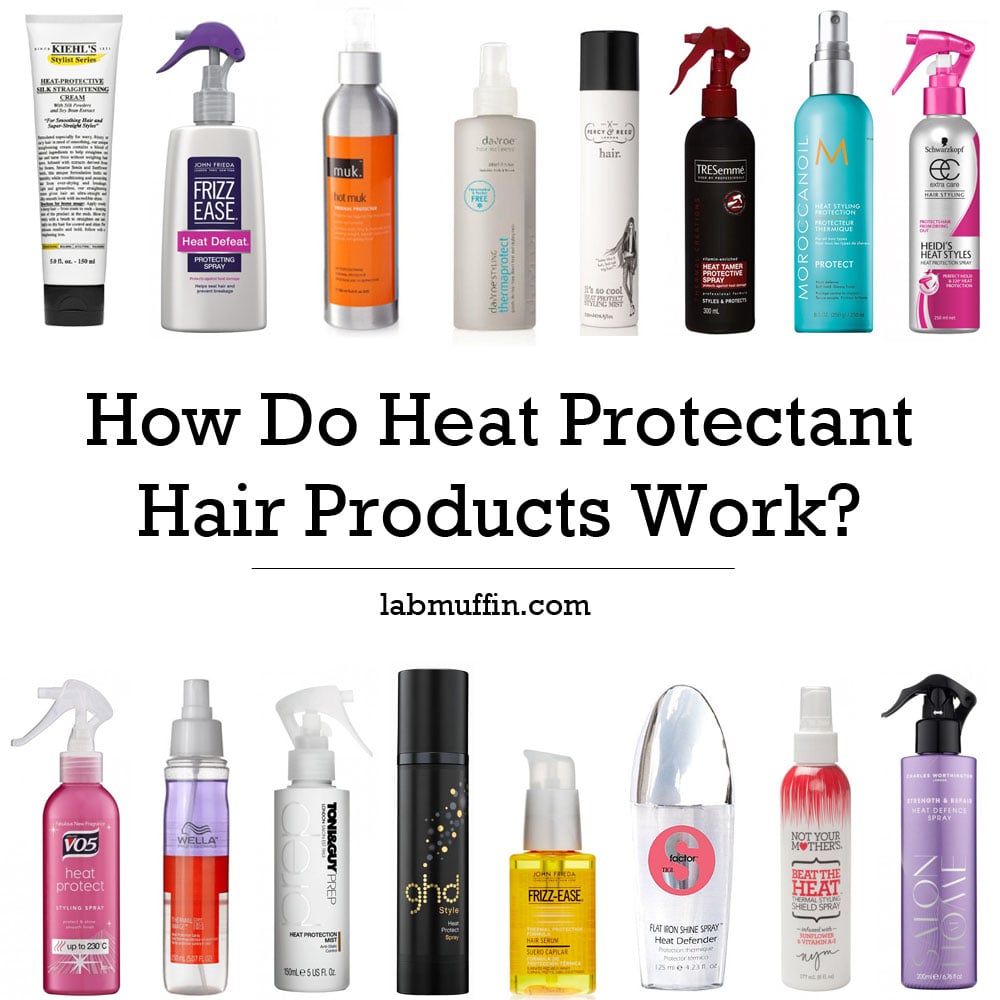
Not all heat protectants are created equal. The most effective ones rely on science-backed ingredients.
Silicones: The Primary Heat Shields
Silicones form the foundation of most effective heat protectants. The key types include:
• Dimethicone, cyclomethicone, amodimethicone: Form a lightweight, heat-resistant film
• Volatile silicones like cyclomethicone evaporate after styling, reducing buildup
• Amodimethicone bonds to damaged hair, offering targeted repair and protection
Polymers: Flexible, Durable Coatings
Polymers create flexible films that resist high heat. Common options include:
• PVP, VP/VA copolymer, PVP/DMAPA acrylates copolymer: Create flexible films that resist high heat
• Improve tensile strength and reduce breakage in lab tests
• Often used in sprays for even distribution
Hydrolyzed Proteins: Internal Reinforcement
These proteins penetrate the cortex and bind to broken protein chains:
• Keratin, wheat, soy, and silk proteins: Penetrate the cortex and bind to broken protein chains
• Help maintain hydrogen bonding, which keeps hair strong and resilient
• Especially beneficial for bleached or chemically treated hair
Humectants: Moisture Lockers
These ingredients attract and retain water:
• Panthenol (Pro-Vitamin B5): Attracts water, improves elasticity, reduces frizz
• Propylene glycol: Prevents dehydration during heat exposure
• Work best when paired with silicones to seal moisture in
Natural Oils: Mild Protection Plus Shine
Natural oils offer conditioning benefits but are less effective than silicones:
• Argan, coconut, and aloe vera: Condition and add shine
• Offer some heat protection but are less effective than silicones
• Best used in combination with polymers and silicones
How Brands Test Heat Protection Claims
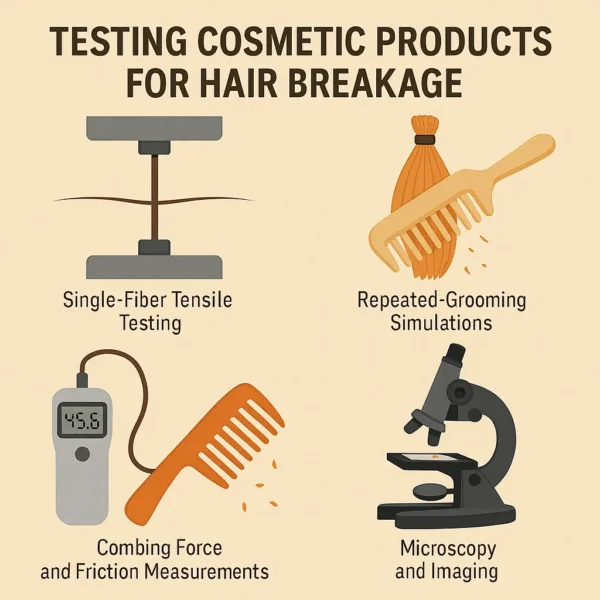
You have seen labels like protects up to 450°F. But how do we know it works? Brands use advanced techniques to prove their products deliver results.
Lab-Validated Testing Methods
The primary testing methods brands use include:
• Differential Scanning Calorimetry (DSC): Measures when keratin proteins begin to denature. Protected hair shows a higher denaturation temperature, proving delayed damage.
• Scanning Electron Microscopy (SEM): Reveals less cuticle lifting and cracking in treated hair after heat exposure.
• Tensile Strength Testing: Shows protected hair resists breakage better after repeated styling.
• Repeated Grooming Tests: Counts broken strands after multiple heat cycles. Treated hair has fewer breaks.
• Dynamic Vapor Sorption (DVS): Proves protected hair retains moisture longer under heat stress.
• FTIR Spectroscopy: Detects chemical changes in proteins and lipids, showing reduced degradation.
Brand Testing Examples
Major brands invest heavily in validation:
• L’Oréal (Redken, Pureology): Uses a 450°F pass/fail test, comparing breakage and strength in treated versus untreated hair. DSC confirms protein protection.
• Pantene: Runs wash-dry-style-iron cycles at 450°F. Treated hair shows fewer breaks and higher DSC denaturation peaks.
• OGX: Combines DSC analysis with automated grooming systems to measure real-world performance.
• Bumble and Bumble: Tests Invisible Oil Primer by exposing hair trusses to 450°F with and without product.
• Tresemmé: Uses thermal imaging and breakage testing, with plans for FTIR and SEM validation.
Regulatory Standards for Heat Protection Claims
In the United States, heat protection claims are regulated, but not pre-approved.
FTC and FDA Oversight
• Federal Trade Commission (FTC): Requires brands to have competent and reliable scientific evidence before making claims.
• FDA: Oversees labeling and safety, but not efficacy.
What Brands Must Prove
• Claims like protects up to 450°F must be backed by controlled lab tests showing no measurable damage at that temperature.
• Even vague claims like helps protect require measurable proof.
• Full test reports and documentation must be kept for audits.
Major brands like L’Oréal, P&G, and Estée Lauder invest heavily in R&D to avoid legal risks. False claims can lead to fines, lawsuits, and reputational damage.
How to Apply Heat Protectant Correctly
Even the best product fails if used wrong. Application timing and technique matter.
When to Apply: Wet or Dry?
The condition of your hair when you apply heat protectant matters:
• Blow dryer: Apply to damp (not soaking wet) hair. This ensures even spread and absorption.
• Flat iron or curling wand: Apply to completely dry hair. This prevents steam damage inside the shaft.
Step-by-Step Application
Follow these steps for maximum protection:
- Shake the bottle well before use.
- Hold the spray 6 to 8 inches from hair.
- Mist evenly from roots to ends.
- Section hair for full coverage.
- Comb through with fingers or a wide-tooth comb.
- Focus on mid-lengths and ends. These areas are most damaged.
- Reapply lightly if re-styling.
Pro tip: Avoid over-spraying fine hair. It can look greasy. Use a lightweight aerosol for better control.
Can Leave-In Conditioner Replace Heat Protectant?
Only if it explicitly claims heat protection and has been tested.
Many leave-in conditioners moisturize but do not form a thermal barrier. Dedicated heat protectants contain higher concentrations of polymers and silicones for real shielding. If the label does not say heat protection, assume it does not protect.
For example, It is a 10 Miracle Leave-In conditions well but is not designed to withstand 400°F. Use it with a heat protectant, not instead of one.
Realistic Limits of Heat Protection
No spray can stop all damage. Know the boundaries.
Protection Is Not Prevention
• Best sprays reduce damage by up to 50 percent, not 100 percent.
• Damage still accumulates over time.
• No protection against UV, pollution, or chemical processing unless specified.
Buildup and Coverage Risks
• Silicones can build up, making hair feel heavy. Use a clarifying shampoo weekly.
• Uneven application leaves sections exposed. Missed spots get damaged.
Expert verdict: Heat protectants only reduce damage. They do not prevent it. The only way to fully avoid heat damage is to stop using hot tools.
Best Practices to Minimize Heat Damage
Protection starts before you plug in the iron.
Use Adjustable Temperature Tools
• Fine or damaged hair: Below 300°F (149°C)
• Thick or coarse hair: Up to 350 to 400°F (177 to 204°C)
• Never exceed 400°F (204°C) unless absolutely necessary
Warning: A sizzling sound or burning smell means the tool is too hot.
Limit Styling Frequency
Maximize 2 times per week for fragile hair. Let hair recover between sessions.
Choose High-Quality Tools
• Dyson Airwrap, Bio Ionic, GHD: Offer even heat, ionic technology, and moisture retention.
• Some claim to seal cuticles during styling, reducing frizz and damage.
Combine Protective Products
• Leave-in conditioner: Adds moisture
• Dry shampoo: Adds volume at roots
• Salt-free texturizing spray: Enhances style without drying
Style Gently
• Keep tools moving. Do not hold in one spot more than a few seconds.
• Use multiple light passes instead of one long stroke.
Repairing Heat-Damaged Hair
Once damaged, hair cannot heal, but you can manage it.
Signs of Damage
Watch for these indicators:
• Dry, brittle texture
• Excessive breakage
• Split ends
• Frizz and lack of shine
• Will not hold a style
Repair Routine
Follow this protocol for managing damage:
- Clarify: Use clarifying shampoo to remove buildup.
- Deep condition: Apply protein-rich mask weekly.
- Switch to sulfate-free care: Use shampoos with keratin, silk amino acids, argan oil.
- Use leave-in repair: Apply daily.
- Trim regularly: Every 6 to 8 weeks to remove splits.
- Take a heat holiday: Stop hot tools for 4 to 6 weeks to allow recovery.
Key Takeaways for Protecting Your Hair from Heat
Heat protection hair spray works, but not like a force field. It is a damage-reducing shield backed by science, regulation, and lab testing. It forms a protective film, insulates against heat, locks in moisture, and reduces breakage. Key ingredients like silicones, polymers, and hydrolyzed proteins deliver measurable results when applied correctly.
But it is not a free pass. No product prevents all damage. Protection is limited, and cumulative harm still occurs. For best results, combine heat protectant with lower heat settings, less frequent styling, high-quality tools, moisture-rich care, and regular trims.
Using heat protectant is not about eliminating risk. It is about smart damage control. And in the long run, that is the difference between hair that looks healthy and hair that actually is healthy.
Frequently Asked Questions About Heat Protection Hair Spray
Does heat protectant really work?
Yes, heat protectant sprays work by forming a protective film around the hair shaft that slows heat transfer and reduces damage. Scientific studies show that ingredients like PVP/DMAPA acrylates copolymer, silicones, and hydrolyzed proteins can reduce heat damage by 10 to 20 percent, and top products can reduce damage by up to 50 percent.
What temperature does heat damage hair?
Heat damage begins at 130°C (266°F), when keratin proteins start to denature. At 200°C (392°F), the damage becomes permanent. For fine or damaged hair, you should stay below 300°F (149°C). For thicker hair, 350 to 400°F is generally safe when using heat protectant.
Can I use heat protectant on wet hair?
It depends on the styling tool. For blow dryers, apply heat protectant to damp (not soaking wet) hair. For flat irons or curling wands, always apply to completely dry hair. Using hot tools on wet hair causes internal steam that creates bubble hair and severe breakage.
How long before styling should I apply heat protectant?
Apply heat protectant immediately before styling, after towel-drying or when hair is completely dry. Shake the bottle well, hold it 6 to 8 inches from your hair, and mist evenly from roots to ends. Comb through to ensure even distribution.
What is the best ingredient in heat protectant spray?
The most effective ingredients are silicones like dimethicone and amodimethicone, which form heat-resistant films, and polymers like PVP that create flexible protective coatings. Hydrolyzed proteins (keratin, wheat, silk) also help by penetrating the hair shaft and reinforcing damaged areas.
Can I use hairspray as a heat protectant?
No. Regular hairspray is not designed for heat protection and may contain flammable ingredients. Only use products specifically labeled as heat protectants or those that have been tested for thermal protection.