
If you have ever struggled to reach your back or chest with a razor, you might have wondered how hair removal spray works without any blades or wax strips. The answer lies in chemistry, not mechanics. These sprays use powerful chemical agents to dissolve hair at the protein level, breaking down the very structure that makes hair strong and resilient. This approach offers a pain-free alternative to waxing while lasting longer than a typical shave.
The process targets keratin, the fibrous protein that gives hair its strength. Within 5 to 10 minutes, the spray softens and disintegrates hair so it can be wiped or rinsed away, leaving smooth skin behind. Below, you will find a complete breakdown of the science, ingredients, proper usage, and how spray compares to other hair removal methods.
Breaks Down Hair Protein Structure
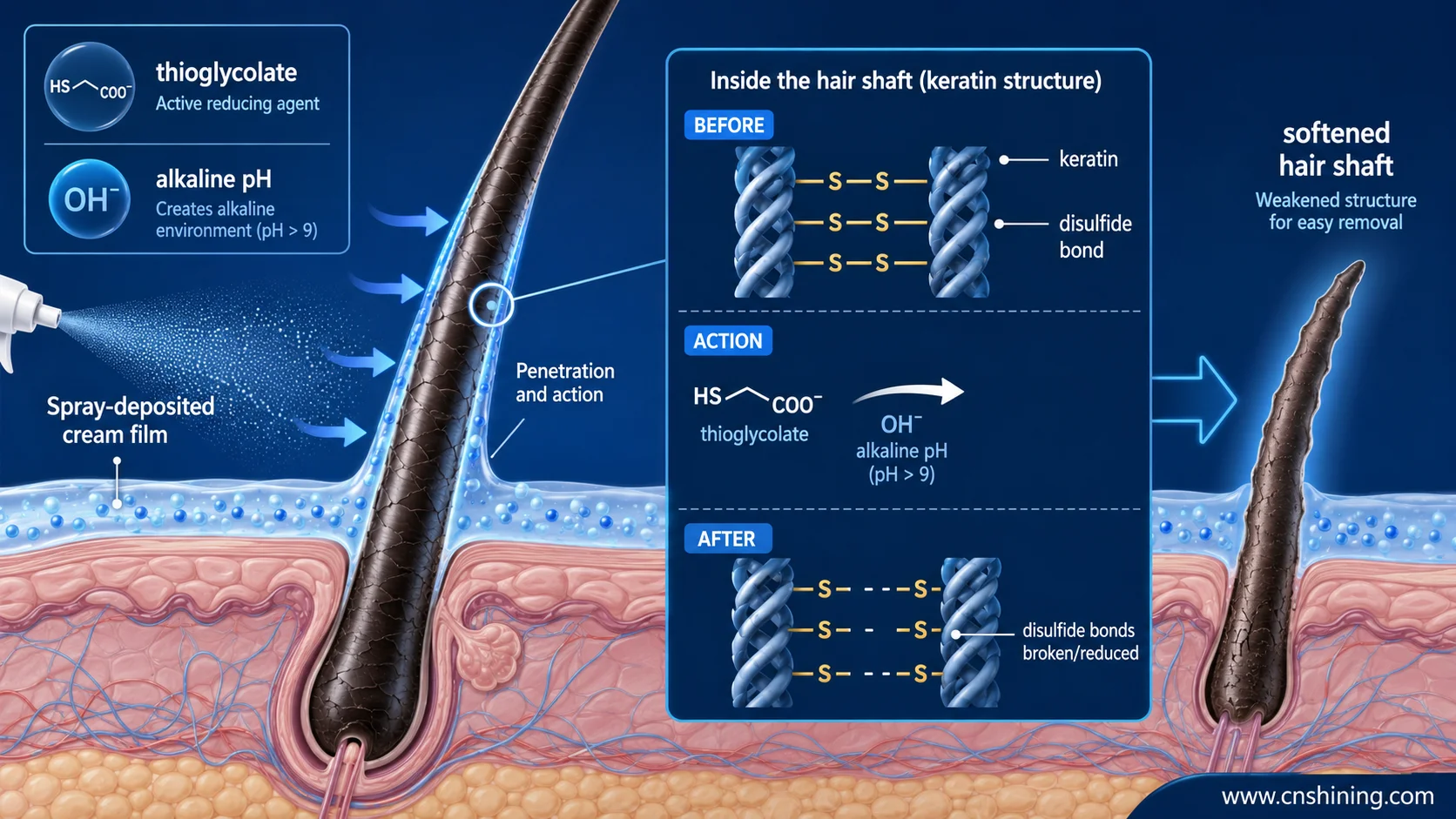
Hair removal spray works by chemically altering the structure of hair, specifically targeting keratin. Unlike shaving, which cuts hair at the surface, or waxing, which pulls it from the root, these sprays dissolve the hair entirely.
Disrupts Disulfide Bonds in Keratin
The key to this process is breaking disulfide bonds. These are sulfur-based chemical bridges that link keratin molecules together, giving hair its rigidity and resistance to breakage. The active ingredients in hair removal spray attack these bonds, effectively turning strong hair into a soft, mushy substance.
The spray penetrates the outer cuticle layer of the hair and reaches the inner cortex, where most keratin and disulfide bonds are located. Once inside, the chemicals cause the cortical cells to swell, fracture, and disintegrate. This structural collapse allows the hair to be wiped away cleanly at skin level.
Why Hair Regrows Quickly
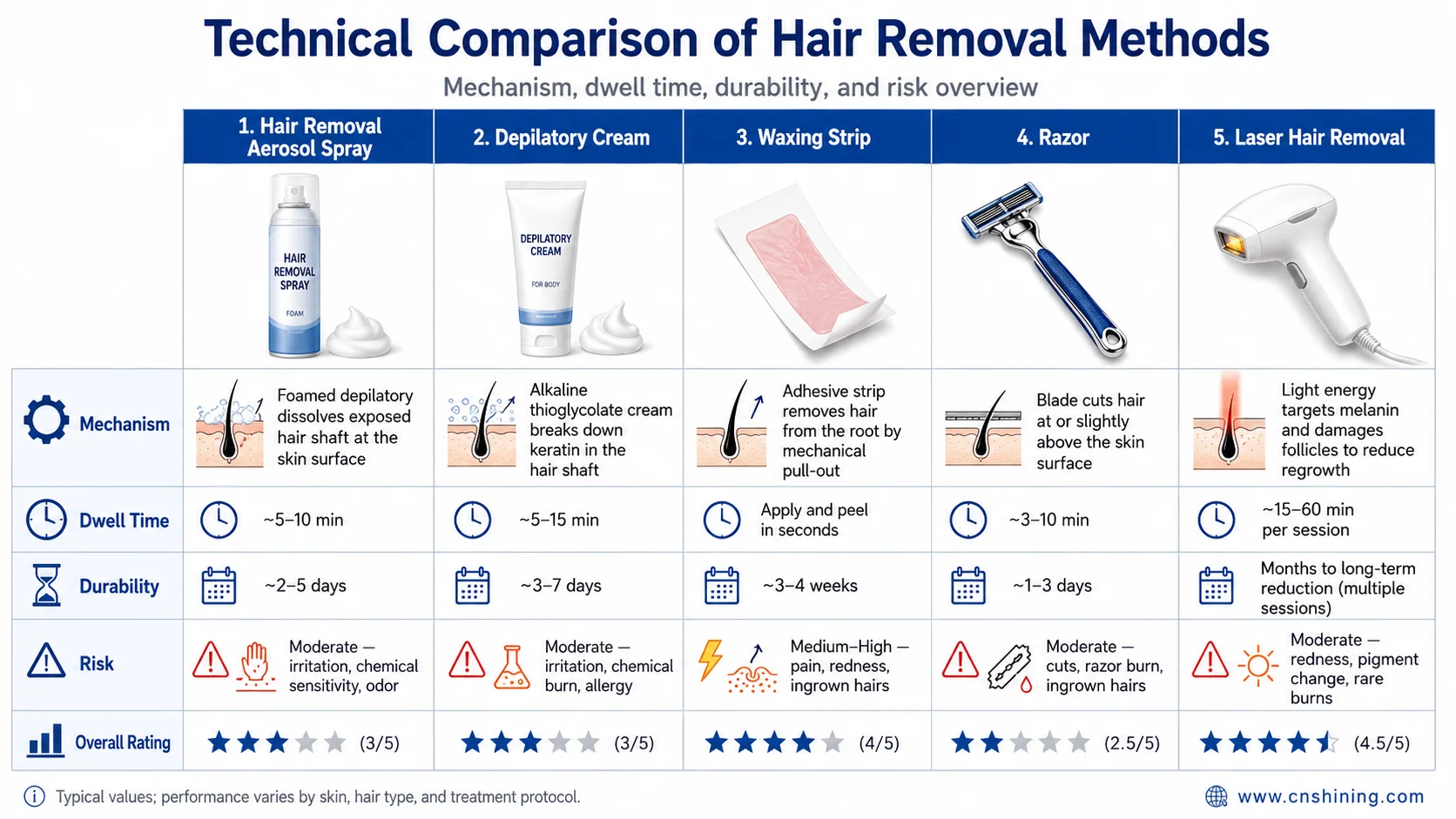
Because the spray only affects the visible portion of the hair, the hair follicle remains completely intact. Regrowth typically begins within 3 to 7 days, depending on your natural hair growth cycle. This is longer than shaving but much shorter than waxing, which removes hair from the root.
Users often report a smoother feel compared to shaving because the hair is not cut bluntly at the surface. Instead, it is removed slightly below skin level, reducing the coarse, prickly stubble commonly associated with razors.
Key Ingredients That Dissolve Hair
The effectiveness of hair removal spray depends on a precise blend of active and supporting chemicals designed to break down hair while minimizing skin damage.
Thioglycolic Acid: The Primary Agent
Thioglycolic acid serves as the main active ingredient in most hair removal sprays. It acts as a reducing agent, meaning it donates electrons to break the disulfide bonds in keratin. When thioglycolic acid reacts with these bonds, it converts them into weaker thiol groups, destabilizing the hair’s internal structure.
This transformation causes the hair to lose its tensile strength and become gelatinous, making it easy to wipe off after the recommended dwell time. Thioglycolic acid is highly effective but must be carefully formulated to avoid skin irritation.
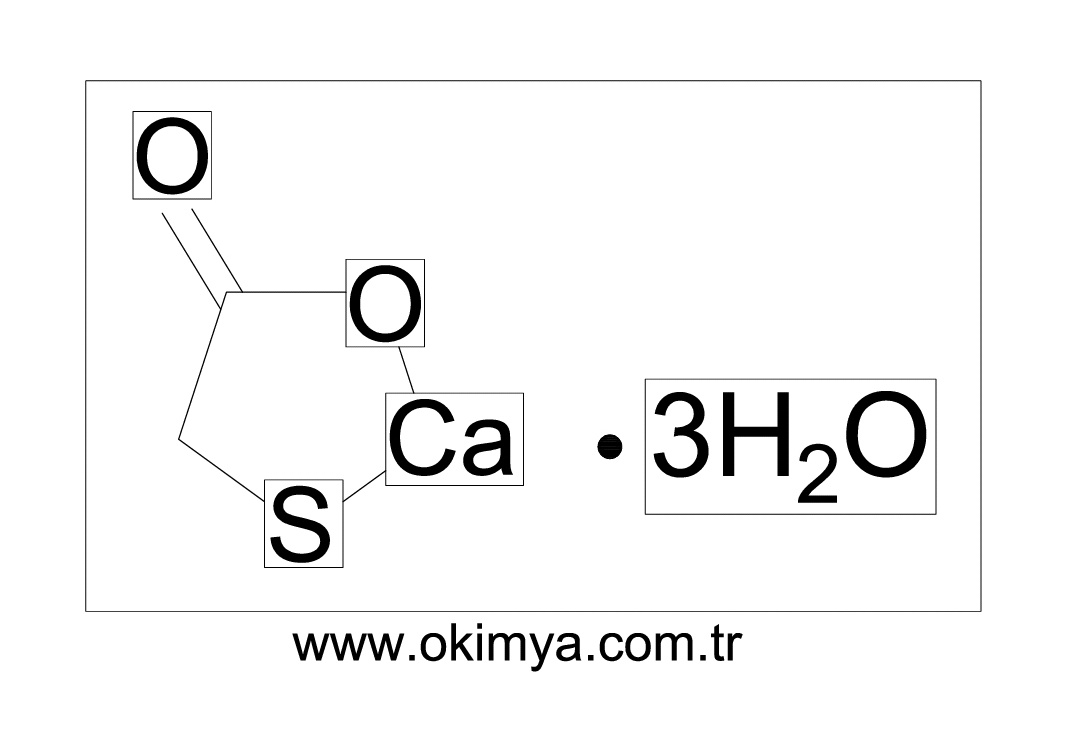
Calcium Thioglycolate: A Gentler Alternative
Some sprays use calcium thioglycolate instead of thioglycolic acid. This derivative functions similarly but may offer better stability and reduced skin sensitivity in certain formulations. It is often found in products labeled for sensitive skin or facial use.
Potassium Hydroxide: Enables Deep Penetration
For thioglycolic acid or calcium thioglycolate to work effectively, the product must have a high pH, typically between 10 and 12. This alkaline environment is created using potassium hydroxide, which swells the hair cuticle and allows the active agents to penetrate deeper into the cortex.
While essential for efficacy, high pH levels can disrupt the skin’s natural acidic barrier, which sits around pH 5.5. This increases the risk of dryness, irritation, or chemical burns if left on too long.
Step-by-Step Application Guide
Using hair removal spray correctly is crucial for both effectiveness and safety. Following these steps will help you achieve smooth results without irritation.
Always Perform a Patch Test First
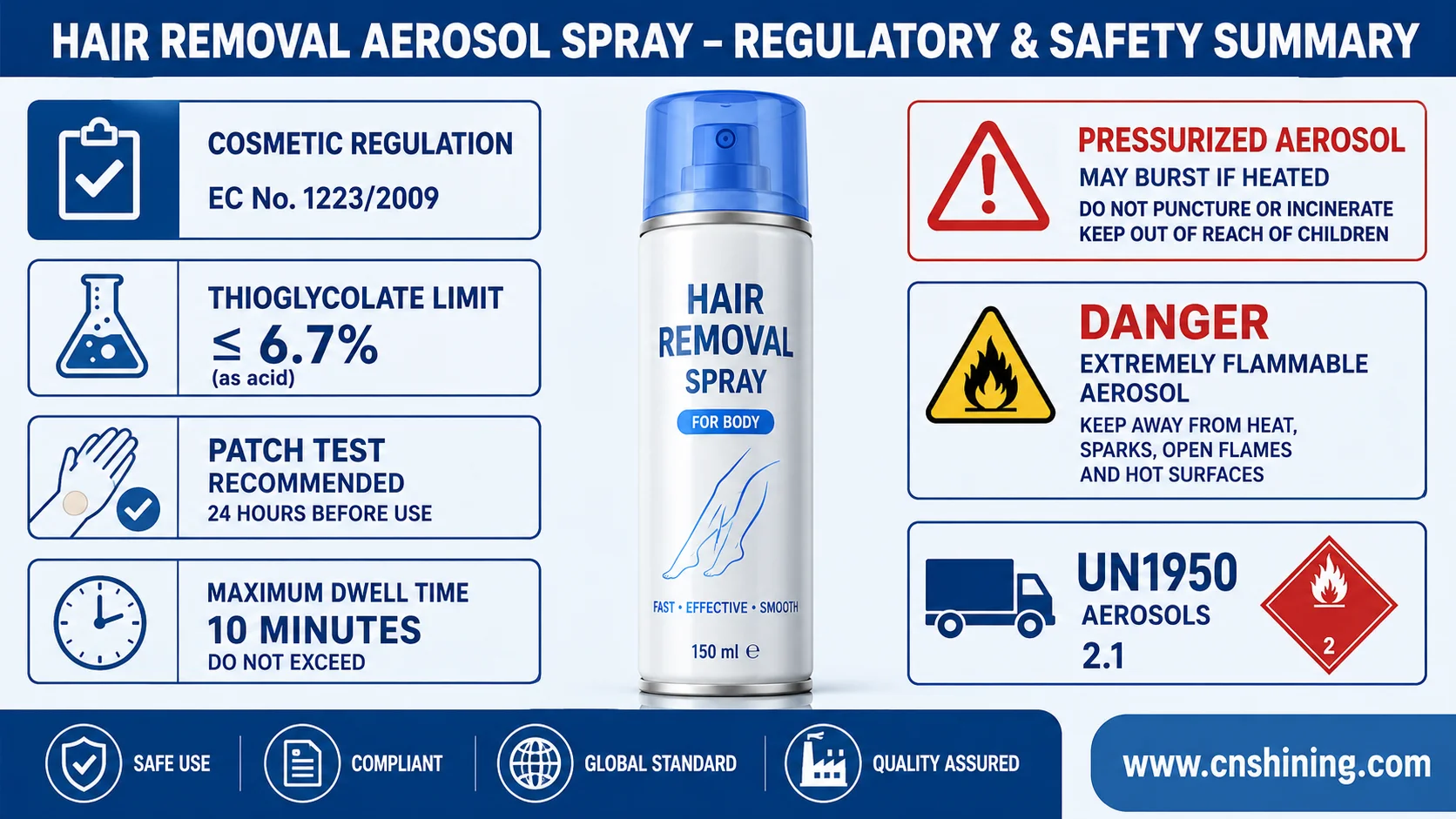
Before full application, apply a small amount to a discreet area like your inner forearm. Wait 24 hours and watch for redness, itching, swelling, or burning. If any reaction occurs, do not use the product. This step is non-negotiable, especially if you have sensitive skin or a history of allergic reactions.
Prepare Your Skin Properly
Use the spray on dry, clean skin. Never apply it to wet or damp skin. Avoid areas with cuts, sunburn, rashes, or recent exfoliation. Do not use the product if you have used retinoids, AHAs, or scrubs in the past 24 hours. Never apply to mucous membranes, genitals, or broken skin.
Apply Evenly and Wait
Shake the can well before use. Hold the spray 10 to 15 centimeters from the skin. Apply a thin, even layer covering all unwanted hair. Do not rub in the product. Let the chemicals work on their own.
Follow the Recommended Dwell Time
Most sprays require 5 to 6 minutes, though some may allow up to 10 minutes. Never exceed the time listed on the label. Overexposure increases the risk of chemical burns significantly. Set a timer to avoid guessing.
Remove and Soothe Your Skin
Gently wipe off the product with a damp cloth or plastic spatula. Alternatively, rinse thoroughly with lukewarm water. Pat your skin dry and apply a soothing moisturizer containing aloe vera, chamomile, or vitamin E. Wash your hands immediately, even if you wore gloves during application.
Compare Spray to Shaving and Waxing
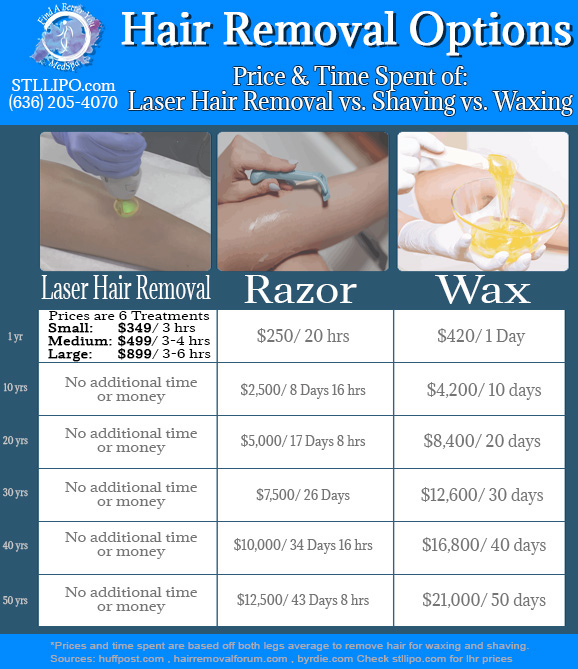
Each hair removal method has trade-offs in terms of pain, duration, and convenience. Hair removal spray sits between shaving and waxing in both effectiveness and user experience.
Why Choose Spray Over Shaving
Sprays last longer than shaving, typically 3 to 7 days compared to 1 to 3 days. They eliminate the risk of nicks, cuts, and razor burn entirely. Since hair is dissolved slightly below the skin, regrowth feels smoother and takes longer to appear.
Why Spray May Suit You Better Than Waxing
Waxing removes hair from the root, offering longer-lasting results of 3 to 6 weeks. However, it is painful and can cause ingrown hairs. Sprays offer a painless alternative with faster application, especially for large areas like the back and chest.
The main advantages of spray include painless application, longer duration than shaving, no risk of cuts, and ease of use for hard-to-reach areas. The main disadvantages include the strong odor, shorter results than waxing, and potential for skin irritation.
Works Best on Fine to Medium Hair
Not all hair types respond equally to chemical depilation. The success of hair removal spray depends largely on hair thickness and density.
Ideal for Thin or Medium Hair
Sprays excel at removing fine to medium body hair on legs, arms, chest, and back. The chemicals penetrate evenly, dissolving hair completely within the recommended time. This makes spray an excellent choice for men managing chest and back hair.
Struggles with Coarse or Curly Hair
Thick, coarse, or tightly curled hair is more resistant to chemical depilation. This includes hair in the bikini line or on beards. The dense keratin structure limits chemical penetration, often leading to patchy removal or the need for repeated applications.
Some users report having to reapply or leave the product on longer, but this increases the risk of skin irritation significantly.
Facial Hair: Generally Not Recommended
Most sprays are not effective on facial hair, especially beards. The hair is too thick and deeply rooted. Only use facial-specific sprays if clearly labeled for that purpose.
Safety Risks and Skin Reactions
Despite being marketed as painless and safe, hair removal sprays carry real risks due to their potent chemical composition and high pH levels.
Common Side Effects
Skin irritation is common, including stinging, redness, or itching, especially in sensitive zones like underarms or the bikini area. Allergic reactions may cause rash, hives, or swelling due to sensitivity to thioglycolic acid, potassium hydroxide, or fragrance. Chemical burns can occur from exceeding dwell time, with symptoms including blistering, peeling, or open sores.
The strong odor, often described as “rotten egg,” comes from sulfur compounds released during keratin breakdown. The alkaline ingredients can strip the skin’s natural barrier, leading to dryness or increased infection risk. Dark spots may develop, especially in darker skin tones after irritation.
Who Should Avoid These Products
People with eczema, psoriasis, or rosacea should avoid hair removal sprays. Those allergic to depilatory products should not use them. Individuals using topical acne treatments like retinoids, AHAs, or benzoyl peroxide should avoid these sprays. Anyone with open wounds, sunburn, or inflamed skin should not apply the product.
Formulated for Different Skin and Body Zones
Not all hair removal sprays are created equal. Manufacturers design specialized formulas to suit various skin sensitivities and body areas.
Sensitive Skin Formulations
These contain lower concentrations of active ingredients and added soothing agents. Common additions include aloe vera to reduce inflammation, chamomile extract to calm irritation, cucumber extract for a cooling effect, glycerin to lock in moisture, and vitamin E to protect against oxidative stress.
Fragrance-Masked Versions
Due to the unpleasant sulfur odor, many sprays include fragrances like cherry blossom, floral, or fresh scents. While they improve user experience, fragrance increases allergy risk. Opt for fragrance-free products if you have sensitive skin.
Zone-Specific Options
Facial sprays are milder with shorter dwell times. Bikini sprays are balanced for delicate skin. Body sprays are stronger for legs, arms, chest, and back. Always check the label to ensure the product is approved for your intended use area.
Storage, Shelf Life, and Long-Term Use
Proper storage and usage habits are essential to maintain effectiveness and safety.
Store Correctly
Keep the spray in a cool, dry place away from direct sunlight and heat sources. Aerosol cans can explode if exposed to excessive heat. Avoid humid environments like steamy bathrooms. Clean the nozzle after each use to prevent clogging.
Know the Shelf Life
Unopened cans last 24 to 36 months. Once opened, use within 12 months for best results. Expired sprays may lose potency or develop bacterial contamination.
Long-Term Skin Impact
There are no permanent changes to hair thickness, density, or growth pattern. The follicle is not damaged, unlike with waxing or laser. However, potential for increased sensitivity exists with frequent use. Mild exfoliation may occur due to repeated chemical exposure. Chronic misuse can compromise the skin barrier and lead to chronic dermatitis.
Real User Pros and Cons
Understanding real-world experiences helps set realistic expectations.
Advantages Users Love
The spray is completely painless with no pulling, tugging, or cutting. Application is fast, with full-body treatment possible in under 10 minutes. No tools are needed beyond a cloth or water. It is cost-effective compared to salon waxing or laser. The compact format is travel-friendly. The smooth finish leaves skin feeling better than shaving. It is easy to use alone, perfect for back, chest, or hard-to-reach areas.
Common Complaints
The strong “rotten egg” smell is a frequent grievance. Some products leave a sticky film requiring thorough rinsing. It may be ineffective on thick hair. Frequent use is needed since regrowth appears in days, not weeks. Skin sensitivity issues like redness or burning occur, especially on underarms. Results are not permanent, and hair grows back fully.
Frequently Asked Questions About Hair Removal Spray
How Long Does Hair Removal Spray Take to Work?
Most hair removal sprays require 5 to 10 minutes to dissolve hair effectively. The exact time depends on the product and hair thickness. Always follow the manufacturer’s recommended dwell time to avoid skin irritation.
Is Hair Removal Spray Safe for Sensitive Skin?
It can be safe if you choose formulations designed for sensitive skin and always perform a patch test first. Look for products containing soothing ingredients like aloe vera, chamomile, or glycerin. Reduce the risk by avoiding sensitive areas like underarms or the bikini line.
Does Hair Grow Back Thinner After Using Spray?
No, hair removal spray does not affect the hair follicle. Hair regrows at its normal thickness and density. Any perception of thinner regrowth is anecdotal and not clinically proven.
Can I Use Hair Removal Spray on My Face?
Most sprays are not effective on facial hair, especially beards. Only use products specifically labeled for facial use. Standard body sprays may cause irritation or ineffective removal on thicker facial hair.
How Often Should I Use Hair Removal Spray?
Most users apply hair removal spray every 3 to 7 days, depending on hair growth rate. Since the follicle remains intact, regrowth happens quickly. Frequent use is safe when following all instructions and watching for signs of sensitivity.
Does Hair Removal Spray Hurt?
No, hair removal spray is completely painless. Unlike waxing, which pulls hair from the root, or shaving, which can cause nicks, spray dissolves hair without any physical sensation beyond possible mild tingling.
Key Takeaways for Using Hair Removal Spray Effectively
Hair removal spray offers a painless, fast, and convenient way to remove unwanted body hair, especially for large areas like the chest, back, legs, and arms. By dissolving hair at the protein level through thioglycolic acid and potassium hydroxide, it provides smoother results than shaving that last 3 to 7 days.
The spray works best on fine to medium hair and is ideal for men or anyone managing broad body zones. However, it is not suitable for coarse hair, facial use, or sensitive areas unless specifically formulated. The strong odor, risk of irritation, and short-lived results are trade-offs to consider.
To use safely, always patch test 24 hours before full application. Follow the dwell time exactly and choose zone-specific formulas. Avoid combining with exfoliants or retinoids. Store properly and use within 12 months of opening.
While not permanent, hair removal spray fills a unique niche as a quick, tool-free, at-home solution that prioritizes comfort and efficiency. If you value smooth skin without the sting of wax or the hassle of blades, it is worth trying, provided you follow all safety guidelines.