If your hair feels dry, brittle, or unmanageable, coconut oil could be the natural solution you have been searching for. This tropical oil has become a staple in haircare routines worldwide because it actually works. Unlike surface-level moisturizers, coconut oil penetrates deep into the hair shaft, delivering lasting hydration and strengthening strands from within. Whether you have curly, damaged, or chemically treated hair, using coconut oil correctly can reduce breakage, add shine, and help retain length over time.
But here is the catch: coconut oil is not a one-size-fits-all miracle. Used improperly, it can leave fine hair greasy or build up on low-porosity strands. The key lies in choosing the right method, amount, and frequency based on your hair type. In this guide, you will learn exactly how to use coconut oil to moisturize hair effectively, step by step, with science-backed insights and practical tips to avoid common mistakes.
Choose the Right Coconut Oil
Virgin vs Refined: What Works Best
For hair moisturization, virgin coconut oil is superior. It is extracted from fresh coconut meat without high heat or chemicals, preserving its natural antioxidants and fatty acids, especially lauric acid. This is the powerhouse behind coconut oil is deep-penetrating benefits.
Refined coconut oil comes from dried copra and undergoes bleaching and deodorizing. While still moisturizing, it loses some nutrients and may contain additives that offer less benefit for your hair.
Best picks include:
• Dr. Bronner is Organic Virgin Coconut Oil
• Kirkland Signature (Costco) organic virgin coconut oil
Avoid:
• Hydrogenated oils
• Coconut oils with added fragrances
Why Coconut Oil Penetrates Better Than Other Oils
Lauric Acid: The Secret Weapon
Most oils like olive or mineral oil sit on top of the hair, coating the cuticle. Coconut oil is different. Its high concentration of lauric acid has a low molecular weight and linear structure, allowing it to slip deep into the cortex of the hair shaft.
Once inside, coconut oil binds to keratin proteins, reducing protein loss during washing. It minimizes water loss, keeping hair hydrated longer. It also strengthens strands and improves elasticity, reducing breakage.
A 2003 dermatological study confirmed that coconut oil outperforms other oils in preventing protein leaching. This makes it ideal for damaged, high-porosity, or frequently styled hair.
Best Application Methods
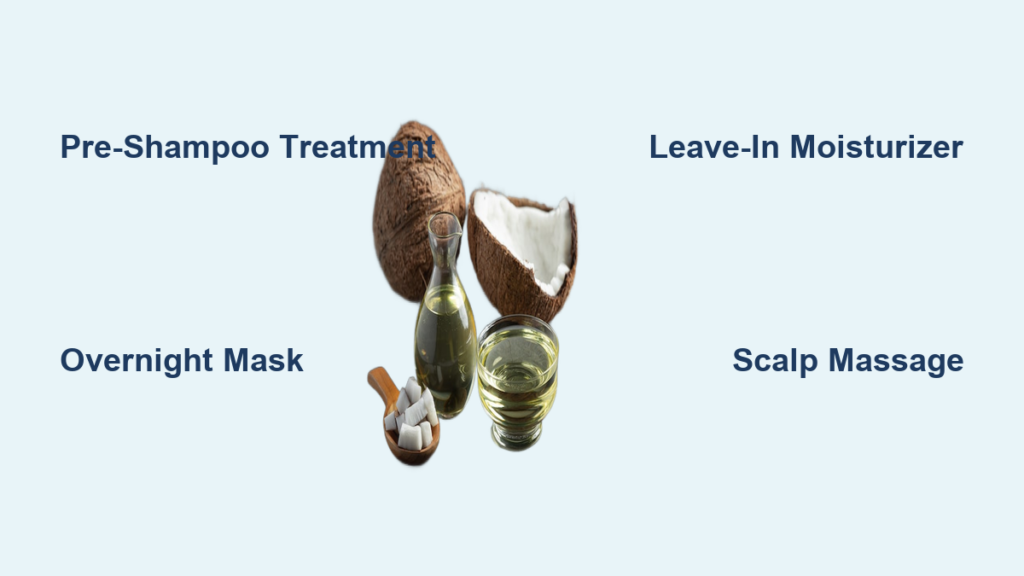
Pre-Shampoo Hot Oil Treatment
This is the most effective way to use coconut oil for deep moisturization. Applying it before washing protects hair from water damage and shampoo friction.
How to do it:
1. Melt the oil by scooping one-half teaspoon (fine hair) to two tablespoons (thick/long hair) and warming between palms or in a bowl of hot water.
2. Start with dry or damp hair, never soaking wet.
3. Detangle with a wide-tooth comb.
4. Section hair into two to four parts for even coverage.
5. Apply from ends up, avoiding roots if you have an oily scalp.
6. Massage lightly into scalp only if treating dryness.
7. Wait thirty to ninety minutes, or overnight for extra-dry hair.
8. Shampoo twice to remove all residue.
9. Condition as usual.
Pro tip: Light exercise during treatment boosts scalp temperature and enhances absorption.
Frequency: Once a week for dry or damaged hair. Every two weeks for fine or low-porosity types.
Overnight Deep Conditioning Mask
For severely dry or thick hair, an overnight treatment maximizes penetration and repair.
Steps:
1. Warm one to two tablespoons of coconut oil.
2. Apply to mid-lengths and ends. Avoid the scalp to prevent clogged pores.
3. Cover with a silk scarf or shower cap to protect bedding.
4. Leave for six to eight hours.
5. Wash out thoroughly in the morning. Double shampooing is often needed.
Results: After four to six weeks of weekly use, users report stronger, shinier hair with less breakage and improved curl definition.
Leave-In Moisturizer for Daily Hydration
Coconut oil can double as a lightweight leave-in conditioner if used sparingly.
How to apply:
1. After washing and towel-drying, take one-fourth to one-half teaspoon.
2. Rub between palms until liquid.
3. Apply only to mid-lengths and ends.
4. Style as normal. Avoid direct heat tools right after application to prevent thermal damage.
Best for: Fine to medium hair needing frizz control without heaviness.
Scalp Treatment for Dryness and Flakes
Coconut oil soothes dry, itchy scalps and helps loosen dead skin, but use with caution.
Procedure:
1. Warm one to two teaspoons.
2. Massage gently into scalp using fingertips, not nails.
3. Leave on for fifteen to thirty minutes maximum. Longer increases risk of clogged follicles.
4. Shampoo out completely.
Boost effectiveness: Add one to two drops of tea tree or lavender essential oil per tablespoon for antimicrobial and calming effects. Always patch test first.
Caution: Coconut oil is comedogenic, meaning it can clog pores. It is not ideal for oily or acne-prone scalps.
Spot Treatment for Frizz and Flyaways
Need a quick fix? Use coconut oil like a natural smoothing serum.
Quick fix steps:
1. Take a pea-sized amount.
2. Warm between fingers.
3. Smooth over flyaways, split ends, or dry tips.
4. Use sparingly. Too much looks greasy.
Ideal for: Between-wash touch-ups on dry hair.
Tailor Use to Your Hair Type

Best for Curly, Coily, or Thick Hair
These textures are naturally drier because sebum struggles to travel down spiral strands. Coconut oil seals in moisture, enhances curl definition, and reduces shrinkage and tangling.
Recommended: Weekly pre-wash treatment plus light leave-in application.
Use Carefully on Fine or Low-Porosity Hair
Fine hair gets weighed down easily. Low-porosity hair resists oil absorption, leading to buildup.
Adjustments:
• Dilute with lighter oils like jojoba, argan, or grapeseed oil in a one-to-one ratio.
• Apply only to ends.
• Reduce frequency to once every two weeks.
• Clarify weekly with a sulfate-free or clarifying shampoo.
For Oily Scalps
Avoid applying coconut oil directly to the scalp. Focus on mid-lengths and ends only to prevent greasiness and folliculitis.
Boost Results with DIY Blends
Hydrating Hair Mask
This blend adds extra moisture-boosting power.
Ingredients:
• Two tablespoons coconut oil
• One tablespoon raw honey (humectant that draws in moisture)
• Five drops lavender oil (soothing scent)
Apply as a hot oil treatment. Leave for forty-five minutes, then wash thoroughly.
Antifungal Scalp Serum
Ingredients:
• One tablespoon coconut oil
• Two drops tea tree oil
Massage into scalp, leave for twenty minutes, then shampoo. This helps with mild dandruff and irritation.
Lightweight Aloe Vera Mix
Ingredients:
• Two tablespoons coconut oil
• Two tablespoons aloe vera gel
This blends oil with water-based hydration, great for low-porosity or fine hair. Use as a leave-in or pre-wash mask.
Avoid Common Mistakes
Over-Application
Using too much oil is the number one error. Start small. You can always add more.
Signs of too much:
• Greasy roots
• Flat hair
• Residue after washing
Skipping Sectioning
Thick or long hair needs to be divided into sections for even distribution. Otherwise, oil pools at the bottom and roots stay dry.
Inadequate Rinsing
Coconut oil does not rinse out easily. Double shampooing is often necessary. If buildup occurs, use a clarifying shampoo once a week.
Heating Oil Too Much
Warm it gently. Never boil. High heat degrades beneficial compounds.
Misunderstanding Hair Growth Claims
Coconut oil does not make hair grow faster or reactivate dormant follicles. However, by reducing breakage and protein loss, it supports length retention, giving the appearance of faster growth.
Fact: No clinical evidence shows coconut oil stimulates hair growth.
How Often Should You Use It
| Use Case | Frequency | Duration |
|---|---|---|
| Pre-Shampoo Treatment | One to two times per week | Thirty minutes to one and a half hours |
| Overnight Mask | Once per week | Six to eight hours |
| Leave-In Conditioner | After every wash | Until next wash |
| Scalp Treatment | Once per week (if dry) | Fifteen to thirty minutes |
| Frizz Control | As needed | Immediate |
Minimum for results: Consistent use for at least four weeks shows measurable improvements in strength, shine, and softness.
Compare Coconut Oil with Other Oils

| Oil | Penetration | Protein Protection | Best For |
|---|---|---|---|
| Coconut Oil | Deep | Superior | Dry, damaged, curly hair |
| Olive Oil | Surface only | Moderate | Occasional deep conditioning |
| Sunflower Oil | Minimal | Low | Lightweight option for fine hair |
| Mineral Oil | Coats surface | Some protection | Budget-friendly sealant |
Winner: Coconut oil leads in penetration, protein retention, and long-term strength.
Final Step-by-Step Routine
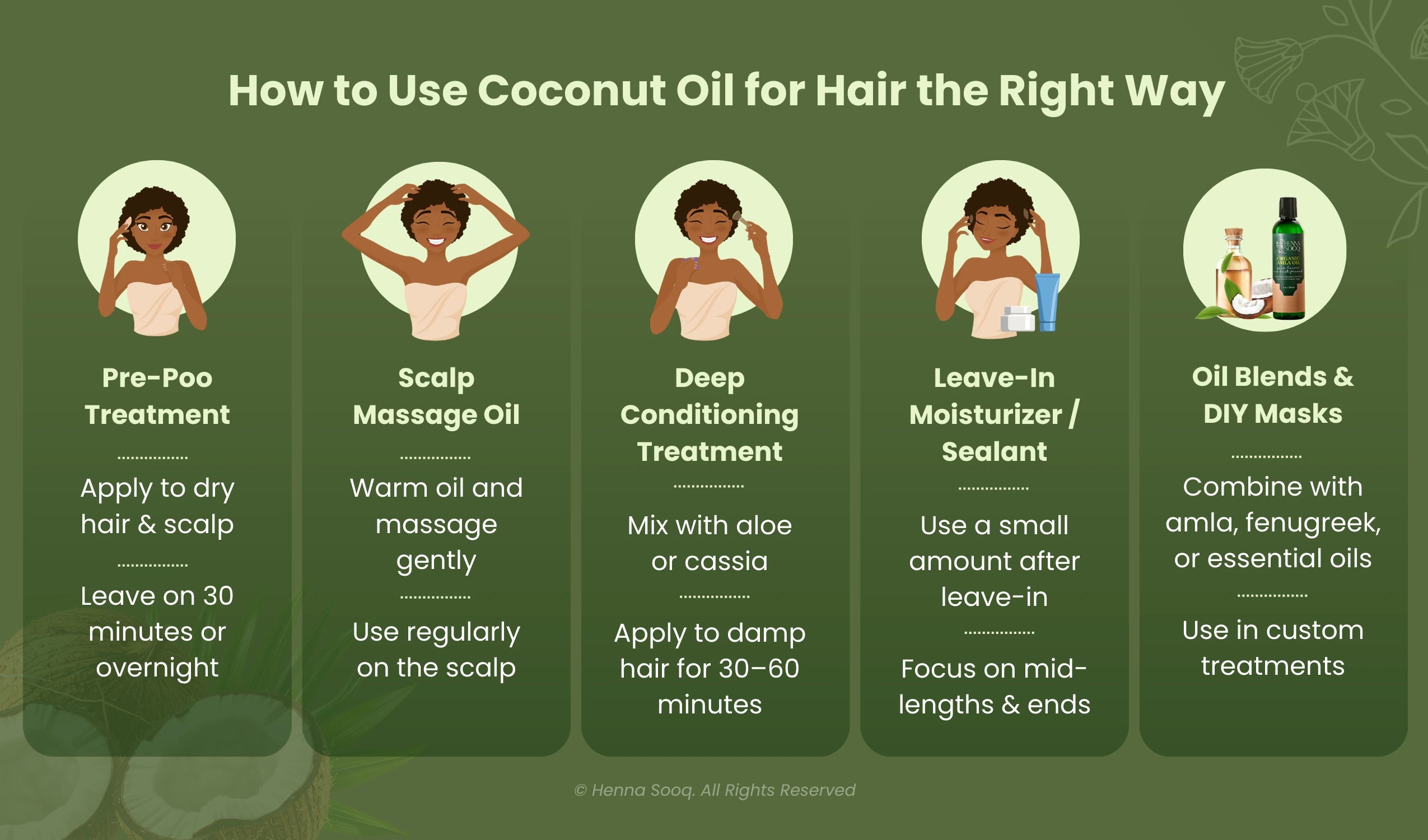
- Pick quality oil: Use organic, virgin coconut oil like Dr. Bronner is or Kirkland Signature.
- Prepare hair: Detangle and section into two to four parts.
- Melt oil gently: Use warm water or rub between palms.
- Apply from ends up: Use fingers or a wooden wide-tooth comb.
- Wait thirty to ninety minutes (or overnight for extra-dry hair).
- Wash thoroughly: Double shampoo if needed.
- Condition and air dry.
- Repeat weekly, adjusting based on hair response.
Bonus tip: Pair with internal care. Drink water, eat protein-rich foods, and include biotin and omega-3s for stronger, healthier hair overall.
Frequently Asked Questions About Using Coconut Oil for Hair
Can I leave coconut oil in my hair overnight?
Yes, you can leave coconut oil in your hair overnight for deep conditioning. Cover your hair with a silk scarf or shower cap to protect your bedding. Leave it for six to eight hours, then wash it out thoroughly in the morning. Double shampooing is usually required to remove all residue.
How much coconut oil should I use for my hair?
Start with a small amount. For fine or short hair, use one-half to one teaspoon. For medium hair, use about one tablespoon. For thick or long hair, use up to two tablespoons. You can always add more if needed.
Does coconut oil help with dry scalp?
Coconut oil can temporarily soothe a dry, itchy scalp due to its moisturizing properties. Apply one to two teaspoons to your scalp, massage gently, and leave for fifteen to thirty minutes before shampooing. However, it is comedogenic, so avoid leaving it on longer or using it frequently if you have an oily scalp.
Can I use coconut oil on fine hair?
You can use coconut oil on fine hair, but you must be careful. Apply a very small amount only to the ends, avoid the roots, and consider diluting it with lighter oils like jojoba or argan. Using too much will weigh down fine hair and make it look greasy.
How long does it take to see results from using coconut oil on hair?
Most people see noticeable improvements after four to six weeks of consistent use. You may notice softer, shinier hair and reduced breakage within the first few weeks, but lasting changes in hair strength and health take time.
Does coconut oil make hair grow faster?
No, coconut oil does not stimulate hair growth or reactivate dormant follicles. It can, however, reduce breakage and protein loss, which helps you retain length. This gives the appearance of faster growth, but the actual growth rate does not change.
Key Takeaways for Using Coconut Oil to Moisturize Hair
Coconut oil is a powerful, natural tool for hair moisturization, but success depends entirely on how you use it. The key is choosing virgin coconut oil, applying the right amount for your hair type, and selecting the appropriate method for your needs. Pre-shampoo treatments offer the deepest conditioning, while small amounts as a leave-in work well for daily maintenance.
Match your application method to your hair type. Curly and thick hair benefits from weekly deep treatments, while fine hair needs minimal amounts and careful rinsing. Always double shampoo to prevent buildup, and start with small quantities to avoid greasiness.
With consistent, smart application, you will enjoy softer, shinier, and stronger hair in just a few weeks. Be patient, adjust based on how your hair responds, and pair your topical treatments with a healthy diet for the best results.