If you use flat irons, curling wands, or blow dryers regularly, your hair endures temperatures that can exceed 400°F. This heat breaks down hair proteins, strips natural oils, and causes dryness, frizz, and breakage over time. While commercial heat protectants exist, many contain silicones that build up on your strands, leaving hair dull and weighed down. The good news? You can create an effective heat protection hair spray at home using natural oils that shield your hair from thermal damage while actually improving its health.
This guide walks you through making a safe, nourishing DIY heat protectant spray. You will learn which oils work best for your hair type, how to mix them properly, and the correct way to apply them for maximum protection without greasiness.
Why Heat Protection Matters for Your Hair
Heat styling tools reach extreme temperatures that compromise your hair’s structure. When flat irons or curling wands hit 300°F to 450°F, they break the hydrogen bonds in your hair shaft, leading to protein loss and structural damage. Without a protective barrier, your strands become brittle, prone to splitting, and lose their natural shine.
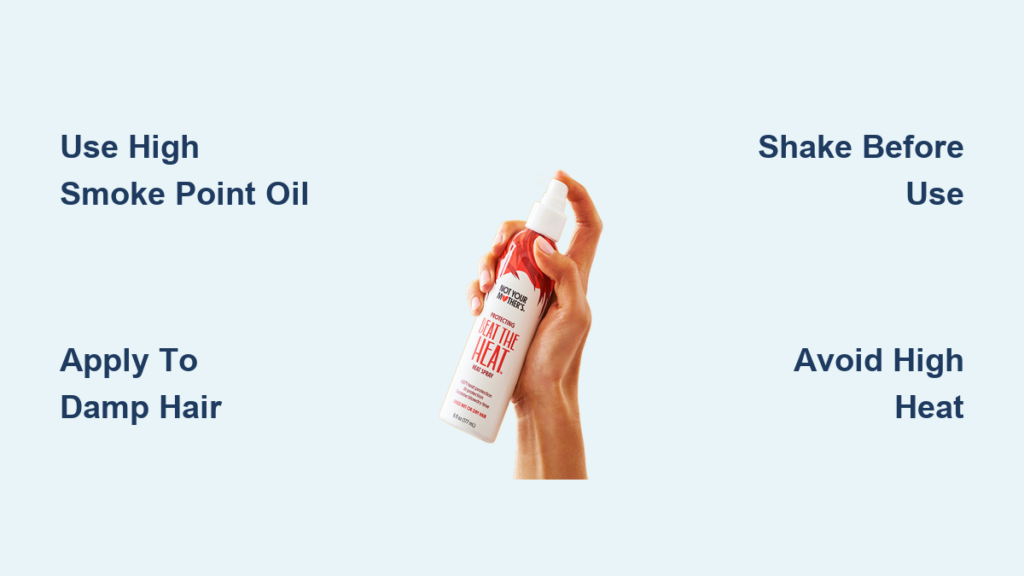
Commercial heat protectants often rely on silicones like dimethicone to create a barrier. These synthetic ingredients coat the hair surface effectively, but they accumulate over time, preventing moisture from penetrating the shaft. Natural oils offer a healthier alternative because they nourish your hair while protecting it from heat. However, the key to safety lies in choosing oils with high smoke points, which is the temperature at which the oil begins to burn and can actually fry your hair instead of protecting it.
Matching Oil Smoke Points to Your Styling Tools
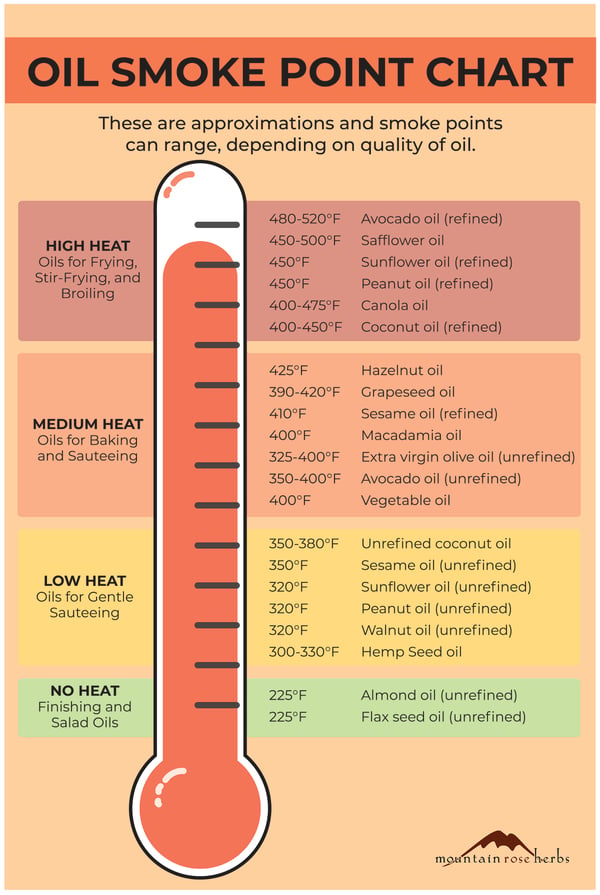
The most critical factor in creating a safe DIY heat protectant is selecting an oil that can handle your styling tool’s temperature. Using an oil with a low smoke point at high heat causes the oil to break down, producing smoke and damaging your hair irreversibly.
Smoke Point Reference Table
| Oil | Smoke Point (°F) | Safe Maximum Tool Temperature |
|---|---|---|
| Avocado Oil | 520°F | 450°F |
| Shea Butter | 450°F | 420°F |
| Sunflower Oil | 440°F | 440°F |
| Almond Oil | 430°F | 420°F |
| Argan Oil | 420°F | 400°F |
| Grapeseed Oil | 420°F | 400°F |
| Coconut Oil | 350°F | 325°F |
Expert Note: Most heat damage occurs above 350°F. When in doubt, lower your styling tool’s heat setting and choose a high-smoke-point oil like avocado or sunflower.
Best Oils for Your Hair Type
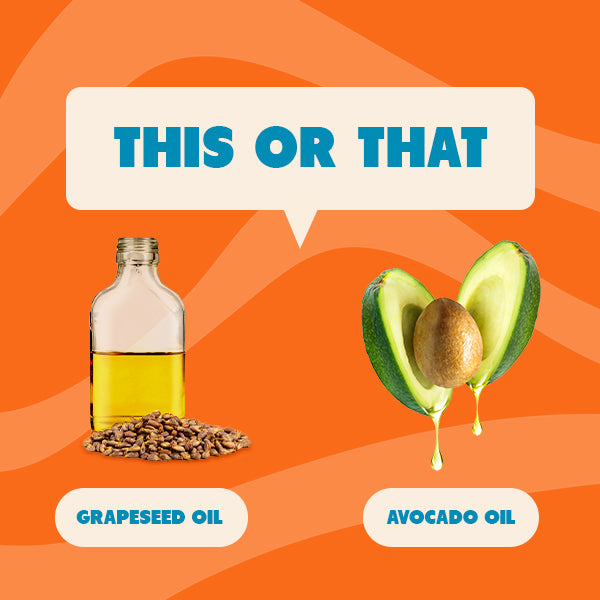
Avocado Oil for All Hair Types
Avocado oil has the highest smoke point among common oils, reaching 520°F. It penetrates the hair shaft to strengthen strands from within while protecting against both heat and UV damage. This makes it ideal for color-treated or sun-exposed hair.
Best for: All hair types, especially damaged or color-treated hair
Usage: Mix 1 tablespoon with 1 cup water in a spray bottle. Apply to damp hair before blow-drying.
Sunflower Oil for Lightweight Protection
Sunflower oil offers a 440°F smoke point and absorbs quickly without leaving residue. It acts similarly to silicones by conducting heat evenly across the hair surface, making it excellent for blowouts.
Best for: Fine, thick, or dry hair
Usage: Combine 1 tablespoon with 2 cups water. Spray on wet hair and comb through before styling.
Grapeseed Oil for Shine and Scalp Health
With a 420°F smoke point, grapeseed oil seals the cuticle to lock in moisture while helping with dandruff. It works well for those with dry scalp or flyaways.
Best for: Fine to medium hair, dandruff-prone scalps
Usage: Apply 4 to 6 drops to your palms, rub together, and smooth from mid-lengths to ends.
Coconut Oil for Deep Conditioning
Coconut oil penetrates deeply and reduces protein loss, but its low 350°F smoke point means it is only safe for low-heat styling below 325°F. Never use it with flat irons or curling wands set to high temperatures.
Best for: Fine to medium hair, low-heat styling only
Usage: Mix 1 teaspoon melted coconut oil with three-quarters cup water. Spray on damp hair and avoid the roots.
Argan Oil for Frizzy or Curly Hair
Argan oil reaches 420°F and provides a thick, viscous texture that tames frizz and adds shine to coarse or curly hair types.
Best for: Thick, frizzy, or textured hair
Usage: Apply 1 to 2 drops directly or blend with avocado oil for extra protection.
Shea Butter for Thick or Natural Hair
Shea butter forms a strong thermal barrier at 450°F and shields against UV damage. It works best for thick, coarse, or natural hair textures.
Best for: Type 4 hair, protective styles
Usage: Blend one-quarter cup shea butter with 1 tablespoon avocado oil. Apply a small amount to damp ends.
Simple DIY Heat Protectant Spray Recipes
Basic Sunflower Oil Spray
This universal formula works for all hair types and takes only 5 minutes to prepare.
Prep Time: 5 minutes
Yield: 1 ounce
Ingredients:
- One-half tablespoon sunflower oil
- One and one-half tablespoons distilled water
- 2 drops rosemary essential oil (optional)
Tools:
- 1-ounce spray bottle (glass or BPA-free plastic)
- Funnel for easy pouring
Instructions:
- Add sunflower oil and essential oil to the spray bottle.
- Fill the remainder with distilled water.
- Cap and shake well to emulsify.
- Shake before every use, as oil and water separate quickly.
Application:
- Spray 6 to 8 inches from hair, focusing on mid-shaft to ends.
- Comb through with a wide-tooth comb.
- Style at temperatures at or below 440°F.
Pro Tip: This spray also works as a frizz control treatment. Spray into your palms first, rub together, then smooth over flyaways.
Avocado Oil High-Protection Spray
This stronger formula suits high-heat styling and color-treated hair.
Ingredients:
- 1 tablespoon avocado oil
- 1 cup water
- 3 drops lavender essential oil (optional)
Instructions:
- Combine all ingredients in a spray bottle.
- Shake well before each use.
- Apply to damp hair and let air-dry slightly before styling.
Note: Use only when your styling tool stays at or below 450°F.
Coconut Oil Conditioning Spray
Use this formula only with low-heat styling tools.
Ingredients:
- 1 teaspoon melted coconut oil
- Three-quarters cup water
Instructions:
- Mix in a spray bottle.
- Shake vigorously before each use.
- Spray on damp hair, avoiding the roots.
- Style at or below 325°F.
Warning: Never use this formula with flat irons or curling wands set above 325°F.
How to Apply Heat Protectant Spray Correctly
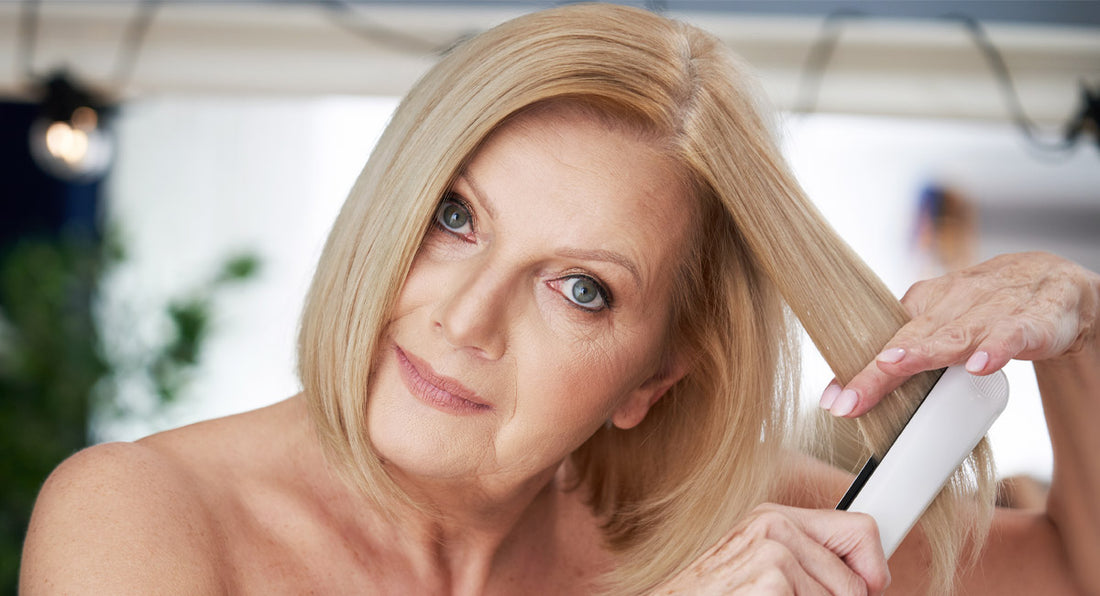
Wet vs. Dry Hair Application
Apply diluted sprays (oil plus water) to damp or wet hair for blow-drying, as the water helps distribute the product evenly. For flat ironing or curling, apply to dry hair or use direct oil application to prevent steam from disrupting the protective layer.
Never apply oil-based protectants to soaking-wet hair because water prevents the oil from adhering properly to the hair shaft.
Distribution Techniques
Always start applying from mid-shaft to ends, avoiding the scalp unless you are specifically targeting scalp health. Use a wide-tooth comb or detangling brush to spread the product evenly across each section. When spraying, hold the bottle 6 to 8 inches away and mist lightly. Over-spraying causes greasiness and weighs down your strands.
Shake the bottle vigorously before each use. The oil and water separate within minutes, so skipping this step means you spray mostly water with little protection.
Temperature Safety Rules
Never exceed your chosen oil’s safe maximum temperature. Use styling tools with adjustable heat settings, and when in doubt, choose lower heat. Most styling can be done effectively at 300°F to 350°F with less damage. If you notice smoke coming from your hair while styling, the oil is burning and causing damage.
Expert Insight: “If the oil smokes, your hair is frying.” Gretchen Friese, BosleyMD Certified Trichologist
Safety Tips and Allergy Considerations
Nut Allergy Precautions
Argan oil, almond oil, and shea butter are derived from nuts. If you have nut allergies, avoid these ingredients and stick with sunflower oil, grapeseed oil, or avocado oil instead. Always perform a patch test by applying a small amount to your inner arm and waiting 24 hours before full use.
Choosing Quality Oils
Select cold-pressed, unrefined, organic oils whenever possible. Refined oils may have higher smoke points but contain fewer nutrients and antioxidants. Authentic argan oil appears golden with a slightly nutty scent and smooth texture, not watery.
Benefits of Natural Heat Protectants
Natural oils provide moisture without the buildup that silicones cause. They nourish and hydrate while protecting, actually improving your hair’s health over time. Many oils also offer additional benefits like promoting scalp health, reducing dandruff, enhancing shine, supporting hair growth, and protecting against UV damage.
Making your own heat protectant eliminates synthetic preservatives, alcohols, and dimethicone from your routine. Most ingredients cost under $10 and last for months, making this approach budget-friendly and fully customizable to your hair’s specific needs.
Frequently Asked Questions About DIY Heat Protection
Can I use olive oil as a heat protectant?
Olive oil has a smoke point of 375°F to 410°F, making it marginally safe for low to medium heat. However, it is heavy and can leave residue, especially on fine hair. It is not recommended for regular or high-heat styling.
What ingredient protects hair from heat?
The oil’s ability to coat the hair shaft creates a barrier that slows heat penetration. Oils with high smoke points (400°F or above) and thermal conductivity, such as avocado, sunflower, and grapeseed oils, provide the most effective protection.
Can I skip heat protectant when styling?
No. Regular heat styling without protection leads to protein loss, dryness, and breakage. Even at lower heat settings, a protectant significantly extends your hair’s health and maintains shine.
How often should I use DIY heat protectant spray?
Use your DIY spray every time you apply heat styling. Reapply only if restyling on the same day, as overuse can cause product buildup.
Does homemade heat spray expire?
Water-based sprays last 1 to 2 weeks at room temperature or up to 1 month when refrigerated. Oil-only applications last 6 to 12 months. Add 1 teaspoon vitamin E oil or 5 drops of grapefruit seed extract to extend shelf life.
Key Takeaways for Making Heat Protection Hair Spray at Home
.jpg)
Creating effective heat protection spray at home requires matching your oil’s smoke point to your styling tool’s temperature. Avocado oil handles the highest heat at 450°F, while coconut oil works only below 325°F. Choose lightweight oils like sunflower or grapeseed for fine hair to avoid greasiness, and opt for thicker oils like shea butter or avocado for coarse or curly hair.
Always apply your protectant from mid-shaft to ends, shake spray bottles before each use, and keep styling temperatures as low as possible. With simple ingredients and proper technique, you can protect your hair from heat damage while nourishing it with natural oils instead of synthetic chemicals. Your strands will stay stronger, shinier, and healthier with every styling session.