

If you’re looking for a natural way to boost hair growth, reduce shedding, and refresh your scalp, rosemary hair spray is a powerful DIY solution backed by both tradition and science. This simple herbal infusion uses fresh rosemary and water to deliver antioxidants, anti-inflammatory compounds, and circulation-stimulating properties directly to your scalp. Unlike commercial products filled with chemicals, this spray is non-toxic, affordable, and customizable for your hair type.
Made in under an hour and stored in a reusable glass bottle, rosemary hair spray can be used daily as a leave-in tonic, pre-wash treatment, or texturizing mist. While clinical studies focus on rosemary oil, the infused water still delivers beneficial polyphenols like rosmarinic acid and carnosic acid, which support follicle health. With consistent use, many people notice less shedding within 4 to 8 weeks and improved texture, shine, and scalp comfort.
This guide walks you through every step: choosing ingredients, brewing the infusion, customizing for your hair goals, applying correctly, and storing safely.
Choose Your Rosemary Type
Use Fresh Over Dried
Fresh rosemary sprigs are strongly preferred for making hair spray because they contain higher levels of volatile oils, antioxidants, and active compounds like carnosic acid, which stimulates dormant follicles. Dried rosemary loses potency during processing and yields a weaker infusion.
What to know:
• Fresh: Use 2 to 4 sprigs per 2 cups of water. Look for vibrant green, aromatic stems.
• Dried: Acceptable only if fresh is not available. Use 1 to 2 tablespoons per 2 cups of water, but expect milder results.
Pro Tip: Grow your own rosemary indoors or outdoors. It is low-maintenance and ensures a steady supply of potent, chemical-free sprigs.
Prepare the Base Infusion

Simmer for Maximum Strength
Simmering extracts more bioactive compounds than steeping alone, creating a concentrated, effective tonic.
What you will need:
• 3 cups distilled or filtered water
• 4 fresh rosemary sprigs
• Small saucepan with lid
• Strainer or cheesecloth
• Heat-safe jar
Steps:
- Bring 3 cups water to a boil.
- Add rosemary sprigs, reduce heat, and simmer uncovered for 20 to 30 minutes.
- Remove from heat and let cool completely, about 20 minutes or longer.
- Strain into a clean jar using a fine mesh strainer or cheesecloth.
- Cool fully before bottling to prevent condensation and mold.
Why simmer? Heat breaks down plant cell walls, releasing more rosmarinic acid and essential oils than cold steeping.
Steep as a Simpler Alternative
For a quicker, gentler method that takes less active time:
Steps:
- Boil 3 cups water.
- Pour over 2 rosemary sprigs in a heat-safe container.
- Cover and steep for 1 hour or until fully cooled.
- Strain and proceed.
Note: This version is less concentrated but easier for beginners.
Customize for Your Hair Type
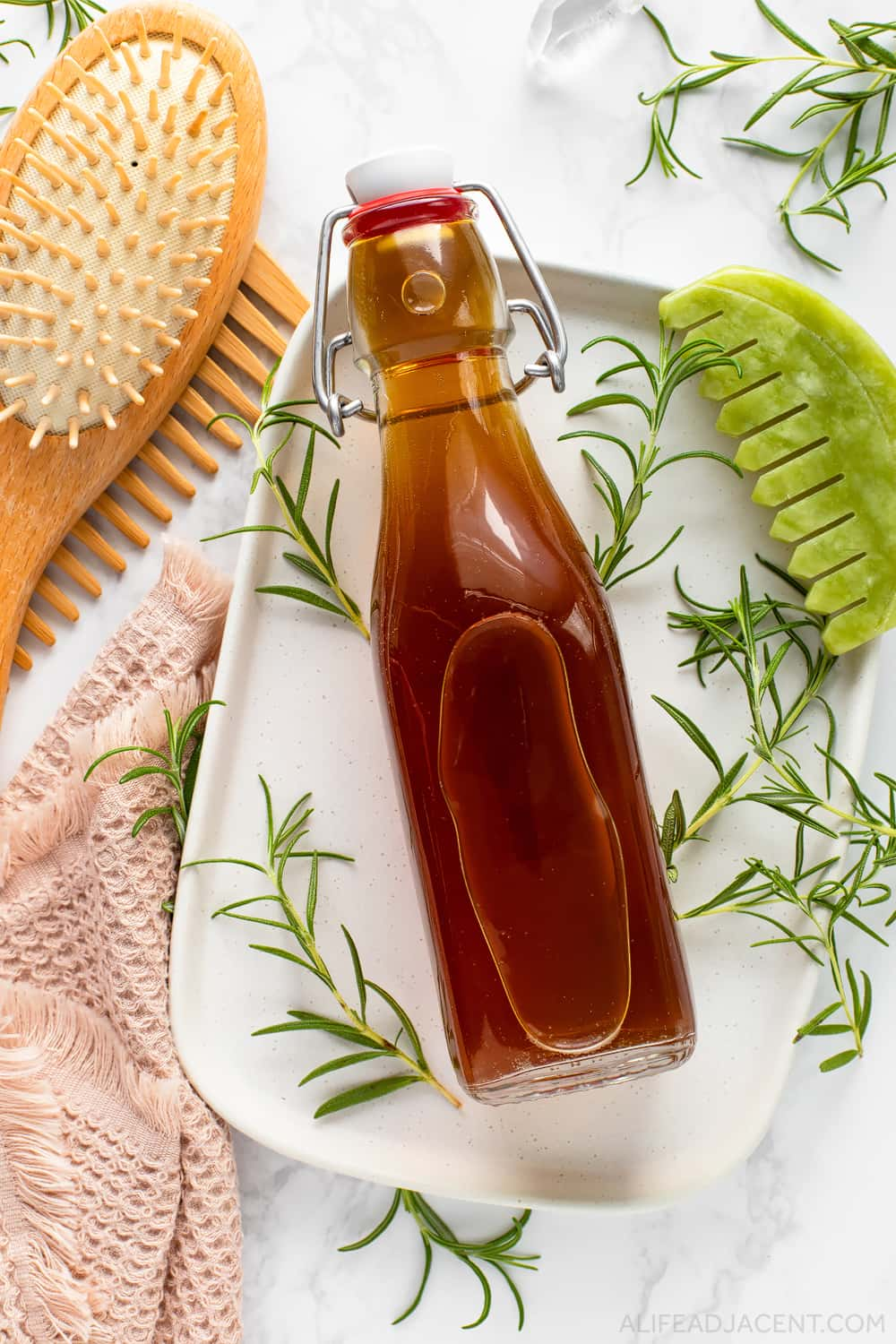
Boost Growth with Essential Oils
Add circulation-boosting oils to enhance follicle stimulation.
Ingredients per 8 oz spray:
• 1 teaspoon rosemary-infused water
• 5 drops rosemary essential oil
• 5 drops peppermint essential oil for cooling and increased blood flow
• 5 drops lavender essential oil to soothe scalp and promote healing
Warning: Never apply undiluted essential oils directly to skin. Always dilute in water or carrier oil.
Add Volume with Sea Salt
Ideal for fine, flat hair seeking beachy texture.
Recipe:
• 1 cup hot, not boiling, water
• 1 teaspoon sea salt or Epsom salt
• 1 teaspoon rosemary infusion
• 1 teaspoon aloe vera gel
• 5 to 10 drops rosemary essential oil
• 5 to 10 drops peppermint oil
Steps:
- Dissolve salt in hot water, then cool completely.
- Add remaining ingredients.
- Mix gently. Do not shake, as this creates foam.
Epsom Salt Benefit: Gentler than sea salt, rich in magnesium, and less drying.
Hydrate Dry or Curly Hair
Skip the salt and add moisture-locking agents instead.
Formula:
• 6 oz rosemary infusion
• 1 tablespoon aloe vera gel, pure and preservative-free
• 1 teaspoon flaxseed gel for slip and definition
• 1 tablespoon lavender hydrosol
Mix well and store in a spray bottle. Avoid alcohol, salt, or strong essential oils that can dry curls.
Soothe Sensitive or Itchy Scalps
Replace harsh ingredients with calming alternatives.
Gentle Blend:
• 4 oz rosemary infusion
• 2 oz chamomile hydrosol
• 1 teaspoon colloidal oat extract
• 1 teaspoon aloe vera
No essential oils are needed. This blend is ideal for reactive skin.
Prevent Hair Darkening
Protect Light or Gray Hair
Rosemary contains natural pigments that may gradually darken blonde, gray, or bleached hair with repeated use.
Prevention Strategies:
• Use only as a pre-wash treatment, not a leave-in spray.
• Limit application time to under 30 minutes before shampooing.
• Blend with chamomile or calendula to balance tone.
• Switch to rosemary essential oil diluted in carrier oil like jojoba for scalp massage instead.
User Tip: One blonde user reported a slight golden tint after 6 weeks of daily use. The effect reversed after switching to pre-wash only.
Extend Shelf Life Safely
Refrigerate Unpreserved Batches
Fresh herbal infusions spoil quickly due to bacterial and fungal growth.
Storage Options:
| Method | Shelf Life | Notes |
|---|---|---|
| Refrigerated, no preservative | 3 to 5 days | Safest for weekly batches |
| With 1 tablespoon vodka or witch hazel at 10% or higher | 2 to 3 months | Acts as preservative and solvent |
| With grapefruit seed extract at 0.5 to 1% | 2 to 4 weeks | Natural option, not foolproof |
| With Optiphen or Leucidal | 4 to 6 months | Best for long-term storage |
| Salt-based sprays | Up to 6 months | High mineral content inhibits microbes |
Critical: Always cool the infusion fully before bottling to avoid pressure buildup.
Freeze for Long-Term Use
Pour cooled infusion into ice cube trays, freeze, then transfer to a freezer bag.
• Thaw one cube at a time.
• Mix with other ingredients fresh.
• Lasts 3 to 6 months without degradation.
Bonus: Frozen cubes double as scalp-soothing tools when rubbed along the hairline.
Apply for Best Results
Spray on Scalp Daily for Growth
Technique:
- Part hair into sections.
- Mist directly onto scalp, focusing on thinning areas.
- Massage with fingertips or a scalp massager for 1 to 2 minutes.
- Leave in. No rinsing required.
Frequency: Apply 1 to 2 times daily for hair growth, aligning with the 6-month study protocol.
Science Note: Massage boosts circulation, enhancing nutrient delivery to follicles.
Use as a Post-Wash Rinse
After shampooing and conditioning:
• Spray or pour over hair.
• Wait 10 to 15 minutes.
• Rinse out or leave in.
Benefits: Seals cuticle, reduces frizz, adds shine.
Refresh Roots Between Washes
Lightly mist roots to absorb excess oil, neutralize odor, and add volume. Avoid the ends if hair is dry.
Style Wavy Hair with Salt Spray
For beachy waves:
- Apply to damp hair.
- Scrunch mid-lengths and ends.
- Air dry or diffuse.
Do Not Rinse: Salt enhances texture and hold.
Watch for Spoilage Signs
Know When to Toss It
Even when refrigerated, rosemary water can spoil.
Warning Signs:
• Cloudiness or floating particles
• Sour, musty, or moldy smell
• Slimy texture
• Visible mold
When in doubt, throw it out. Spoiled spray can cause scalp infections.
Track Results Over Time

Expect Changes in 4 to 8 Weeks
Hair grows slowly. Consistency is key.
Timeline:
• 1 to 2 weeks: Less itching, flaking, and a fresher scalp.
• 4 weeks: Reduced shedding becomes noticeable in your brush or shower.
• 8 weeks: New fine hairs appear, especially along the hairline.
• 3 to 6 months: Improved thickness, shine, and overall vitality.
Study Insight: A 2015 Skinmed trial found rosemary oil matched 2% minoxidil after 6 months of twice-daily use.
Safety First
Patch Test Before Use
Allergic reactions are rare but possible.
How to test:
- Apply a small amount behind your ear or on your inner forearm.
- Wait 24 hours.
- If redness, itching, or burning occurs, discontinue use.
Avoid if you are allergic to mint, sage, or thyme, which belong to the same plant family.
Avoid Eyes and Internal Use
Rosemary is safe topically but can irritate eyes.
• Rinse immediately with water if contact occurs.
• This spray is not for ingestion. Concentrated forms may be toxic internally.
Consult a Doctor for Medical Hair Loss
This spray supports hair health but is not a cure for alopecia, hormonal imbalances, or nutrient deficiencies.
• See a dermatologist for persistent shedding or bald patches.
• Use alongside medical treatments, not as a replacement.
Make It Sustainable

Grow Your Own Ingredients
A single rosemary plant provides sprigs for months.
• Thrives in pots or gardens with full sun.
• Requires no pesticides.
• Clip as needed. The plant regrows quickly.
Cost Savings: One $5 plant replaces dozens of store-bought products.
Reuse Glass Bottles
Wash and sterilize spray bottles between batches.
• Use dark glass to block UV light and preserve potency.
• Label each bottle with the date and ingredients.
Final Tips for Success
Combine with Scalp Massage
Use a jade roller, boar bristle brush, or silicone massager to boost absorption and circulation.
• Two minutes daily enhances results.
• Feels relaxing. Turn it into a self-care ritual.
Rotate with Other Herbal Infusions
Prevent stagnation and broaden benefits.
Try alternating with:
• Nettle tea, rich in iron and supports growth
• Green tea, which provides antioxidants and reduces DHT
• Hibiscus, which adds shine and may slow graying
Pair with Clean Hair Care
Maximize results by avoiding sulfates, silicones, and heat damage.
• Use sulfate-free shampoo.
• Deep condition weekly.
• Limit blow-drying and straightening.
Frequently Asked Questions About Rosemary Hair Spray
How long does homemade rosemary hair spray last?
Without preservatives, refrigerated rosemary hair spray lasts 3 to 5 days. With vodka or witch hazel added, it lasts 2 to 3 months. Salt-based versions can last up to 6 months.
Can I use dried rosemary instead of fresh?
Yes, but fresh rosemary is more potent. Use 1 to 2 tablespoons of dried rosemary per 2 cups of water instead of 2 to 4 fresh sprigs. Expect milder results.
Does rosemary hair spray really work for hair growth?
Studies show rosemary oil promotes hair growth comparably to 2% minoxidil. While the infused water is less concentrated, it still delivers beneficial polyphenols and antioxidants that support scalp and follicle health.
Will rosemary spray darken my hair?
Rosemary contains natural pigments that may gradually darken blonde, gray, or bleached hair with repeated use. To prevent this, use it as a pre-wash treatment only or blend with chamomile.
How often should I use rosemary hair spray?
For hair growth, apply 1 to 2 times daily. For general scalp health or refresh, use 3 to 4 times per week. Consistency over 3 to 6 months produces the best results.
Can I use rosemary hair spray on colored hair?
Yes, but test on a small section first. Rosemary is generally safe for colored hair, though it may slightly deepen brown or black tones over time.
Key Takeaways for Making Rosemary Hair Spray
Rosemary hair spray is a versatile, science-backed DIY treatment that supports hair growth, reduces shedding, and improves scalp health. The process is simple: simmer fresh rosemary in water, cool, strain, and customize based on your hair type.
For best results, use fresh rosemary over dried, refrigerate unsaved batches, and expect to wait 4 to 8 weeks for visible changes. Customize with essential oils for growth, salt for volume, or aloe vera for moisture. Patch test before first use, and consult a dermatologist for persistent hair loss.
Start small, stay consistent, and let your hair thrive naturally.