If you’re battling dandruff, an itchy scalp, or stubborn product buildup, tea tree oil might be the natural solution you’ve been seeking. Extracted from the leaves of the Australian Melaleuca alternifolia plant, this potent essential oil is celebrated for its powerful antifungal, antibacterial, and anti-inflammatory properties. Its active compound, terpinen-4-ol, targets the root causes of many scalp issues, particularly the overgrowth of Malassezia yeast linked to dandruff and seborrheic dermatitis.
Clinical research supports its effectiveness: a landmark study found that a 5% tea tree oil shampoo reduced dandruff severity by 41% in just four weeks, far outperforming the placebo. This guide walks you through exactly how to use tea tree oil on hair and scalp safely, including dilution ratios, application methods, carrier oil pairings, and safety rules based on scientific evidence.
Benefits of Tea Tree Oil for Scalp Health
Tea tree oil offers clinically backed benefits that transform scalp care by targeting microbial imbalances, inflammation, and buildup without harsh chemicals. Understanding these benefits helps you apply the oil for maximum results.
Controls Dandruff and Fungal Growth
The most well-documented benefit of tea tree oil is its ability to control dandruff. A randomized, double-blind study showed that a 5% tea tree oil shampoo used daily for four weeks reduced dandruff severity by 41%, compared to just 11% in the placebo group. This effect comes from tea tree oil’s strong antifungal action against Malassezia, a yeast naturally present on the scalp that triggers flaking, itching, and irritation when overgrown.
Its active component, terpinen-4-ol, disrupts fungal cell membranes, preventing reproduction and spread. Unlike some medicated shampoos, tea tree oil also reduces inflammation, making it ideal for sensitive or red scalps.
Soothes Itch and Inflammation
An itchy scalp often results from dryness, product residue, or microbial imbalance. Tea tree oil acts as a natural antiseptic and anti-inflammatory agent, calming irritated skin and reducing the urge to scratch. Because scratching can lead to micro-tears and secondary infections, tea tree oil helps break the cycle of irritation and damage.
Users report immediate relief after applying diluted tea tree oil, especially when combined with moisturizing carriers like jojoba or argan oil.
Unclogs Follicles and Removes Buildup
Over time, dead skin cells, sebum, and styling products accumulate on the scalp, clogging hair follicles. This buildup can hinder hair growth and contribute to thinning. Tea tree oil functions as a natural deep cleanser, penetrating pores to dissolve residue and clear follicles.
By clearing the way, it enhances the absorption of other treatments and creates a cleaner foundation for healthier hair growth.
Safe Dilution Guidelines for Tea Tree Oil
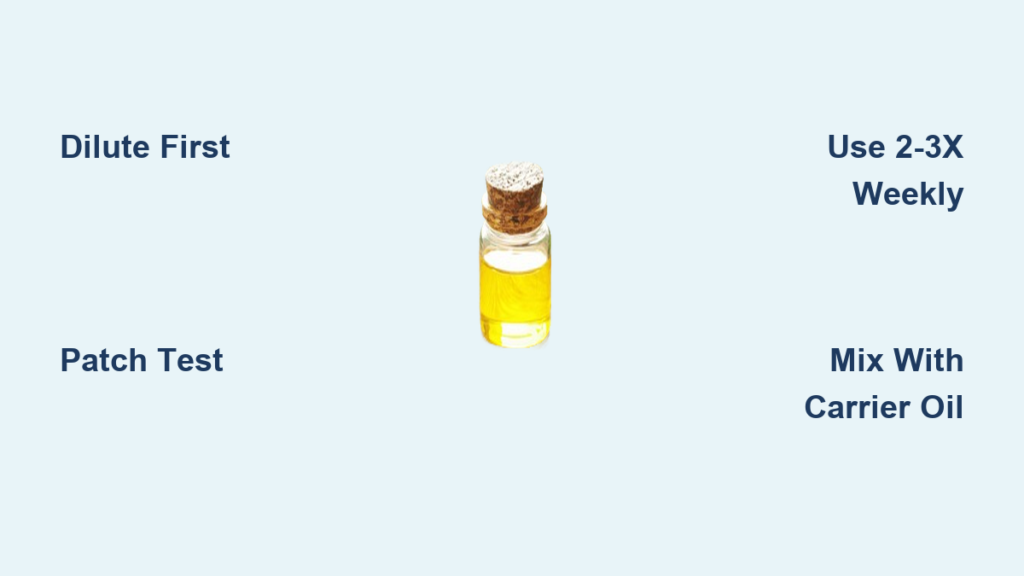
Using tea tree oil safely starts with proper dilution. Because it is highly concentrated, never apply it undiluted to your scalp. Doing so risks irritation, dryness, or even chemical burns.
Correct Dilution Ratios
Follow these ratios to ensure effectiveness without compromising scalp health:
• For carrier oils or shampoos: Use 2 to 3 drops of tea tree oil per 1 tablespoon (15 mL) of base
• For sprays or liquid formulas: Aim for a 5% concentration, about 10 to 15 drops per ounce (30 mL) of solution
• Maximum safe level: Do not exceed 5% tea tree oil in any preparation
These ratios ensure effectiveness while protecting your scalp from irritation.
Best Carrier Oils to Mix with Tea Tree Oil
Pairing tea tree oil with the right carrier oil boosts both safety and performance. Each carrier oil offers unique benefits for different hair types.
• Jojoba oil: Mimics natural sebum, ideal for oily or fine hair
• Coconut oil: Deeply moisturizing, effective for pre-wash treatments
• Argan oil: Lightweight and frizz-reducing, great for dry or damaged hair
• Avocado oil: Rich in fatty acids, perfect for thick or coarse textures
• Grapeseed oil: Light and fast-absorbing, suitable for daily use
• Almond oil: Softening and vitamin-rich, a traditional Ayurvedic favorite
Choose based on your scalp type, using lighter oils for oily scalps and richer ones for dryness.
How to Add Tea Tree Oil to Shampoo

The easiest way to incorporate tea tree oil into your routine is adding it to your regular shampoo. This method works well for daily cleansing, dandruff control, and oil regulation.
Simple Shampoo Addition Steps
- Add 1 to 2 drops to a palmful of shampoo, or 5 to 10 drops per 4 oz (120 mL) bottle
- Shake well before each use
- Massage into wet scalp for 1 to 3 minutes
- Leave on for 3 to 5 minutes to allow penetration
- Rinse thoroughly
This method is best for general maintenance and mild dandruff control. Use 2 to 3 times per week, or up to daily if using a formulated 5% tea tree shampoo.
Tea Tree Oil Scalp Massage Treatment
A pre-wash or overnight treatment delivers deeper results than shampoo addition alone. This method stimulates blood flow, exfoliates dead skin, and unclogs follicles.
Massage Treatment Recipe
• 1 tablespoon carrier oil (jojoba or coconut)
• 3 drops tea tree oil
Application Method
- Warm the mixture slightly (optional)
- Use fingertips to massage into scalp in circular motions for 5 to 10 minutes
- Choose one option: leave overnight with a shower cap, or leave for 30 to 60 minutes before shampooing
- Shampoo twice to remove all oil
Perform this treatment 2 to 3 times per week for best results.
DIY Hair Masks with Tea Tree Oil

Custom masks address unique scalp needs using natural ingredients. Here are three proven formulations for different concerns.
Nourishing Mask for Dry Scalp
• 2 tablespoons jojoba or avocado oil
• 3 drops tea tree oil
• 2 drops tangerine oil (optional, for circulation)
• 1 teaspoon rosehip oil (regenerative)
Apply, leave for 30 minutes or longer, then shampoo out.
Clay Mask for Oily Scalp
• 1 teaspoon French green clay
• 1 teaspoon aloe vera gel
• 1 drop tea tree oil
• 1 drop chamomile oil
• 1/2 teaspoon jojoba oil
Mix into a paste, apply to scalp, leave 15 to 20 minutes, rinse, then shampoo. This absorbs excess oil and gently exfoliates.
Yogurt-Avocado Mask for Itch Relief
• 1/4 cup plain yogurt or 1 ripe avocado
• 1 tablespoon honey
• 3 to 5 drops tea tree oil
Blend, apply to scalp, leave 15 to 20 minutes, rinse with cool water. Yogurt contains lactic acid for gentle exfoliation while honey soothes and hydrates.
Tea Tree Oil for Head Lice Treatment

Tea tree oil is a powerful, non-toxic option for managing head lice thanks to its insecticidal properties. The compounds terpinen-4-ol and 1,8-cineole disrupt lice nervous systems and prevent nits from sticking to hair shafts.
Lice Treatment Protocol
Formula:
• 7 to 8 drops tea tree oil
• 1 tablespoon carrier oil (coconut or almond)
Steps:
1. Apply to dry hair and scalp, focusing on roots, nape, and behind ears
2. Cover with a shower cap, leave overnight (6 to 8 hours)
3. In the morning, comb through with a fine-toothed lice comb (5 to 6 passes)
4. Wash hair with a gentle cleanser
Repeat every 3 to 4 days for 2 weeks to disrupt the lice lifecycle. Add lavender or eucalyptus oil for stronger repellent action.
Safety Rules and Precautions
Despite being natural, tea tree oil is potent and must be used responsibly. Following these precautions prevents adverse reactions.
Always Dilute Before Use
Undiluted tea tree oil can cause skin irritation, burning, contact dermatitis, dryness, flaking, and chemical burns. Never apply pure tea tree oil directly to the scalp.
Perform a Patch Test First
- Mix 1 drop tea tree oil with 1 teaspoon carrier oil
- Apply to inner forearm or behind the ear
- Wait 24 hours
- If redness, itching, or swelling occurs, do not use
Repeat this test when switching brands or formulas.
Avoid Overuse and Know Contraindications
Using tea tree oil daily may lead to excessive dryness, scalp sensitivity, and disrupted oil balance. Recommended frequency is once per week initially, increasing to 2 to 3 times weekly if tolerated.
Never ingest tea tree oil, as it is toxic if swallowed. Symptoms include drowsiness, confusion, and loss of coordination. Use caution with children and consult a pediatrician before use. Talk to your doctor if pregnant or breastfeeding.
Choosing High-Quality Tea Tree Oil
Not all tea tree oils are created equal. Efficacy depends on purity, composition, and sourcing.
What to Look For
• Botanical name: Melaleuca alternifolia
• Purity: 100% pure, undiluted, therapeutic-grade
• Extraction method: Steam-distilled (avoid solvent-extracted)
• Origin: Australian-grown (widely considered highest quality)
• Terpinen-4-ol content: 30% or higher (key active compound)
• 1,8-cineole content: Less than 3% (lower levels reduce irritation risk)
Look for certifications like organic or non-GMO, and GC/MS testing reports that confirm composition.
Selecting Commercial Products
When buying shampoos or scalp treatments, look for tea tree oil concentration of at least 5%. Check ingredient lists to ensure tea tree oil appears near the top, not the end. Avoid products with sulfates, parabens, and synthetic fragrances if you have sensitive skin.
Expected Results and Timeline
Consistency is key when using tea tree oil for scalp health. Here is what to expect over time:
• 1 to 2 weeks: Reduced itching, less flaking, fresher scalp
• 3 to 4 weeks: Noticeable dandruff reduction, improved texture
• 6 to 8 weeks: Balanced oil production, minimal buildup, healthier-looking hair
• For lice: Maintain treatment for at least 2 weeks to break the lifecycle
If you see no improvement after 4 to 6 weeks, or have persistent hair loss or severe conditions like psoriasis, consult a dermatologist or trichologist. Tea tree oil supports but does not replace medical treatment.
Frequently Asked Questions About Using Tea Tree Oil on Hair and Scalp
Can I apply tea tree oil directly to my scalp?
No, you should never apply undiluted tea tree oil directly to your scalp. Always mix it with a carrier oil or shampoo first. The recommended ratio is 2 to 3 drops per tablespoon of carrier oil or shampoo. Undiluted application can cause irritation, burning, or chemical burns.
How often should I use tea tree oil on my scalp?
Start with once per week to assess tolerance, then increase to 2 to 3 times per week if no irritation occurs. Using it daily may lead to excessive dryness and scalp sensitivity. For dandruff control, consistent use over 4 to 6 weeks produces the best results.
Does tea tree oil help with hair growth?
Tea tree oil does not directly regrow hair in cases of genetic hair loss like androgenetic alopecia. However, it supports hair growth indirectly by reducing inflammation, removing buildup that clogs follicles, and improving scalp circulation during massage. It enhances the effectiveness of other treatments like minoxidil.
How long does it take to see results from tea tree oil for dandruff?
Most users notice reduced itching and flaking within 1 to 2 weeks. A clinical study showed a 41% reduction in dandruff severity after 4 weeks of daily use with a 5% tea tree oil shampoo. For optimal results, continue use for 6 to 8 weeks.
Is tea tree oil safe for children?
Use caution with children. A study suggested a possible link between topical tea tree oil and prepubertal gynecomastia in young boys, though causation is not proven. Consult a pediatrician before use on children, and avoid large or frequent applications.
Can I use tea tree oil if I have a sensitive scalp?
Yes, but proceed carefully. Always perform a patch test first, use lower concentrations (2% or less), and pair with a soothing carrier oil like jojoba or argan. If irritation occurs, discontinue use immediately. People with eczema or psoriasis should consult a dermatologist before using tea tree oil.
Key Takeaways for Using Tea Tree Oil on Hair and Scalp
/media/ic/files/2025/11/Tea-Tree-Oil-for-Hair.png)
Tea tree oil is a powerful, science-backed solution for improving scalp health when used correctly. The most important points to remember are always dilute tea tree oil before applying it to your scalp, using 2 to 3 drops per tablespoon of carrier oil or shampoo and never exceeding a 5% concentration.
Choose high-quality Australian-grown tea tree oil with at least 30% terpinen-4-ol content for maximum effectiveness. Pair it with appropriate carrier oils based on your scalp type, using lighter oils like jojoba for oily scalps and richer oils like coconut for dry scalps.
Start with once-weekly applications and perform a patch test before first use. Consistency matters more than concentration, so use it regularly for 4 to 6 weeks to see significant results for dandruff and scalp buildup. For lice treatment, maintain the regimen for at least 2 weeks to break the lifecycle.
If you have persistent scalp conditions or see no improvement after 6 weeks, consult a dermatologist. With proper use, tea tree oil can transform your scalp from flaky and irritated to clean, balanced, and healthy.