Your new glasses keep sliding down your nose. The earpieces pinch. One lens sits higher than the other. You are frustrated, but you do not need to rush to an optician. With a hair dryer and about 10 minutes, you can reshape plastic or acetate frames at home for a perfect fit.
The trick is that heat makes thermoplastic frames temporarily flexible. Acetate, TR-90, and nylon soften around 140–160°F—easily reached with a standard hair dryer on medium heat. Once warm, the frame can be gently bent to correct slippage, pressure, or crookedness. When cooled, it locks into place.
Check If Your Frame Is Heat-Safe

Not all glasses can be adjusted with heat. Applying hot air to the wrong material can melt, crack, or warp your frame permanently.
Plastic Frames That Work
Most common frame materials respond well to heat. Cellulose acetate is the standard material for plastic frames and softens evenly when heated. Nylon and plastic composites used in sports frames become flexible when warm. TR-90 flexible plastic becomes highly pliable and resilient to repeated heating.
Metal Frames: Proceed with Caution
Metal-only frames like titanium, steel, and aluminum do not bend with heat and require professional tools. Hybrid frames with metal and plastic tips allow heating only the plastic portion. Use nose pad pliers for metal frames with adjustable pads instead of heat.
Frames to Avoid Heating
Rimless or semi-rimless designs risk lens damage or screw loosening from heat. Vintage or brittle plastic may crack under thermal stress. Smart glasses risk damaging internal electronics. Any cracked or damaged frame may worsen with heat application.
Gather Your Tools You Need
You do not need much equipment—just a few household items to get started.
Essential Equipment
A standard household hair dryer on medium heat setting serves as your primary heat source. A mirror helps check symmetry and fit from multiple angles. A flat table or countertop lets you test whether the frame sits evenly. A timer on your phone tracks heating duration accurately.
Optional Tools for Precision
Cotton gloves protect your fingers and improve grip when bending warm plastic. Nose pad pliers enable precise adjustments on metal frames with adjustable pads. Tape or cloth wrapped around plier tips prevents scratching the frame surface.
Heat the Frame Safely
Heat is powerful but easy to overuse. Following specific rules prevents permanent damage.
Set the Right Temperature
Use medium heat setting and never high. Hold the dryer 6–8 inches from the frame. Move the dryer in slow circles rather than focusing heat on one spot.
Heat Time Guidelines
Heat temple arms for 20–30 seconds until they feel warm and slightly flexible. Heat the bridge area for 30 seconds to 2 minutes for plastic bridges. Heat temple tips on hybrid frames for 20–30 seconds only.
Critical Safety Rules
Stop immediately if you smell burning, see bubbling, or notice warping. Never direct heat toward the lenses. Heat near lens edges can crack glass, delaminate coatings, or melt plastic lenses. Aim airflow only at the frame, especially near hinges or the bridge.
Adjust the Temple Arms
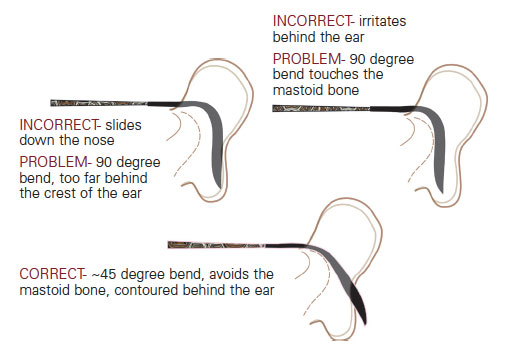
Slipping or tightness behind the ears? Fix it by reshaping the temple arms.
Tighten Loose Temple Arms
Heat the hinge area of both arms for 20–30 seconds. With one hand, hold the frame front steady. With the other, gently bend the arms inward toward your head. Hold the new position for 15–20 seconds while cooling. Test the fit and repeat if needed.
A 1–2 mm inward bend makes a big difference. Do not overdo it.
Loosen Tight Temple Arms
Heat the same hinge area. Gently bend the arms outward away from your head. Hold and cool for 15–20 seconds. Test the fit.
If arms are too tight over the ear, bend upward slightly at the back curve after heating.
Adjust the Nose Bridge
Frames sitting too low or pinching your nose? Fix the bridge for better comfort.
Raise a Low-Riding Frame
The bridge is too wide if the frame sits low on your nose. Heat the center bridge for 30–60 seconds. Gently pinch the lenses closer together with your thumbs. Hold the position for 15–20 seconds while cooling. This raises the frame on your nose.
Relieve a Pinching Bridge
The bridge is too narrow if it pinches your nose. Heat the bridge, then gently push the lenses apart. Hold and cool. This relieves pressure on the nose.
Work slowly. Uneven pressure can tilt the frame.
Metal Frames with Nose Pads
No heat is needed for metal frames with adjustable nose pads. Use nose pad pliers or fingers wrapped in cloth. Adjust silicone pads closer together to raise the frame. Adjust them farther apart to lower the frame and reduce pressure.
Fix a Crooked or Uneven Fit
One lens higher than the other? Frame tilting to one side? Here is how to level it.
Level the Frame Step by Step
Place glasses lens-down on a flat table. Check the four contact points: both lens rims and both temple ends. If one temple lifts, that side is too long or bent upward.
Heat the lifted temple arm for 20–30 seconds. Gently bend the arm downward at the hinge or behind the ear. Recheck on the table. Repeat until all four points touch evenly.
For example, if the left lens is higher, heat and bend the left temple down slightly.
Prevent Asymmetry
Adjust one side at a time. Always test fit and recheck on the flat surface. Use a mirror to confirm visual symmetry from the front view.
Cool and Set the New Shape
Heating makes the frame flexible, but cooling locks it in place.
Proper Cooling Process
After bending, hold the frame in the new position for 15–20 seconds. Let it sit undisturbed for 30–60 seconds to fully harden. Avoid touching or testing until completely cool.
Rushing this step causes the frame to spring back or warp.
Test the Fit
Wear the glasses and walk around. Check for no slippage, even pressure behind ears, balanced vision without tilt, and comfort on the nose. Make tiny adjustments if needed by reheating and rebending.
Avoid Common Mistakes
Even small errors can ruin your glasses. Steer clear of these issues.
Overheating the Frame
Signs include bubbling, warping, and soft spots. The result is permanent damage. The frame may sag over time.
Bending Too Much
Plastic frames are strong but not indestructible. A 1–2 mm change is often enough. Force leads to cracks.
Heating the Lenses
Heat near lens edges can separate anti-reflective or blue-light coatings. Once damaged, coatings cannot be repaired.
Skipping Symmetry Checks
Uneven adjustments cause visual imbalance. Always use a mirror or flat surface to verify evenness.
Repeated Heating Cycles
Most frames tolerate 3–5 reshapes over their lifetime. Frequent heating weakens plastic and reduces durability.
When to See a Professional
DIY works great for minor fixes, but not for everything.
Seek Professional Help If
You have progressive, bifocal, or trifocal lenses. Your prescription includes high astigmatism. The frame has spring hinges or complex joints. You are unsure about the material or heat tolerance. The lenses are loose, misaligned, or popped out. Your glasses came with a warranty that DIY may void.
Most optical stores offer free adjustments, even if you did not buy your glasses there.
Final Tips for Long-Term Success
Get the most from your glasses without damaging them.
Start with Small Changes
Make tiny bends. You can always reheat and do more. Big changes are hard to undo.
Use a Mirror Constantly
Check symmetry from front and side views. Look for even temple angle and lens height.
Combine Adjustments
Fix temple arms and nose pads together for best comfort. For example, tighten the arms and narrow the bridge to stop slippage.
Limit Heat Cycles
Repeated heating weakens plastic. After 3–5 adjustments, consider professional help.
Know When to Stop
If the frame feels brittle, stops holding shape, or cracks, stop immediately. It is time for a replacement or professional repair.
Frequently Asked Questions About Adjusting Glasses with a Hair Dryer
Can I use a hair dryer on metal frames?
Metal-only frames like titanium or stainless steel do not respond to heat. They require professional adjustment with specialized tools. However, you can heat the plastic temple tips on hybrid frames.
How long should I heat the glasses?
Heat temple arms for 20–30 seconds. Heat the bridge for 30 seconds to 2 minutes. The frame should feel warm and slightly flexible, not hot or deformed.
Can I damage my lens coatings?
Yes. Directing heat toward lenses can crack glass, delaminate anti-reflective coatings, or melt plastic lenses. Always aim heat only at the frame, especially near hinges and the bridge.
What if my glasses still do not fit after one try?
You can reheat and adjust again. Most frames tolerate 3–5 minor reshapes over their lifetime. Make small changes each time and test frequently.
Is this method safe for rimless glasses?
No. Rimless and semi-rimless designs risk lens damage or screw loosening from heat. Skip this method and visit an optician for these frames.
Can I fix crooked glasses that one lens is higher?
Yes. Place the glasses on a flat surface to identify which side is higher. Heat the higher side is temple arm and gently bend it downward. Check and repeat until the frame sits evenly.
Key Takeaways for Adjusting Glasses with a Hair Dryer
Adjusting glasses with a hair dryer works effectively when done correctly. It is a smart solution for plastic and acetate frames that do not fit quite right. Use medium heat, keep the dryer 6–8 inches away, and heat in short bursts of 20–30 seconds. Make small changes—1–2 mm bends make a noticeable difference. Always test fit frequently and allow 30–60 seconds of cooling before wearing.
Respect the material. Never force the frame or overheat it. Avoid heating lenses or rimless designs. Limit adjustments to 3–5 times over the frame is lifetime. When in doubt, see a professional. Most optical stores offer free adjustments.
With care and patience, you can enjoy a custom fit from home without leaving your house.