
Drying your dog after a bath doesn’t require a hair dryer to be effective. In fact, many dogs dislike the noise, heat, or forced air from traditional dryers, making alternative methods not just practical but often preferable. Whether you’re dealing with a shivering Chihuahua, a thick-coated Husky, or a wriggly Labrador fresh from the tub, knowing how to dry a dog without a hair dryer is essential for comfort, hygiene, and long-term coat health. Left damp, your dog risks skin infections, matting, chills, and that unmistakable wet dog smell.
The good news is that with the right techniques, tools, and a little patience, you can achieve a completely dry, fluffy, and happy pup using only low-tech, quiet, and safe methods. This guide covers everything from high-absorbency towels to drying robes, air drying strategies, and breed-specific tips designed to keep your dog calm, warm, and dry without ever turning on a dryer.
Use High-Absorbency Towels for Maximum Moisture Removal
Towel drying is the foundation of any no-dryer routine. But not all towels are created equal, and using the right type and technique makes all the difference in how to dry a dog without a hair dryer effectively.
Choose the Right Towel Type
Standard bath towels soak up water, but they are far from efficient for dogs with thick or long coats. Microfiber dog towels outperform traditional options significantly because they can absorb seven to eight times their weight in water while drying quickly and resisting frizz and tangles. Absorber towels used by professional groomers are even more efficient. They are reusable, super-absorbent, and designed to be wrung out and reused during a single drying session. Avoid terry cloth towels because they become heavy when wet and are less effective at moisture removal.
Master the Blotting Technique
Rubbing creates friction that leads to tangles and frizz, especially in long or curly coats. Instead, press the towel firmly into the fur to soak up water. Work in sections starting at the head and moving toward the tail, focusing on moisture traps like armpits, belly, groin, and between the toes. Use three to five dry towels for medium to large dogs, replacing saturated towels with fresh ones. For thick or double coats, use your hands to squeeze water from the fur before blotting.
Owners of large breeds report cutting drying time by fifty to seventy percent when switching to microfiber or absorber towels.
Apply a Drying Robe or Coat for Hands-Free Absorption

After towel drying, a dog drying robe locks in warmth and pulls out residual moisture, making it ideal for cold homes or long-haired breeds when learning how to dry a dog without a hair dryer.
Why Drying Robes Work
Drying robes are made from quick-dry, high-absorbency fabric that continues wicking moisture after toweling. They keep your dog warm, reducing shivering and chills, and they prevent wet paw prints on floors and furniture. The hands-free design lets your dog relax or even nap while the robe does the work.
Popular Options and How to Use Them
Snuggly Dog is popular for large breeds like Labradors and Husky mixes. One owner of a ninety-five-pound dog reported that it absorbed enough moisture to prevent what they described as a hundred-hour natural dry time. Happy Hoodie was originally designed to reduce noise anxiety, but its snug fit also makes it effective as a drying garment because it mimics a calming hug.
To use a drying robe, wrap it around your dog after towel drying, secure the straps, and leave it on for twenty to thirty minutes. Remove and check for dampness, especially along the back and under the tail.
Try a Drying Bag for Calm, Mess-Free Results
Drying bags are a game-changer for pet parents who want a mess-free, calming solution, especially for small or anxious dogs learning how to dry a dog without a hair dryer.
How Drying Bags Function
These enclosed, absorbent bags wrap around the dog is body with the head and legs exposed. The super-absorbent lining draws out moisture while creating a den-like environment that many dogs find soothing. This containment also prevents wet fur from getting everywhere in your home.
Step-by-Step Usage
Towel dry your dog thoroughly first. Guide your dog into the bag, ensuring the head is properly positioned through the designated opening. Zip up slowly and securely. Supervise continuously and never leave your dog unattended in the bag. Leave it on for twenty to forty minutes depending on coat thickness. Remove gently and check for remaining dampness.
The Pawdaw of London method uses a drying bag after towel drying, conditioning, and combing, finishing with a cologne spray and treat. Users praise it for reducing anxiety, mess, and overall drying time.
Air Dry Safely and Strategically
Air drying is possible, but only if done correctly and never as the sole method for soaking wet, long, or double-coated dogs.
When Air Drying Works
Air drying works best for short-haired breeds like Beagles and Boxers with minimal undercoat. It also works well in warm, dry, draft-free indoor spaces and as a final step after towel or robe drying. For dogs with thick coats, air drying alone will not achieve complete dryness.
Best Practices for Air Drying
Towel dry first to remove as much water as possible before letting your dog air dry. Choose a warm room, perhaps a heated space or a sunny indoor spot, but avoid direct sunlight for prolonged periods. Encourage movement by letting your dog walk on dry towels or mats to promote airflow. Brush while damp using a slicker brush or wide-tooth comb to prevent matting and improve air circulation. Monitor drying time, which typically takes two to six hours, though double-coated breeds may take longer.
Never rely on air drying alone for Huskies, Golden Retrievers, or German Shepherds because trapped moisture in the undercoat can lead to fungal infections and persistent odor.
Take an Outdoor Drying Walk for Natural evaporation
If the weather permits, a post-bath walk is one of the fastest and most enjoyable drying methods when figuring out how to dry a dog without a hair dryer.
Why Outdoor Walks Work
Wind and body heat accelerate evaporation naturally. Paw friction against pavement helps dry feet and underbelly areas that are hard to reach with towels. Exercise also reduces post-bath zoomies and promotes calmness afterward.
Tips for a Successful Drying Walk
Towel off your dog first to minimize dripping onto floors and furniture. Avoid muddy or dirty areas because some dogs roll to dry, which would require another bath. Bring a collapsible water bowl and treats to extend the walk if needed. Brush your dog after the walk to remove loose hair and improve coat texture.
A Cockapoo owner reported their dog rolled in dirt within minutes of a walk, proving that close supervision is essential during outdoor drying.
Use a High-Velocity Force Dryer Without Heat

Not all dryers are noisy or hot. A high-velocity force dryer with cool air is a safe, fast alternative, especially for thick or double-coated breeds learning how to dry a dog without a hair dryer.
Benefits of Force Dryers
These tools use room-temperature, high-speed air to blow out undercoat and dry deep layers without heat. They dry up to ten times faster than towels alone and prevent matting while improving coat volume. They are safe for all sizes from eight-pound Yorkies to one-hundred-fifty-pound Newfoundlands. Most models include three condenser nozzles for targeted drying on paws, face, and underbelly.
Many dogs prefer the cool airflow over hot dryers. At around one hundred seventy-nine dollars, it is a long-term investment that replaces the need for frequent towel changes.
Brush During Drying to Prevent Matting
Brushing is not just for after drying. It is a critical part of the drying process itself when you are learning how to dry a dog without a hair dryer.
Why Brushing Matters
Brushing separates damp fur to allow airflow. It prevents tangles and matting, especially in long or curly coats. It also speeds up evaporation by lifting the coat away from the skin.
Choose the Right Brush for Your Coat Type
Use a slicker brush for Poodles, Shih Tzus, and Maltese. Use an undercoat rake for Huskies and Golden Retrievers. Use a wide-tooth comb for detangling cords or sensitive areas. Brush in sections starting at the skin and working outward, rewarding with treats to keep your dog still.
Apply Quick-Dry Grooming Spray for Faster Results
When time is short, a quick-dry grooming spray can cut drying time by twenty to thirty percent.
How Quick-Dry Sprays Work
These sprays lower water is surface tension, which speeds evaporation. Many include conditioning agents to prevent dryness and are safe for daily use.
How to Apply Correctly
Towel dry thoroughly first. Spray lightly over damp areas, focusing on the undercoat. Follow with brushing to distribute the product and increase airflow. This method is especially useful for dogs with dense coats or those who resist long drying sessions.
Avoid Dangerous Drying Methods
Some drying methods may seem convenient but pose serious risks to your dog is health and safety.
Skip Cage Dryers Completely
Cage dryers force hot, loud air into a confined space. They carry a high risk of overheating, especially in brachycephalic breeds like Bulldogs and Pugs. They cause extreme stress due to noise and lack of control and are often left unsupervised, increasing danger. Avoid cage dryers entirely and opt for hand drying, force drying, or drying bags instead.
Never Use Human Hair Dryers on Dogs
Human hair dryers operate at higher heat levels than dog skin can tolerate. They can cause burns, especially on thin-coated or elderly dogs. They lack airflow settings suitable for thick or double coats. Only use dog-specific dryers if heat is needed.
Only use dog-specific equipment designed for canine coat types and temperature tolerances.
Match Your Drying Method to Your Dog is Breed
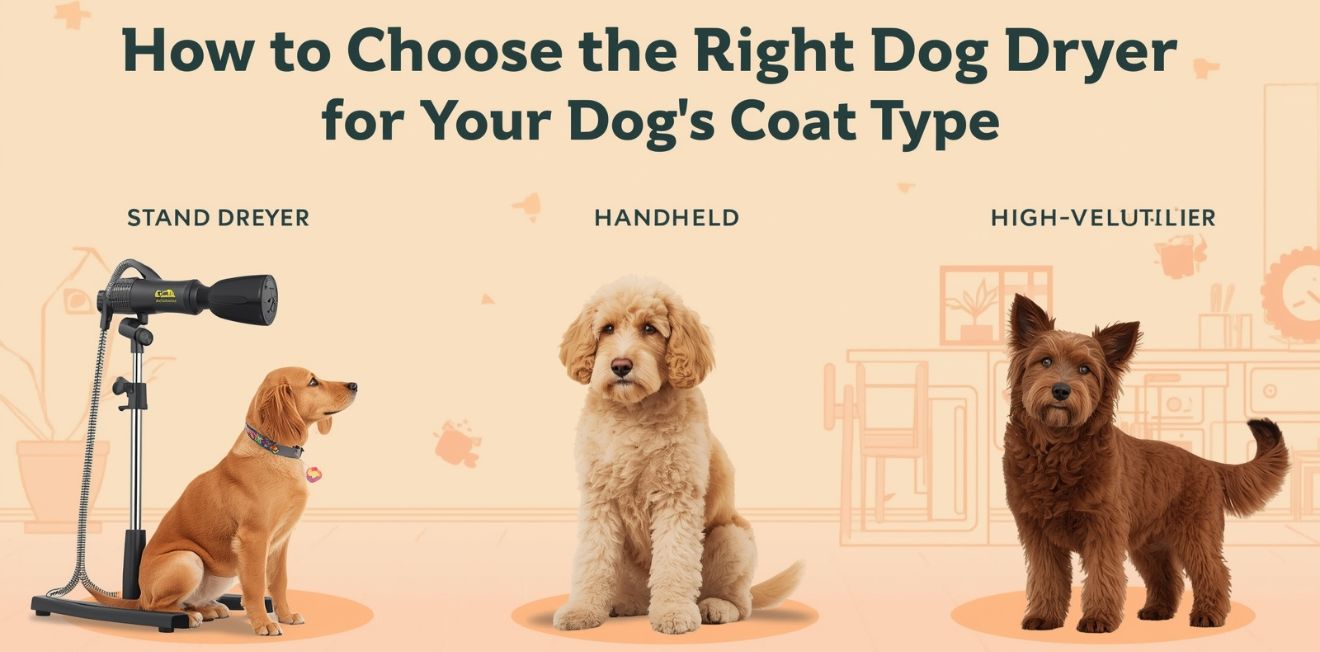
Your dog is coat type determines the best drying approach. One size does not fit all when mastering how to dry a dog without a hair dryer.
Short-Haired Breeds
Beagles, Boxers, and similar breeds dry quickly with towel drying followed by air drying in a warm room. Expect drying to take ten to twenty minutes. Minimal undercoat means quick drying with simple blotting.
Long-Haired Breeds
Shih Tzus, Maltese, and similar dogs need towel drying plus a drying bag plus brushing. Expect thirty to sixty minutes. Focus on preventing matting by combing while damp and avoid relying on air drying alone.
Double-Coated Breeds
Huskies, Golden Retrievers, and German Shepherds need absorber towels plus high-velocity force drying. Expect forty-five to ninety minutes. You must blow out the undercoat to prevent skin issues and odor.
Curly-Coated Breeds
Poodles, Bichon Frises, and Cockapoos benefit from towel drying plus a drying brush plus quick-dry spray. Expect thirty to sixty minutes. Focus on root areas, ears, and legs to prevent cord matting.
Small Breeds
Yorkies, Chihuahuas, and similar tiny dogs do well with towel drying plus a drying bag. Expect twenty to forty minutes. They are sensitive to cold, so keep them warm with a robe or heated room.
Large Breeds
Labradors, Newfoundlands, and similar giant dogs need multiple towels plus a drying robe plus force drying. Expect sixty minutes or longer. Thick coats hold a lot of water, so rotate towels and use layered methods.
Reduce Drying Anxiety Through Positive Training
Many dogs resist drying due to fear, discomfort, or past negative experiences. Building confidence makes learning how to dry a dog without a hair dryer much easier.
Use High-Value Rewards
Offer treats like peanut butter, cheese spray, or peanut butter smeared on a lick mat stuck to the shower wall. This keeps your dog distracted and still during drying sessions. Praise calmly and consistently throughout the process.
Desensitize Your Dog to Towels
Let your dog sniff the towel first. Reward for touching it. Drape it gently over the back. Gradually increase contact until full wrapping is tolerated. Take this process slow over multiple sessions.
The Happy Hoodie reduces anxiety even without a dryer because its snug fit and fabric muffle sound and movement.
Complete Post-Drying Care for Full Health
Drying is not over when the fur looks dry. Final steps ensure long-term health and comfort.
Dry Ears and Paws Thoroughly
Use a soft cloth or cotton ball to dry inside the ears, especially in floppy-eared breeds like Cocker Spaniels. Towel between toes to prevent slipping and fungal growth.
Brush Again After Drying
This removes any remaining tangles. It distributes natural oils. It leaves the coat shiny and soft.
Check for Lingering Dampness
Smell the coat because if wet dog odor persists, moisture is trapped. Feel under the collar, behind ears, and in skin folds. If dampness remains, continue drying with additional towels or a robe.
Protect Your Dog from Cold and Infection Risks
Incomplete drying can lead to serious health issues that are easily preventable.
Health Risks of Wet Coats
Wet coats can cause skin infections including bacterial or yeast infections. They create hot spots from moisture and irritation. They lead to chills or hypothermia in cold environments. They create slipping hazards on hardwood or tile.
Keep Your Dog Warm During Drying
Use a drying robe or blanket. Dry in a heated room. Avoid drafts. Monitor your dog for shivering and address it immediately with additional warmth.
Frequently Asked Questions About Drying Dogs Without a Hair Dryer
Can I use a regular bath towel to dry my dog?
Regular bath towels work but are far less efficient than microfiber or absorber towels. Standard towels absorb less water, become heavy when wet, and are more likely to cause tangles. Switching to specialized dog towels significantly reduces drying time and effort.
How long does it take to air dry a dog without a dryer?
Air drying typically takes two to six hours depending on the dog is coat type, thickness, and your home is humidity. Short-haired breeds dry faster, while double-coated breeds may take six hours or longer. Air drying should never be the sole method for thick or long-coated dogs.
Are drying bags safe for all dog sizes?
Drying bags work best for small to medium dogs. They are not recommended for large or giant breeds because the bag may not fit properly and supervision becomes more difficult. Always supervise your dog continuously and never leave them unattended in a drying bag.
What is the fastest way to dry a dog without heat?
The fastest method combines multiple techniques. Start with thorough towel drying using high-absorbency microfiber towels. Follow with a drying robe or bag for residual moisture. For thick coats, finish with a high-velocity force dryer using cool air. This layered approach can cut drying time significantly.
Why does my dog still smell wet after drying?
Lingering wet dog odor indicates moisture is trapped in the undercoat or skin folds. Recheck areas like the back, under the tail, and between toes. Use a force dryer to blow out the undercoat or apply a quick-dry spray and brush thoroughly to ensure complete dryness.
Key Takeaways for Drying Your Dog Without a Hair Dryer
You do not need a hair dryer to dry your dog effectively. By combining high-absorbency towels, drying robes or bags, strategic air drying, and gentle brushing, you can keep your dog dry, comfortable, and healthy without noise, heat, or stress. The most critical factors are using the right tools like microfiber towels and absorber towels, matching your method to your dog is breed and coat type, and ensuring complete dryness to prevent skin infections and odor. Always prioritize your dog is comfort through positive reinforcement and never leave drying bags or heated setups unattended. With the right routine, bath time can end on a calm, cozy note every time.