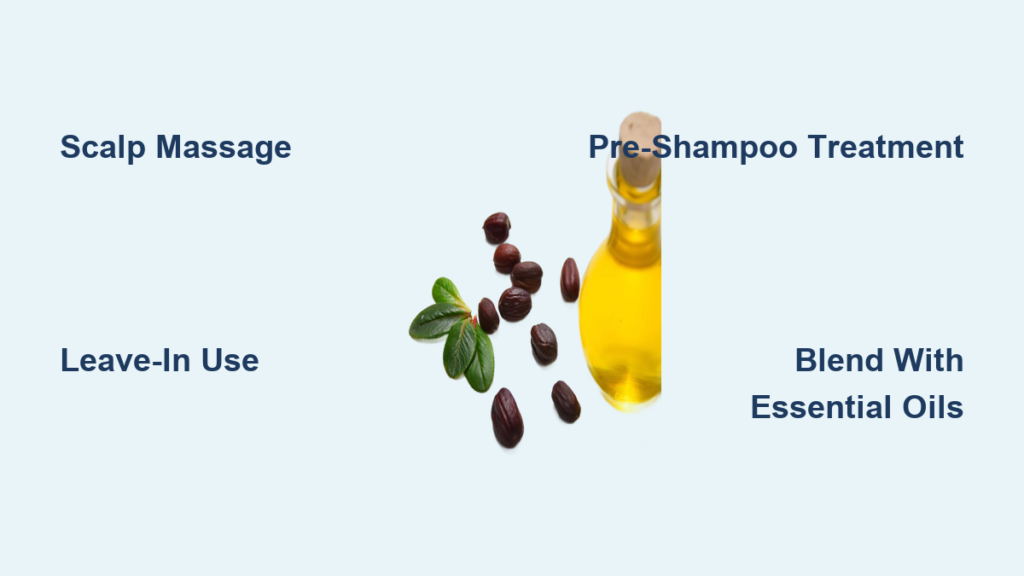
You’ve probably heard that jojoba oil can transform your hair, but if you’re wondering how to use jojoba oil for hair growth effectively, you are not alone. While it will not magically regrow lost hair, this golden-hued liquid wax is one of the most scientifically supported natural ingredients for creating the ideal environment for stronger, longer, and healthier-looking hair.
Derived from the seeds of the Simmondsia chinensis plant, jojoba oil mimics your scalp’s natural sebum, helping balance oil production, prevent breakage, and nourish follicles without clogging pores. It is rich in vitamin E, antioxidants, and essential fatty acids that protect hair from environmental damage and improve scalp health. In this guide, you will learn exactly how to apply jojoba oil for best results, which methods work for different hair types, and how to avoid common mistakes that could reduce its effectiveness.
Apply Jojoba Oil to Scalp with Massage

Massaging jojoba oil into your scalp is not just relaxing. It is a science-backed way to boost circulation and deliver nutrients directly to hair roots.
Stimulate Blood Flow to Follicles
Use one to two teaspoons of warmed jojoba oil and part your hair into sections for even coverage. Using your fingertips, apply gentle pressure in circular motions across the scalp for five to ten minutes. This mechanical stimulation increases blood flow to the dermal papilla, supporting healthier growth cycles.
Leave the oil on for at least one hour or overnight, then wash thoroughly with a mild shampoo. For best results, repeat one to two times per week.
Pro Tip: Warm the oil by placing the bottle in warm water. Never microwave it, as overheating can degrade its beneficial compounds.
Prevent Buildup on Oily Scalps
If you have an oily scalp, focus application only on dry or flaky areas and avoid saturating the entire scalp. Jojoba oil signals sebaceous glands to reduce excess sebum production, but overuse can lead to residue or clogged follicles.
Use a light layer and always rinse completely. Consider using it as a pre-wash treatment instead of a leave-in to minimize greasiness.
Use as a Leave-In Hair Conditioner

For daily hydration without heaviness, apply one to three drops of jojoba oil to damp or dry hair, focusing on mid-lengths and ends.
Smooth Frizz and Protect Ends
Jojoba oil’s lightweight texture coats the hair cuticle, locking in moisture and reducing friction that leads to split ends. Unlike heavier oils, jojoba absorbs quickly and will not weigh down fine or thin hair when used sparingly. It also enhances shine and improves manageability, making detangling easier.
Visual Cue: If your hair looks shiny but not greasy, you have used the right amount. If it feels slick or oily, reduce the quantity next time.
Customize by Hair Type
Fine or thin hair should use just one drop and avoid the scalp. Curly or coily hair can be applied more generously to define curls and combat dryness. Chemically treated hair benefits from mixing with a leave-in conditioner to reinforce weakened strands.
This method works especially well when combined with heat protectants before styling.
Pre-Shampoo Treatment for Damage Prevention
Shampooing strips natural oils, leaving hair vulnerable to dryness and breakage. A pre-wash oil treatment with jojoba creates a protective barrier that minimizes protein loss during cleansing.
Seal Cuticles Before Washing
Apply a few drops from roots to tips ten to twenty minutes before shampooing. The oil binds to the hair shaft, preventing excessive moisture loss and reducing porosity-related damage.
Why it works: Jojoba does not penetrate deeply like coconut oil but forms a breathable film that shields hair while still allowing shampoo to clean effectively.
You will notice less tangling and softer hair after washing, especially beneficial for color-treated or heat-damaged locks.
Boost Conditioners and Hair Masks
Elevate your favorite conditioner or deep mask by adding two to five drops of jojoba oil.
Enhance Moisture and Slip
This boosts hydration, improves slip, and reinforces hair strength over time. Mix the oil into the product in your palm before applying to avoid clumping. Focus on damaged or dry areas such as split ends or stretched roots.
Adjust for your hair type:
Fine hair should add two to three drops maximum. Thick, curly, or damaged hair can use up to one teaspoon depending on length.
Leave on for the recommended time, then rinse thoroughly. With consistent use, hair becomes more resilient and less prone to snapping.
Blend with Other Oils for Stronger Results
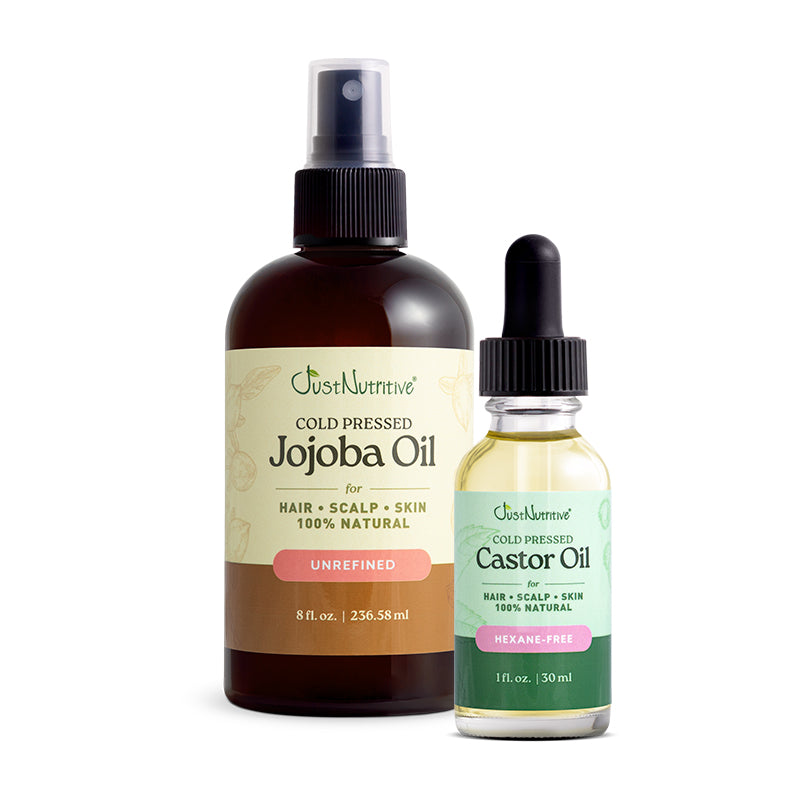
Jojoba oil blends well with other natural oils to address multiple concerns.
Combine with Castor Oil for Thickness
While jojoba excels at balancing the scalp, castor oil is known for its thickening properties due to high ricinoleic acid content. Mix one teaspoon jojoba oil with one teaspoon castor oil for a powerful blend that nourishes follicles and reduces shedding.
Apply to the scalp and massage gently. Leave for one hour before shampooing. This combination is ideal for those seeking fuller-looking hair or recovering from breakage.
Warning: Castor oil is very viscous and hard to wash out. Diluting it with jojoba makes it easier to apply and remove.
Pair with Argan or Coconut Oil for Repair
Jojoba plus argan works best for frizzy, dull hair and adds shine and heat protection. Jojoba plus coconut is ideal for porous or dry hair because coconut penetrates the shaft while jojoba seals the surface.
Use these blends one to two times weekly for intensive repair.
Dilute Essential Oils Safely with Jojoba
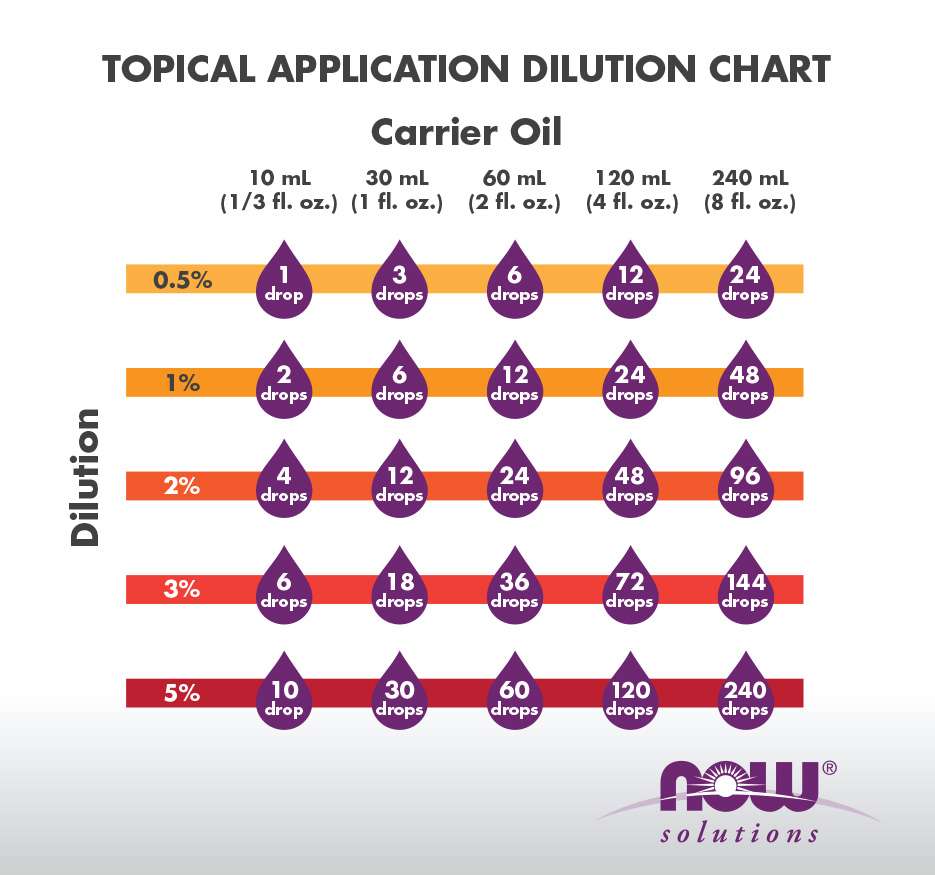
Essential oils like rosemary, peppermint, and tea tree have clinical evidence supporting their role in hair growth, but they must be diluted to prevent irritation.
Activate Growth-Boosting Blends
Jojoba is the perfect carrier oil because it enhances absorption without clogging pores. The recommended dilution is no more than six drops of essential oil per two tablespoons of jojoba oil.
Proven blends include:
Rosemary plus jojoba has been shown in studies to be as effective as minoxidil for androgenetic alopecia. Peppermint plus jojoba increases blood flow and creates a tingling sensation that may stimulate follicles. Tea tree plus jojoba clears dandruff and balances microbial activity on the scalp.
Always perform a patch test before full application. Apply the mixture to the scalp, massage in, and leave for thirty to sixty minutes before washing.
Optimize Use by Hair Type
Not all hair types benefit the same way from jojoba oil. Tailoring your routine ensures maximum results without side effects.
Choose the Right Method for Your Needs
Dry or damaged hair benefits most from weekly deep treatments plus daily leave-in application. This repairs cuticle damage, restores softness, and prevents further breakage.
Oily hair should use pre-wash scalp treatment only and avoid leave-ins. This regulates sebum, prevents rebound oiliness, and removes buildup.
Curly or frizzy hair responds well to daily leave-in mixed with curl cream. This defines curls, controls frizz, and enhances shine.
Fine or thin hair should use one to two drops as a shine enhancer and avoid the scalp. This adds luster without weighing hair down.
Sensitive or itchy scalps benefit from gentle scalp massage with diluted oil. This soothes irritation, reduces flaking, and calms inflammation.
Prevent Hair Breakage and Shedding
While jojoba oil does not regrow hair lost to genetics or hormonal imbalances, it plays a crucial role in length retention, a key factor in the appearance of faster growth.
Strengthen Strands Against Damage
By coating the hair shaft, jojoba oil reduces friction during brushing and styling, prevents moisture loss that leads to brittleness, and shields against UV rays, pollution, and heat tools.
Less breakage means more of your newly grown hair stays intact, giving the illusion of quicker growth over time.
Fact: Most people mistake reduced shedding for new growth. Jojoba helps both by minimizing avoidable loss due to dryness or mechanical stress.
Support Scalp Health for Growth Readiness
A healthy scalp is non-negotiable for optimal hair growth. Jojoba oil supports scalp homeostasis by moisturizing dry skin and reducing dandruff-related flaking, calming inflammation linked to conditions like seborrheic dermatitis, and maintaining pH balance and microbial stability.
Create a Clean, Balanced Environment
Unlike heavier oils, jojoba evaporates slowly and allows oxygen exchange, so it does not suffocate follicles. This makes it ideal for long-term use without risk of fungal overgrowth.
Sign of Success: Less itching, fewer white flakes, and a balanced level of oiliness within two to four weeks.
Avoid Common Mistakes and Side Effects
Even safe products can cause issues when misused. Here is how to stay out of trouble.
Do Not Overapply or Skip Patch Testing
Patch test first by applying one to two drops behind your ear or on your forearm. Wait twenty-four to forty-eight hours to check for redness or rash. Start small with minimal amounts and increase only if needed. Limit frequency to deep treatments two to three times per week maximum and daily use only for light leave-ins.
Watch for Buildup and Clogged Follicles
Though rated non-comedogenic, excessive use, especially in combination with silicones or heavy products, can lead to buildup. If you notice dullness, greasiness, or small bumps on the scalp, switch to a clarifying shampoo once a week.
Warning Signs: Scalp acne, itching, or temporary shedding may occur if oil is not rinsed properly.
Never ingest jojoba oil. It is for external use only.
Store and Use Long-Term for Lasting Benefits
Jojoba oil is highly stable and resistant to oxidation, lasting two to five years when stored properly.
Maximize Shelf Life and Effectiveness
Keep jojoba oil in a dark glass bottle and store in a cool, dry place away from sunlight and heat. Do not refrigerate unless exposed to extreme temperatures.
With consistent use, expect improved elasticity and resilience within four to six weeks, reduced environmental damage over months, and a balanced scalp microbiome that supports natural growth cycles.
Combine with Proven Treatments for Best Results
Jojoba oil should not replace FDA-approved treatments like minoxidil, finasteride, or low-level laser therapy for medical hair loss.
Use Alongside Medical Therapies
However, it can be a valuable supportive adjunct. Apply after medicated serums to seal in moisture. Use as a carrier for topical actives. Soothe irritation caused by potent treatments.
Expert Note: Dermatologists recommend applying jojoba oil last in your routine as an occlusive layer to lock in hydration without interfering with active ingredients.
Frequently Asked Questions About Jojoba Oil for Hair Growth
Does jojoba oil actually grow hair?
No, it does not directly stimulate follicles or extend the anagen phase. However, it supports indirect growth by improving scalp health, reducing breakage, and enhancing hair strength, leading to better length retention and a fuller appearance.
How long until I see results?
Most users report improved shine, softness, and reduced frizz within two to four weeks. Noticeable reductions in breakage and scalp irritation typically appear by six to eight weeks with consistent use.
Can I leave it in overnight?
Yes. Overnight application increases absorption, especially when paired with a warm towel or shower cap. Just be sure to cover your pillow and shampoo thoroughly in the morning.
Should I apply to wet or dry hair?
Both work. Wet hair application locks in moisture after washing. Dry hair application tames flyaways and adds shine.
Is it safe for daily use?
Yes, in small amounts. Use one to three drops as a daily leave-in. Avoid heavy applications every day to prevent buildup.
Can it cause hair loss?
No. When used correctly, jojoba oil helps prevent shedding. However, excessive oil left on the scalp may block follicles and contribute to temporary clogging-related hair fall.
Final Tips for Maximizing Jojoba Oil Benefits
Jojoba oil is not a miracle cure, but it is one of the most effective natural tools for building a strong foundation for healthy, resilient hair. Used wisely, it helps you keep every inch of hair you grow.
Best time to apply: At night as the final step in your routine.
Washing out: May require double shampooing, especially after overnight treatments.
Blending: Mix with other oils or products to customize benefits.
Avoid if: You have an active scalp infection, open wounds, or severe inflammation.