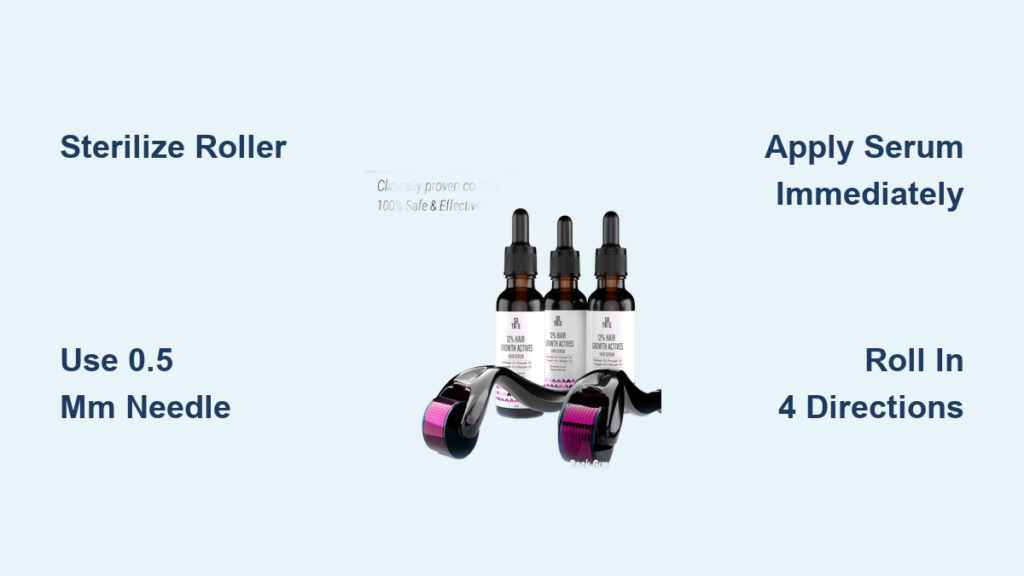
If you’re struggling with thinning hair or slow regrowth, combining a derma roller with hair serum could be the breakthrough you’ve been looking for. This powerful duo works by creating micro-channels in your scalp, allowing active ingredients to penetrate deeper than ever before. When done correctly, this method boosts blood flow, stimulates dormant follicles, and enhances serum effectiveness by up to 1000%. But improper use can lead to irritation, infection, or even hair damage. The key lies in using the right needle size, applying correct technique, and timing your serum application perfectly. In this guide, you’ll learn exactly how to use a derma roller with hair serum for maximum results safely and effectively.
Prep Scalp and Tools
Before rolling, proper preparation is essential to avoid infection and ensure optimal results. A clean scalp and sterilized tool set the foundation for a successful session.
Wash and Dry Your Scalp
Start with a gentle shampoo that’s free of sulfates and harsh chemicals. Avoid exfoliating treatments or scrubs on the day of rolling, as they can weaken the skin barrier and increase sensitivity. After washing, thoroughly dry your hair and scalp using a towel or a blow dryer on a cool setting. Rolling on a damp scalp increases bacterial growth risk and reduces the device’s effectiveness. Ensure your scalp is completely dry before proceeding.
Choose the Right Hair Length
For best contact between the needles and scalp, keep your hair short, ideally under 1 inch. Long hair tangles in the roller, blocking access to the skin and reducing coverage. If you have longer hair, part it into sections with a fine-tooth comb to expose the scalp. This allows precise rolling but isn’t as effective as short hair. A buzz cut or crew cut is ideal for consistent, full-coverage treatment.
Sterilize the Derma Roller
Always sanitize your derma roller before each use. Soak it in 70% isopropyl alcohol for 5 to 10 minutes. This kills bacteria, fungi, and viruses that could enter your skin through micro-channels. After soaking, shake off excess alcohol and let it air dry on a clean towel. Never wipe it with fabric, as this can bend or contaminate the needles. Store it in its protective case when dry.
Clean Your Hands
Wash your hands thoroughly with soap and water before touching your scalp or the roller. Even minor contamination can lead to infection when the skin barrier is temporarily compromised. Avoid touching your face or phone during the process to minimize germ transfer.
Section and Position Scalp
To cover all thinning areas evenly, divide your scalp into clear sections. This prevents missed spots and ensures every part receives consistent stimulation.
Divide Into Manageable Sections
Use your fingers or a comb to create 4 to 6 sections: front hairline, crown, sides, and back. Clip or tie each section away while working on one area at a time. Focus on zones with visible thinning, like the crown or temples, but avoid completely bald areas where follicles may no longer be active.
Target Areas with Miniaturized Follicles
Concentrate on regions where hair is fine, short, or sparse but still present. These are signs of miniaturized follicles that can potentially be reactivated. Microneedling won’t regrow hair in areas with zero follicular activity, so prioritize zones with existing, weakened growth.
Apply Correct Rolling Technique
Proper technique ensures effective stimulation without causing trauma. The goal is micro-injury, not damage. Using the wrong pressure or pattern can reduce results or harm your scalp.
Use 45-Degree Angle and Light Pressure
Hold the derma roller at a 45-degree angle to your scalp. Apply gentle, even pressure just enough to feel a mild tingling or prickling. If you feel pain, you’re pressing too hard. Excessive force can cause bleeding, inflammation, or follicle damage. Let the weight of the device do most of the work.
Roll in Four Directions
For full coverage, roll each section in four directions:
• Up and down
• Side to side
• Diagonal left to right
• Diagonal right to left
Make 10 to 14 passes per direction. This X-pattern maximizes micro-channel formation and avoids directional bias. Lift the roller after each pass; don’t drag it continuously to prevent skin tearing.
Limit Time and Avoid Sensitive Areas
Keep total rolling time between 5 and 10 minutes. Over-rolling leads to chronic inflammation and delays healing. Never roll over open wounds or cuts, active acne, eczema, or psoriasis, fungal infections or severe dandruff, or recent surgical sites or scar tissue. If you have keloid-prone skin or a history of abnormal scarring, consult a dermatologist before starting.
Apply Serum at the Right Time
Timing your serum application correctly determines how well your scalp absorbs nutrients and whether you risk irritation or side effects.
Immediate vs. Delayed Application
There are two schools of thought on this. Apply immediately within 1 hour for gentle, non-irritating serums like those with rosemary oil, caffeine, or peptides. Micro-channels are most open during this window, boosting absorption significantly. Wait 24 hours when using potent actives like minoxidil or finasteride. Applying too soon increases the risk of systemic absorption, which can cause dizziness, low blood pressure, or scalp irritation. For most users, immediate application is safe with natural or hydrating serums. Wait 24 hours when using pharmaceutical-grade treatments.
Massage Serum Into Scalp
Once ready, apply a few drops of serum directly to treated areas. Use your fingertips to gently massage for 2 to 3 minutes. This boosts blood flow and helps distribute the product evenly through the micro-channels. Avoid using nails or excessive pressure.
Choose the Right Serum Formula
Look for serums with proven ingredients that support hair growth. Niacinamide strengthens the scalp barrier and improves circulation. Rosemary oil is a natural DHT blocker shown in studies to match minoxidil effectiveness. Caffeine wakes up dormant follicles and counteracts DHT. Peptides like copper peptides support tissue repair and collagen synthesis. Ginseng extract enhances cellular metabolism and follicle vitality. Avoid serums with high alcohol content, synthetic fragrances, or essential oils unless diluted, as these can sting freshly rolled skin.
Clean and Store the Roller
After use, proper cleaning prevents bacterial buildup and extends your device’s lifespan.
Re-Sanitize After Each Use
Soak the roller in 70% isopropyl alcohol for 5 to 10 minutes post-session. Rinse lightly with warm water if needed, then shake off excess liquid. Let it air dry completely on a clean towel. Never store it damp.
Store in Protective Case
Place the dry roller in its enclosed case. Keep it in a cool, dry place away from dust and sunlight. Never share your device, as this increases the risk of infection and cross-contamination.
Choose the Right Needle Size

Needle length determines depth of penetration and treatment intensity. Using the wrong size can reduce results or cause harm.
0.25 mm: Boost Serum Absorption
Ideal for beginners or sensitive scalps. Use 2 to 3 times per week to enhance product penetration without deep trauma. Causes minimal discomfort and no downtime.
0.5 mm: Best for Home Use
Recommended as the starting point for most people. Effective for mild to moderate thinning. Use 1 to 2 times weekly. Offers strong stimulation with low risk.
1.0 mm: For Moderate Hair Loss
Use every 7 to 10 days for deeper follicle activation. Requires longer recovery. Suitable for experienced users only.
1.5 mm: Professional Use Only
Reserved for severe cases under dermatological supervision. Use every 2 to 3 weeks. Higher risk of irritation and prolonged healing.
Expert Tip: Start with 0.5 mm. Only increase needle length if you see no improvement after 3 months and have no adverse reactions.
Follow Optimal Frequency and Timing
Consistency matters, but so does rest. Overuse can inflame the scalp and halt progress entirely.
Match Frequency to Needle Length
Different needle sizes require different treatment frequencies to allow proper healing. Using 0.25 mm needles, aim for 2 to 3 times per week. With 0.5 mm needles, stick to 1 to 2 times weekly. For 1.0 mm needles, use every 7 to 10 days. If using 1.5 mm needles, space treatments every 2 to 3 weeks. Always allow your scalp to heal fully between sessions. Rolling too often prevents recovery and triggers chronic inflammation.
Best Time: Evening Use
Roll in the evening for several important reasons. Lower UV exposure reduces oxidative stress on vulnerable skin. Overnight rest supports natural healing processes. It avoids sweat, pollution, or styling products post-treatment. Do not roll before workouts, saunas, or hot showers, as heat and sweat irritate micro-wounded skin.
Understand How It Stimulates Growth
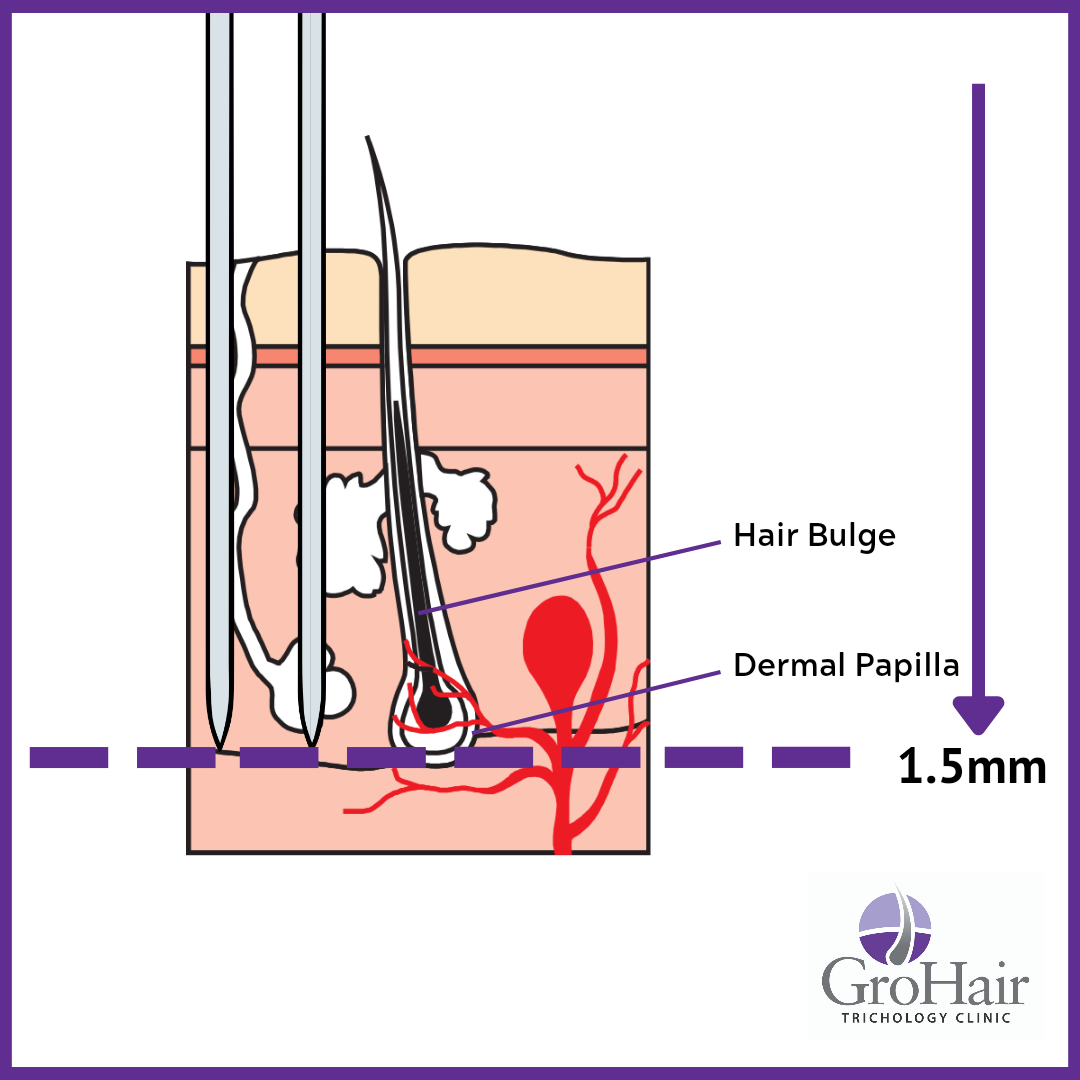
Derma rolling isn’t just about absorption. It triggers biological changes that reactivate hair follicles and promote new growth.
Boosts Blood Flow and Collagen
Micro-injuries stimulate new blood vessel formation, delivering more oxygen and nutrients to follicles. They also activate fibroblasts, increasing collagen and elastin production to strengthen the dermal papilla.
Releases Growth Factors
The healing response releases key proteins that drive follicle activation. VEGF promotes blood vessel growth. PDGF stimulates cell regeneration. TGF-beta supports tissue remodeling. These signals push follicles from resting phase to growth phase.
Activates Stem Cells and Genes
Microneedling wakes up hair follicle stem cells in the bulge region. It also modulates gene expression, turning on growth-promoting genes and turning off those linked to miniaturization.
Track Realistic Results Timeline

Hair growth is slow. Knowing what to expect keeps you motivated and prevents early quitting.
Weeks 1-2: No Visible Change
Expect mild redness, tingling, or sensitivity. These are normal and fade within hours. No new hair appears yet.
Weeks 2-4: Less Shedding
Many users notice reduced hair fall during washing or brushing. Scalp may feel healthier and less itchy.
Weeks 6-8: Shedding Stabilizes
Hair loss slows significantly. Some see early signs of improved texture.
Weeks 9-12: Baby Hairs Appear
Fine, soft peach fuzz hairs emerge in thinning zones. These are early signs of regrowth.
Months 3-4: Density Improves
New hairs thicken and darken. Part lines may narrow. Density increases noticeably.
Months 5-6: Peak Results
Most users see maximum improvement: fuller, stronger hair. Continued use maintains gains.
Note: Results vary based on age, genetics, and underlying cause. Discontinuing treatment often reverses progress.
Avoid Common Mistakes
Even small errors can reduce effectiveness or cause harm. Stay alert to these frequent pitfalls.
Don’t Use Too Much Pressure
Forcing the roller causes pain, bleeding, and follicle damage. Use light, consistent strokes. Stimulation, not injury, is the goal.
Don’t Over-Roll
Rolling daily with a 1.0 mm needle overwhelms the scalp. Stick to recommended frequency based on needle size.
Don’t Apply Harsh Products Immediately
Avoid alcohol-based minoxidil, strong acids, or undiluted essential oils right after rolling. Wait 24 hours to prevent irritation or systemic absorption.
Don’t Share or Neglect Cleaning
Sharing spreads bacteria. Skipping sterilization risks infection. Clean before and after every use.
Don’t Use a Dull or Damaged Roller
Needles wear out after 10 to 15 uses. If they look bent, rusty, or blunt, replace the roller. Dull needles tug skin instead of piercing cleanly.
Know When to Stop or Consult a Doctor
While safe for most, derma rolling isn’t for everyone. Recognize warning signs and contraindications.
Who Should Avoid It
Do not use if you have active scalp conditions like psoriasis, eczema, or fungal infections. Avoid it with open wounds or recent surgery. Stay away if you have keloid scarring tendency. Skip treatment if you have severe dandruff or inflamed skin. Consult a doctor if pregnant or breastfeeding.
When to See a Dermatologist
Consult a professional if you experience prolonged redness, pus, or pain. Seek help if hair loss worsens after 2 months. Get professional guidance if you’re unsure about combining with medications. Dermatologists often recommend microneedling as part of a multi-modal plan that includes minoxidil, finasteride, nutrition, and low-level laser therapy.
Frequently Asked Questions About Using Derma Roller with Hair Serum
How long should I wait to apply serum after derma rolling?
For gentle serums containing natural ingredients like rosemary oil, caffeine, or peptides, you can apply immediately within 1 hour. However, if using pharmaceutical products like minoxidil or finasteride, wait 24 hours to prevent systemic absorption and potential side effects like dizziness or low blood pressure.
Can I use derma roller on my hairline?
Yes, but use extreme caution around the hairline and edges. These areas are more sensitive and prone to irritation. Use a shorter needle size like 0.25 mm or 0.5 mm, apply light pressure, and avoid rolling over the same spot repeatedly. The hairline often shows early results because it contains active follicles that respond well to stimulation.
How often should I replace my derma roller?
Replace your derma roller every 10 to 15 uses, or sooner if the needles appear bent, dull, or rusty. Dull needles cause unnecessary skin trauma and reduce effectiveness. If you notice the roller pulling or tugging instead of gliding smoothly, it’s time for a replacement.
Does derma rolling really help hair growth?
Yes, clinical studies show that microneedling combined with topical treatments can be significantly more effective than either treatment alone. It creates micro-channels that boost serum absorption by up to 1000%, stimulates blood flow, activates growth factors, and wakes up dormant follicle stem cells. Results typically appear within 3 to 6 months with consistent use.
Can I use derma roller with minoxidil?
Yes, but timing matters. Apply minoxidil 24 hours after derma rolling rather than immediately. This allows your scalp’s barrier to begin healing and reduces the risk of systemic absorption. The combination is particularly effective, with studies showing up to 3 times greater improvement in hair count compared to minoxidil alone.
Is derma rolling painful?
With proper technique and correct needle size, derma rolling should feel like mild tingling or prickling, not pain. Using 0.25 mm or 0.5 mm needles typically causes minimal discomfort. If you experience pain, you’re pressing too hard. Let the weight of the device do the work rather than forcing it into your scalp.
Key Takeaways for Using Derma Roller with Hair Serum

Using a derma roller with hair serum can significantly enhance hair regrowth when done correctly. Start with a 0.5 mm roller, sterilize it every time, roll gently in four directions, and apply the right serum at the right time. Be patient, as results take 3 to 6 months to become visible. Avoid common mistakes like overuse, excessive pressure, or applying harsh products immediately after treatment. Choose serums with proven ingredients like niacinamide, rosemary oil, caffeine, and peptides to maximize growth stimulation. Always allow proper healing time between sessions based on your needle size, and consult a dermatologist if you experience any adverse reactions or don’t see improvement after several months of consistent use. With proper technique, hygiene, and consistency, this simple at-home treatment can transform thinning hair into thicker, healthier growth.