
You just enjoyed a soothing scalp massage—maybe an Ayurvedic treatment, a spa session, or a self-care ritual at home. The oil felt amazing. It calmed your mind, nourished your scalp, and left your hair with a healthy sheen. But now, hours later, your hair looks greasy, feels heavy, and refuses to style properly. Sound familiar?
Getting oil out of hair after a massage is one of the most common haircare challenges, especially when using thick, natural oils like coconut, sesame, or almond. These oils do not mix with water, making them stubborn to remove with regular shampooing. This guide delivers proven techniques to fully remove post-massage oil without damaging your hair.
Why Oil Stays in Hair After Washing
Oil and water do not mix. That is basic science, and it explains why washing oil out of hair is harder than regular cleansing. Most shampoos rely on surfactants to break down oils, but gentle or sulfate-free formulas often lack the strength to remove heavy oils used in scalp treatments.
Coconut oil is especially stubborn. It solidifies below 76°F (24°C), turning into a waxy layer on hair strands. It also penetrates the hair shaft deeply, which is great for conditioning but hard to rinse out. Sesame oil, almond oil, and herbal-infused blends are dense and slow to emulsify. If you have washed your hair twice and still felt residue, it is not your imagination. Most people need targeted techniques to fully remove massage oil.
Apply Shampoo to Dry Hair First

This is the number one most effective method recommended by users, stylists, and Ayurvedic experts alike. The technique works because undiluted shampoo has maximum contact with oil. Once water is added, the surfactants become less effective.
Apply shampoo directly to dry, oily hair. Use a clarifying or high-lather shampoo. Massage shampoo into scalp and lengths for one to two minutes. Let it sit for 15 to 20 minutes. This allows surfactants to bind with oil molecules. Rinse with lukewarm water, then shampoo again.
Focus on the scalp and roots where oil accumulates. Use enough shampoo to cover all oily sections. Follow with a second wash to ensure complete removal.
Double Shampoo to Remove All Residue

One wash rarely cuts it. Multiple cleansing cycles are essential for removing stubborn oil. The first shampoo breaks down surface oil. The second shampoo targets residual buildup. An optional third wash helps if hair still feels slick or heavy.
Wet hair thoroughly with lukewarm water. Apply shampoo and rinse completely. No suds should remain. Apply shampoo a second time and rinse again. Use a clarifying shampoo like Neutrogena Anti-Residue or a dandruff formula like Head & Shoulders. Avoid co-washing or low-lather formulas. They will not cut through heavy massage oil.
Use Dish Soap for Stubborn Oil
Yes, dish soap. It is designed to cut through grease, and it works wonders on oily hair. This method is ideal for occasional use when oil will not come out with shampoo alone.
Apply one-half teaspoon of mild dish soap to damp or dry hair. Work into scalp and oily areas. Lather and rinse extremely well. Immediately follow with deep conditioner or hair mask.
Do not use dish soap daily. It can strip natural oils and weaken hair. Avoid antibacterial or heavily scented versions. Always condition after. Dish soap is very drying.
Try the Conditioner-First Method
This sounds backwards, but it works for some hair types. The technique is also gentler on sensitive scalps than aggressive shampoos.
Saturate oily hair with regular conditioner. Let it sit for 15 to 20 minutes. Rinse thoroughly. Shampoo twice afterward.
Conditioner contains emollients that help dissolve excess oil. This method reduces frizz during cleansing and works well for those avoiding harsh cleansers.
Green Gram Flour Ayurvedic Cleansing
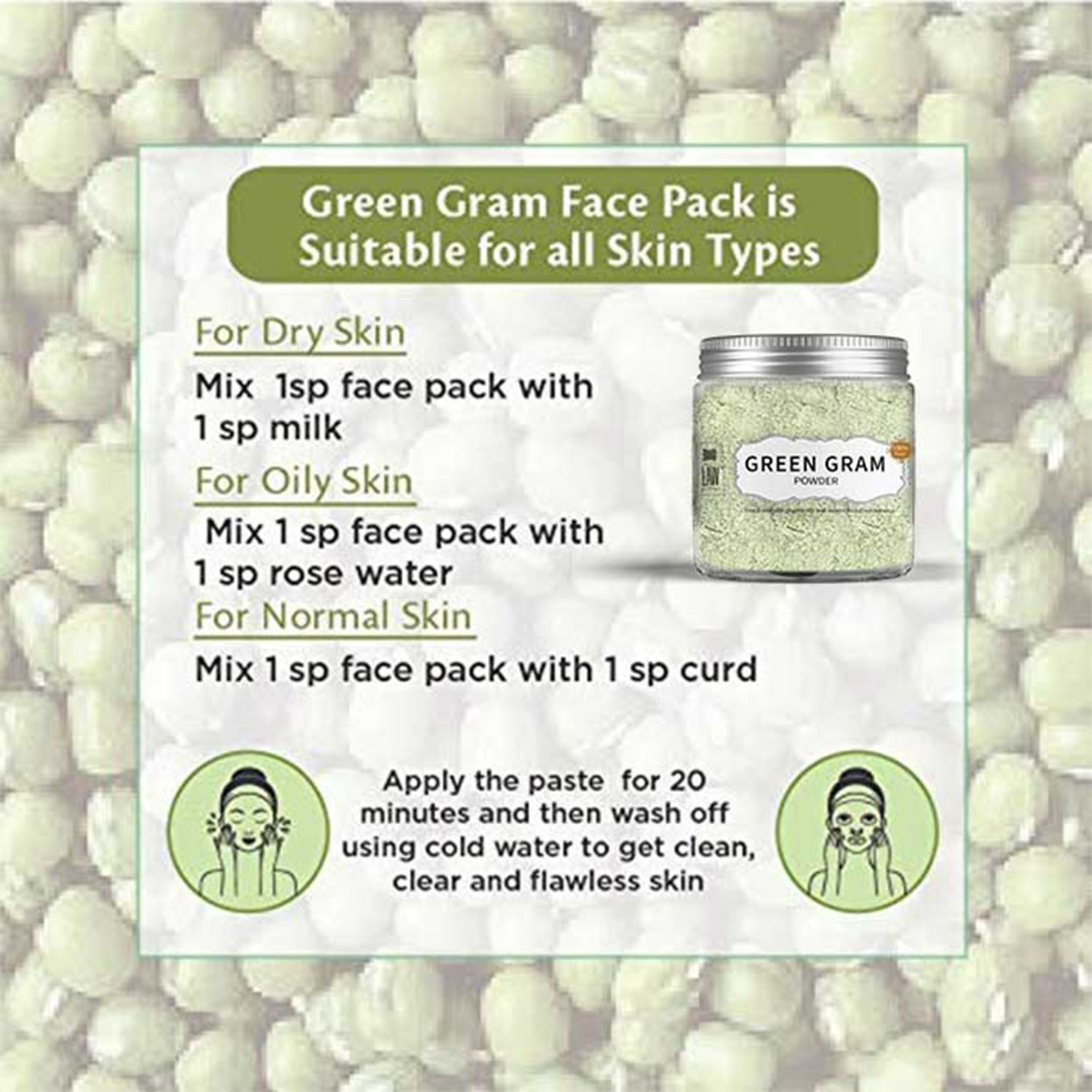
An ancient, chemical-free way to absorb oil uses natural flour. This method is popular in India and excellent for those avoiding synthetic products.
Mix one cup green gram flour with water to form a smooth paste. Massage into scalp and hair. Leave on for 5 to 10 minutes. Rinse thoroughly, which may require two to three rinses.
The benefits include being natural and non-irritating. It absorbs oil without stripping moisture. The drawbacks include being messy and hard to rinse. This method works best for thick, curly, or coarse hair. It is not ideal for fine or straight hair because it may weigh it down.
Quick Fixes When You Cannot Wash
Sometimes you cannot jump in the shower. These tricks help manage greasy hair temporarily.
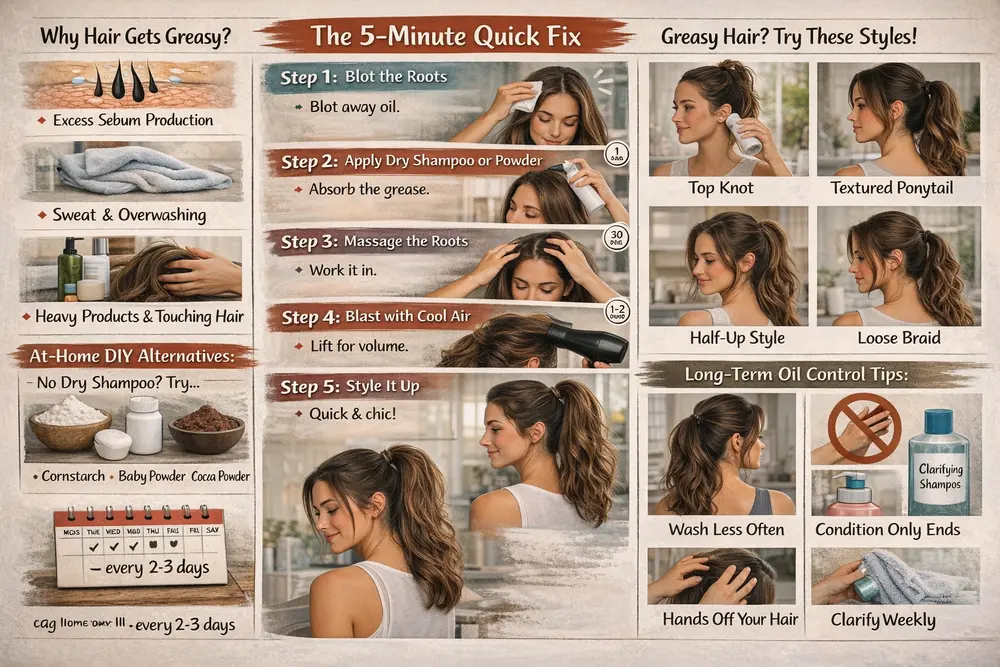
Use dry shampoo effectively. Spray or sprinkle strong dry shampoo at the roots. Wait two to three minutes, then brush through to absorb oil. Focus on bangs and hairline.
Blot with oil-absorbing sheets. Gently press facial blotting papers on oily sections. This helps reduce shine without disturbing your style.
Style to hide greasiness. A slick ponytail or low bun works well because greasy hair holds slick styles better. Braids or twists hide oil while adding texture. Avoid voluminous styles. They will fall flat.
Water Temperature Matters for Oil Removal
Temperature matters more than you think. Hot water can irritate the scalp. Cold water causes coconut oil to solidify, making it harder to remove. Lukewarm water keeps oil in liquid form for easier rinsing.
Avoid hot water on the scalp. Ayurveda warns it can aggravate Pitta dosha and irritate the skin. Avoid cold water if coconut oil was used. Always finish with a lukewarm rinse to ensure full oil removal.
Choose the Right Shampoo for Your Oil Type

Not all shampoos are created equal. Match your cleanser to the oil used for best results.
For coconut or sesame oil, use a clarifying or sulfate-based shampoo. Strong surfactants break down heavy oils. For herbal blends, use an anti-residue shampoo. It removes plant particles and resins. For silicone-based oils, regular shampoo works fine. Silicones emulsify easily but may need occasional deep cleaning.
If your current shampoo is not working, upgrade to a clarifying formula.
Rehydrate Hair After Deep Cleansing
Stripping oil can leave hair dry and brittle. Replenish moisture immediately after aggressive washing.
Apply deep conditioner or hair mask from mid-length to ends. Leave on for 10 to 20 minutes. Rinse with cool water to seal cuticles. Detangle with a wide-tooth comb. Never use a brush on wet hair.
Avoid heat styling for 24 hours to prevent further dryness.
Prevent Oil Buildup Next Time
The best cleanup is the one you do not need. Prevent greasiness before it starts.
Apply oil 30 to 60 minutes before washing. This gives time for absorption while leaving excess easy to rinse.
Dilute oil with water before applying. Place oil in one palm, water in the other. Rub hands together to emulsify before applying. Results in even distribution and easier washout.
Use silicone-blended oils like Moroccanoil. They contain silicones that rinse out more easily. These are ideal for daily use or quick treatments.
Step-by-Step Oil Removal Checklist
Follow this proven protocol for completely oil-free hair.
Assess oil type and hair texture. Choose appropriate method. Apply shampoo to dry hair. Maximize oil breakdown. Wait 15 to 20 minutes. Allow emulsification. Rinse with lukewarm water. Prevent solidification or irritation. Shampoo again. Double cleanse to remove all residue. Use dish soap if needed. Deep degrease stubborn oil. Rinse thoroughly. Avoid buildup. Apply deep conditioner. Restore moisture. Comb gently with wide-tooth comb. Prevent breakage.
Frequently Asked Questions About Getting Oil Out of Hair After Massage
Does coconut oil wash out completely?
Yes, but it requires specific techniques. Coconut oil solidifies below 76°F, so use lukewarm water. Apply shampoo to dry hair first, wait 15 to 20 minutes, then rinse. Double shampoo to ensure complete removal.
How many times should I shampoo after an oil massage?
At least twice. Most people need double shampooing to remove all residue. If oil persists after two washes, a third wash or using dish soap as a one-time deep clean helps.
Can I use dish soap on my hair every day?
No. Dish soap is too harsh for daily use. It strips natural oils and can damage hair over time. Use it only as an occasional treatment when shampoo alone will not remove stubborn oil.
What is the best dry shampoo for oily hair?
Strong dry shampoos work best. Pssssst! Instant Dry Shampoo and similar products absorb oil at the roots. Spray, wait a few minutes, then brush through for best results.
Does water temperature affect oil removal?
Yes significantly. Hot water irritates the scalp. Cold water solidifies coconut oil. Lukewarm water keeps oil liquid and easier to rinse. Always use lukewarm water for washing oil-treated hair.
How can I prevent oil buildup after future massages?
Apply oil 30 to 60 minutes before showering. Dilute oil with water in your palms before applying. Use silicone-blended products for easier washout. Choose lighter oils for Kapha dosha types.
Key Takeaways for Removing Massage Oil From Hair
Getting oil out of hair after massage requires the right technique, not just more shampoo. Apply shampoo to dry hair first and wait 15 to 20 minutes before rinsing. Double shampoo to remove all residue. Use dish soap as an occasional deep clean when needed. Always follow with deep conditioning to restore moisture. Prevent buildup by applying oil before showering and diluting it with water. With these methods, you can enjoy all the benefits of scalp oiling without the greasy aftermath.