
Waking up to beautifully defined curls without the sound of a blow dryer is possible if you know the right techniques. Drying curly hair without heat protects your curl pattern, reduces frizz, and preserves long-term hair health. The key lies in minimizing manipulation, retaining moisture, and using methods that work with your curls, not against them.
This guide delivers science-backed, curl-type-specific strategies to dry your hair beautifully without a blow dryer. Whether you have loose waves or tight coils, you will learn how to cut drying time by up to 50 percent, enhance definition, and wake up to bouncy, healthy-looking curls.
Plopping for Faster, Defined Curls
Plopping is one of the most effective heat-free techniques to speed up drying and boost curl definition. By wrapping styled, damp hair in a soft fabric, you gently absorb excess moisture while encouraging curls to form in their natural shape without disturbance.
What Is Plopping
Plopping involves gathering your freshly styled curls onto a cotton T-shirt or microfiber towel and wrapping them to compress and shape the curls as they dry. It mimics the scrunching effect of a diffuser but without any heat or mechanical stress. The result is more volume at the roots, better clumping, and significantly reduced drying time.
Plopping cuts drying time by 30 to 50 percent.
How to Plop in 6 Steps
- Wash and condition your hair as usual.
- Gently squeeze out water. Your hair should be damp, not dripping.
- Apply all styling products while hair is soaking wet.
- Shake out curls gently to loosen the pattern.
- Lay a cotton T-shirt flat, bend forward, and gather your hair into the center.
- Wrap the fabric over your head, tie the sleeves, and leave for 15 to 60 minutes.
Remove the plop before your hair is fully dry to avoid over-scrunched curls that lose their natural drop.
Cotton vs. Microfiber: Which Is Better
Cotton T-shirts are softer, reduce static, and are gentler on delicate curls. They are ideal for Type 2 to 3 curls. Microfiber towels absorb more water but may cause frizz in some curl textures. Use microfiber only if you do not experience flyaways.
Detangle Before Drying for Smooth Curls
Detangling wet curly hair prevents snagging and ensures even product distribution. Doing it wrong can cause breakage and frizz. Always detangle before applying styling products and while hair is wet.
Detangling Tools by Curl Type
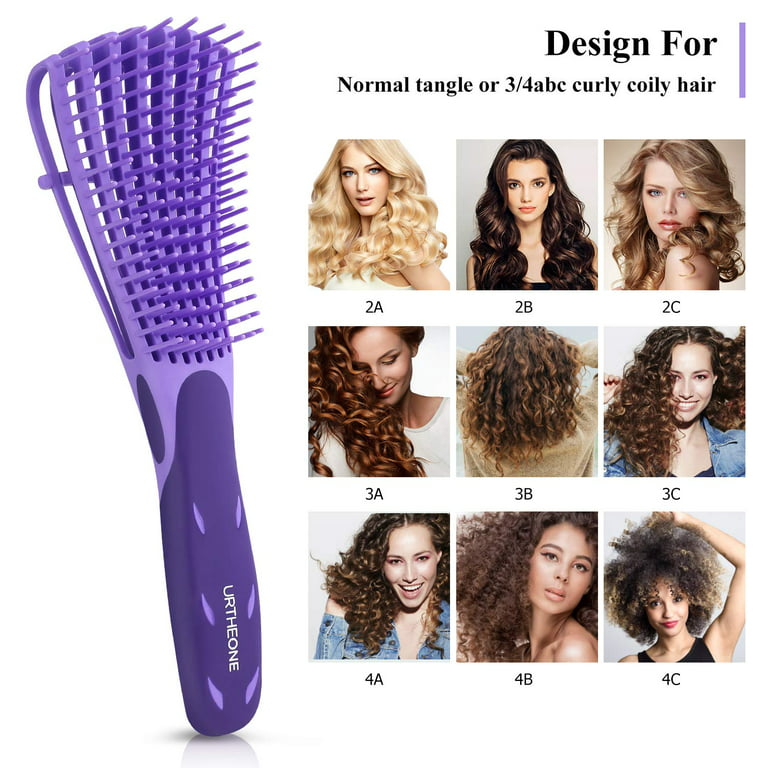
• 2A to 2C (Waves): Wide-tooth comb plus slip detangler. This prevents tugging on loose patterns.
• 3A to 3B (Spirals): Fingers plus leave-in conditioner. This minimizes disruption to clumps.
• 3C (Tight Curls): Fingers in sections plus curl cream. This controls shrinkage and tangles.
• 4A to 4C (Coils): Sectioning with coil primer. This maximizes slip and moisture.
Best Detangling Practices
• Detangle under running water or with ample conditioner.
• Start from the ends, working upward to the roots.
• Never brush dry curly hair. It breaks the curl clumps and causes frizz.
Use the Right Products for Your Curl Type
Using curl-specific products ensures hydration, definition, and faster drying. Applying the wrong formula can weigh hair down or extend dry time.
Leave-In Conditioners: The Foundation
Apply a leave-in after detangling to lock in moisture and prep for styling. Use a quarter-sized amount, adjusting for length and thickness. For waves, choose lightweight options like Curl Shaper 3-in-1 Revitalizing Milk. For spirals and tight curls, Moisture Lock Leave-In Conditioner balances hydration and shape. For coils, Coil Infusion Primer provides deep slip and fights dryness.
Styling Products: Layer for Hold
Match product weight to your curl pattern. Waves benefit from lightweight gel or cream like Oribe Curl Gloss. Spirals need gel-cream combinations like Hydra Stuff See Jelly. Tight curls require cream plus strong-hold gel layers. Coils need high-hold gels like TPH Curls 4 Days or Coil Infusion Styling Shaping Gel.
Application tip: Rake or brush with a Denman to ensure every curl is coated. You should hear a soft squish when scrunching. This means moisture and product are evenly distributed.
Clump Curls for Definition and Volume
Clumping is the secret to defined, frizz-free curls. It encourages strands to group together naturally, enhancing shape and minimizing halo frizz.
How to Clump Curls
• Use a Denman brush. Use all seven rows for 3C to 4 curls and fewer rows for looser 2 to 3A textures.
• Rake or brush curls in one direction to form clumps.
• Reverse direction to confuse the hair and boost root lift.
Avoid Creating Parts
Parts disrupt natural curl flow and cause flatness. If a part forms, rewet the area, restyle with product, and use clips to lift roots during drying.
Keep Curls Elevated with Clips
Flat roots ruin volume even with perfect clumping. Use clips to lift curls at the crown and speed up drying through increased airflow.
Claw Clip Volume Technique
- After plopping or styling, section hair into top, sides, and back.
- Take the top section, lift it upward, and secure with a claw clip.
- Allow hair to dry completely before removing.
Remove clips only when hair is 100 percent dry. Otherwise, volume collapses.
Sectioning for Long Hair
Use diagonal 45-degree sections to build lift without creating parts. Clip each section upward as you go. This method prevents heaviness and keeps curls bouncy from root to tip.
Never Touch Curls While Drying
Hands are the enemy of drying curls. Even a gentle touch disrupts clumping, introduces frizz, and slows drying.
Why Touching Ruins Curls
• Wet cuticles are raised, and touching them causes friction and frizz.
• Disturbing curls breaks natural clumps.
• Each touch redistributes oils and moisture unevenly.
What to Do If You Must Adjust
• Wear clean cotton gloves to minimize oil transfer.
• Only reposition clips or fix slipping plops.
• Avoid scrunching, fluffing, or touching ends.
Speed Drying with Airflow and Environment
You do not need heat to dry faster. Smart environmental choices can cut air-drying time significantly.
Optimize Your Drying Space
• Use a fan to circulate air, especially effective for short or fine curls.
• Open a window for natural airflow.
• Avoid steamy bathrooms. High humidity traps moisture and increases frizz.
• Choose cool, dry rooms. They preserve the CMC and speed evaporation.
Car Vent Drying
If you are okay with minimal heat, use your car HVAC system. Style and plop or clip hair, turn on vents, position head so airflow hits damp roots and mid-lengths, then remove clips when you arrive. Pair with a net plopping cap to maintain shape while drying.
Try Net Plopping for Breathable Drying
Net plopping uses a mesh cap to contain curls while allowing airflow. It is ideal for travel or humid climates.
How to Net Plop
- Style hair as usual.
- Place a mesh laundry bag or fishnet stocking over your head.
- Gather curls into the net and secure under the chin.
- Let dry for 30 to 60 minutes.
Benefits include reduced drying time, frizz prevention, and keeping curls contained without flattening. This method is perfect for commuters or anyone who wants faster, cleaner drying without heat.
Use DIY Diffusers If You Own a Blow Dryer
Even if you want to avoid direct heat, a blow dryer with a DIY diffuser can safely finish drying, especially for thick or long curls.
Sock Diffuser Hack
Materials needed are a cotton sock and a hair tie. Slide the sock over the dryer nozzle and secure with a hair tie. Use on low or cold setting. This disperses airflow to prevent frizz and breakage.
Cheesecloth or Dryer Sheet Diffuser
Wrap cheesecloth or dryer sheet around the nozzle and secure with a fabric hair tie. Use on low heat only. Dryer sheets are heat-resistant and less likely to melt.
Colander Method
- Dip curls into a stainless steel colander.
- Rest near scalp.
- Blow dry on low heat, held at a safe distance.
Never use high heat. Metal conducts heat and can burn your scalp. This method is best for emergency use only.
Curl-Type-Specific Drying Routines
Tailor your drying method to your curl pattern for best results.
Waves (Type 2A to 2C)
• Techniques: Plopping, crab hands, claw clips
• Products: Lightweight options like Oribe Curl Gloss or Air Dry Cream
• Tip: Avoid heavy creams. They flatten waves.
Spirals (Type 3A to 3B)
• Techniques: Clumping, plopping, Denman brushing
• Products: Medium-hold gel plus leave-in like See Jelly or Moisture Lock
• Tip: Section for volume and avoid parts.
Tight Curls (Type 3C)
• Techniques: Air-dry undisturbed, layered products
• Products: Cream plus strong-hold gel like Curl Quencher
• Tip: Let dry completely. Touching ruins definition.
Coils (Type 4A to 4C)
• Techniques: Net plopping, sectioned application
• Products: Rich creams, strong gels like TPH Curls 4 Days
• Tip: Seal with oil after drying to lock in moisture.
Finish with Oil for Shine and Moisture
Once curls are 100 percent dry, apply a nourishing oil to seal hydration and add shine.
Best Finishing Oils
Kerastase Curl Manifesto Oil is silicone-free and safe for scalp and hair. Intense Treatment Serum is shea butter-based and deeply occlusive. Use one to two drops, emulsify between palms, and smooth over ends or frizzy areas.
Avoid These Common Drying Mistakes
Even small errors can ruin your curl routine. Steer clear of these pitfalls.
• Starting with soaking-wet hair causes product runoff.
• Using terry cloth towels creates frizz and cuticle damage.
• Touching curls mid-dry disrupts clumping and increases frizz.
• Leaving plop on too long over-scrunches curls.
• Skipping ventilation traps moisture and slows drying.
• Sleeping with wet hair risks fungal growth, odor, and breakage.
Never sleep with wet hair. It increases risk of damage and odor.
Frequently Asked Questions About Drying Curly Hair Without a Blow Dryer
How long does it take to air-dry curly hair without a blow dryer?
Air-drying curly hair typically takes 2 to 8 hours depending on your curl type, hair thickness, and environment. Using techniques like plopping can cut this time by 30 to 50 percent.
Can I use a towel to dry curly hair without causing frizz?
Yes, but choose wisely. Cotton T-shirts and microfiber towels are gentler than terry cloth towels. Gently scrunch hair from ends upward and avoid rubbing.
What is the best way to dry curly hair overnight without a blow dryer?
Avoid sleeping with wet hair entirely. Instead, plop your curls for 15 to 60 minutes before bed, then allow them to air-dry completely or use a low-heat diffusing session. Sleeping with wet hair risks fungal growth and breakage.
Do I need special products to air-dry curly hair?
Yes, curl-specific products make a significant difference. Use lightweight leave-in conditioners for waves, medium-hold gels for spirals, and strong-hold gels for tight curls and coils. Matching products to your curl type ensures faster drying and better definition.
Can I speed up air-drying without heat?
Absolutely. Use a fan, open windows, and dry in a cool, low-humidity room. Plopping, net plopping, and clip drying all reduce drying time significantly without any heat exposure.
Is it bad to diffuse curly hair instead of air-drying?
Not at all. Diffusing on low heat and low speed is an acceptable way to finish drying, especially for thick or long hair. Use it after air-drying for about 30 minutes, focusing on mid-lengths where moisture often gets trapped.
Key Takeaways for Drying Curly Hair Without a Blow Dryer
Drying curly hair without a blow dryer is not just possible. It is often better for your hair health. By plopping, clumping, using curl-specific products, and avoiding touch, you protect your hair natural structure and achieve defined, frizz-free curls.
The most important techniques to master are plopping to cut drying time by up to 50 percent, using a Denman brush to clump curls for better definition, applying products to soaking-wet hair for optimal absorption, and keeping curls elevated with clips to maximize volume. Match your drying method and products to your specific curl type, whether you have loose waves or tight coils.
Start with these steps today. Apply a leave-in conditioner to damp hair, use a Denman brush to clump curls, plop for 15 to 60 minutes, and finish with clips for volume. Your curls will thank you.