
If you’ve ever bleached, colored, or heat-styled your hair, you’ve likely experienced the aftermath: dryness, breakage, and a loss of bounce. Enter K18, a leave-in hair mask that promises not just surface-level conditioning but true molecular repair. Unlike traditional treatments that coat or temporarily smooth hair, K18 claims to fix damage from the inside out, reversing years of structural harm in just 4 minutes.
But how does K18 hair mask work? The answer lies in biotech innovation, a patented peptide, and a deep understanding of hair biology. At its core, K18 doesn’t mask damage. It rebuilds the very foundation of your hair: the broken polypeptide chains within keratin proteins. This sets it apart from conditioners, protein treatments, and even other bond builders like Olaplex.
What K18 Repairs: Understanding Hair Damage at the Molecular Level

Your hair’s strength comes from keratin, a structural protein made of long chains of amino acids linked by peptide bonds. These chains twist into coiled helices, forming the inner scaffold of each hair strand. Think of them as strings of pearls, each pearl an amino acid, each string a polypeptide chain.
When hair is damaged by bleach, color, heat, or UV exposure, these strings break. Traditional treatments focus only on disulfide bonds, which connect different keratin strands, but K18 goes deeper. It targets the broken peptide bonds within the chains themselves.
Why Surface Treatments Fall Short
Most hair masks and conditioners work by coating the cuticle with silicones, temporarily filling in cracks, or adding moisture. These improve feel and appearance but do not fix the underlying damage. Even bond repair systems like Olaplex rebuild only disulfide bonds, leaving the broken internal chains unrepaired.
K18 addresses the root cause by reconnecting broken polypeptide chains. This restores the hair’s natural framework, leading to stronger, more elastic strands over time.
The Active Ingredient: K18PEPTIDE™ Explained

The heart of K18 is sh-Oligopeptide-78, branded as K18PEPTIDE™. This is not a natural extract. It is a lab-engineered, biomimetic peptide designed to mimic the exact sequence of human hair keratin.
This peptide was developed over 10 years of research into hair biology. It is structurally identical to the missing segment in broken polypeptide chains. Once attached, it permanently reconnects the amino acid chain until new damage occurs.
How the Peptide Finds and Fixes Damage
The peptide is small and charged, allowing it to penetrate the hair cuticle, travel into the cortex, seek out broken ends of polypeptide chains, and bind selectively and precisely. No other haircare product contains this peptide, making K18 unique in its mechanism of action.
Step-by-Step: How K18 Works in 4 Minutes
The application protocol is critical for results. Follow these steps exactly.
1. Shampoo Only – Skip the Conditioner
The first rule of using K18 is do not condition before application. Most conditioners contain cationic surfactants and silicones that leave behind a protective film. This film blocks the K18PEPTIDE™ from entering the hair shaft.
2. Towel-Dry Thoroughly
Apply K18 to damp, not soaking wet, hair. Excess water dilutes the formula, reducing the concentration of the active peptide. Towel-drying ensures maximum potency and better contact with hair strands.
3. Apply 1–3 Pumps Evenly
Use enough product to coat all hair. Fine hair needs 1 pump, medium hair needs 2 pumps, and thick or curly hair needs 3 or more pumps. Start at the ends and work upward.
4. Wait Exactly 4 Minutes – Do Not Rinse
This is the critical repair window. During these 4 minutes, the alcohols in the formula gently lift the cuticle while the K18PEPTIDE™ travels into the cortex and reconnects broken chains. After 4 minutes, the repair is complete. No rinsing required.
5. Style as Usual
Once the timer ends, you can comb through and apply leave-in conditioner, heat protectant, or styling products. Follow-up products are essential because K18 repairs structure but does not add moisture or softness on its own.
Why the Formula Opens the Cuticle
K18 contains three alcohols: alcohol denat., isopropyl alcohol, and propylene glycol. These are penetration enhancers, not drying agents. At precise concentrations, they temporarily open the hair cuticle, allow the peptide to reach the cortex, and evaporate quickly without leaving residue.
Despite common fears, the formula is designed not to dry out hair. The alcohols serve a functional, targeted purpose in getting the peptide where damage lives.
Results: What to Expect and When
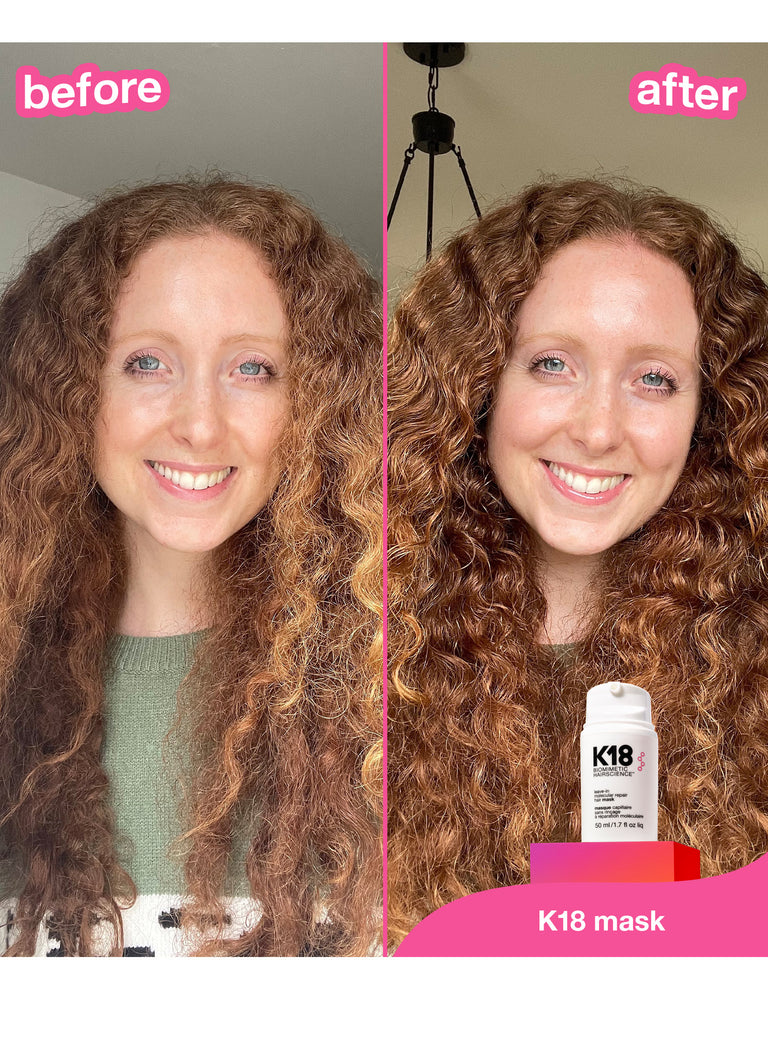
You will not feel silky smoothness right away because K18 is not a conditioner. Results build over time instead.
After the first use, hair may feel slightly dry or stiff due to lack of conditioning. Improved elasticity and reduced breakage may not always be noticeable immediately.
After 2–3 uses, you will see visible softness and shine, less frizz, better manageability, and hair that feels stronger and more resilient.
Long-term after 4–6 uses, you will experience progressive repair of internal damage, reduced split ends and breakage, and hair that regains bounce and body.
Common Issues and How to Fix Them
Several users report dryness, brittleness, or straw-like texture after using K18. This is usually due to skipping post-treatment moisture, product buildup blocking penetration, using conditioner before K18, or overuse without need.
K18 repairs structure but does not hydrate. Without follow-up products, hair lacks slip and can feel coarse. Use a leave-in conditioner, oil, or cream after the 4-minute wait.
Product buildup from silicones and styling products accumulates over time, forming a barrier. Use a clarifying shampoo every 3–4 weeks to reset the cuticle.
Even a light conditioner can block the peptide. Stick to shampoo only before application.
K18 vs. Olaplex: What Sets Them Apart

K18 targets polypeptide chains within individual keratin strands, repairing the inner cortex. Olaplex targets disulfide bonds between keratin strands.
K18 uses sh-Oligopeptide-78 as its active ingredient. Olaplex uses bis-aminopropyl diglycol dimaleate.
K18 requires 4 minutes of leave-in application. Olaplex No.3 requires 10 or more minutes and is rinsed out.
K18 should not be used with conditioner before application. Olaplex works with conditioner.
Many users combine both products for comprehensive repair, using Olaplex for surface-level smoothing and K18 for deep structural repair.
Who Should Use K18
K18 delivers the most dramatic results for bleached or highlighted hair, color-treated or chemically processed hair, heat-damaged strands, hair with low elasticity or chronic breakage, and fine or thinning hair prone to snapping.
K18 may not benefit those with healthy, undamaged hair who will see minimal improvement. It also may not suit those seeking instant softness since it is not a moisturizer, people with very low porosity hair who may struggle with peptide penetration, and budget-conscious users since it is a premium investment at $75 for 50 mL.
Usage Frequency and Maintenance
Use K18 4–6 times consecutively after a chemical service for maximum repair during peak vulnerability. Then switch to every 3–4 washes for maintenance.
Use a clarifying shampoo every few weeks to prevent buildup that blocks peptide access. K18 offers its own clarifying shampoo, or you can use a sulfate-based cleanser.
What K18 Is Not
K18 is not a protein treatment despite repairing keratin. It contains no protein and does not cause protein overload. It does not provide protein-based strengthening.
K18 is not a moisturizer. It fixes structure but leaves moisture to other products. Using it alone can result in dry, stiff hair.
K18 is not a one-size-fits-all solution. It requires routine adjustment, including skipping conditioner before use and detangling unconditioned hair.
Key Takeaways for Understanding How K18 Hair Mask Works
K18 uses a patented biomimetic peptide called K18PEPTIDE™ to reconnect broken polypeptide chains in damaged keratin. This repairs hair from the inside out, restoring the core structural integrity that surface treatments cannot reach.
The product works best when you follow the protocol exactly: shampoo only before application, towel-dry damp hair, apply 1–3 pumps, wait exactly 4 minutes, and follow with moisturizing products. Results are cumulative, with most users seeing visible improvement after 2–3 uses and dramatic transformation in severely damaged hair.
For bleached, colored, or heat-damaged hair, K18 offers molecular-level repair that goes beyond traditional bond builders. It is an investment, but for those dealing with serious damage, the science delivers real, lasting results.
Frequently Asked Questions About K18 Hair Mask
How long does it take for K18 to work?
K18 requires exactly 4 minutes of leave-in time for the peptide to penetrate and repair broken polypeptide chains. However, visible results typically appear after 2–3 uses, with cumulative improvement over weeks of consistent application.
Can I use conditioner after K18?
Yes, you can apply conditioner, leave-in conditioner, or hair oils after the 4-minute wait period. K18 repairs structure but does not provide moisture, so follow-up products are essential for softness and hydration.
Why does my hair feel dry after using K18?
K18 repairs the internal hair structure but does not add moisture. If you do not follow with conditioning products, hair can feel dry or stiff. Also ensure you are not using conditioner before application, as this blocks peptide penetration.
How often should I use K18 hair mask?
Use K18 4–6 times consecutively after chemical services like bleaching or coloring. For maintenance, use it every 3–4 washes. Clarify regularly to prevent buildup that blocks the peptide from reaching damaged areas.
Is K18 better than Olaplex?
K18 and Olaplex serve different purposes. K18 repairs polypeptide chains within keratin strands for deep structural repair. Olaplex rebuilds disulfide bonds between strands for elasticity and surface smoothing. Many users benefit from using both products together.
Who should not use K18?
K18 may not be worth the investment for those with healthy, undamaged hair who will see minimal results. It is also not ideal for those seeking instant softness since it requires follow-up products, and it may struggle to penetrate very low porosity hair.